
The Best Medium Hairstyles for Your Face Shape
Face shape advice usually arrives as a list of rules with no reasoning attached. Round faces get long layers. Square faces get waves. Nobody explains why.
The reasoning is simpler than the categories suggest. Hair adds apparent width wherever it holds volume, and adds apparent length wherever it hangs. That single principle produces every recommendation below.
Learning it beats memorising six shape names. The best medium hairstyles come from knowing which measurement to counter. The six categories are shorthand for common measurement patterns, nothing more.
How to Find Your Face Shape
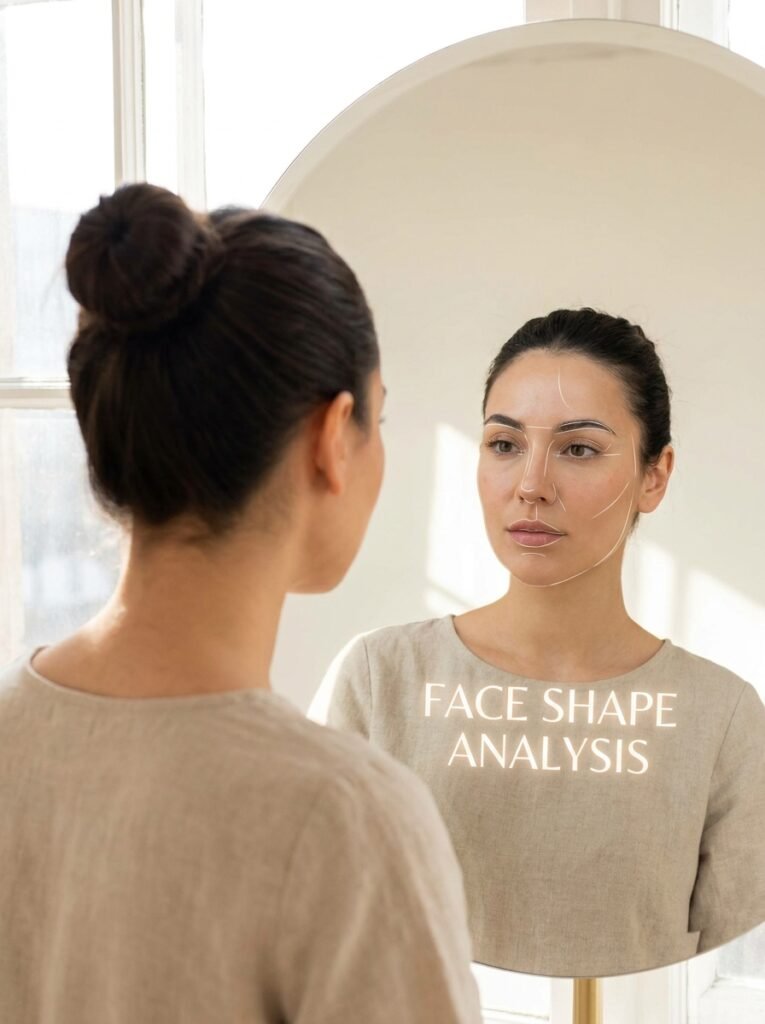
Four measurements settle it. Forehead width at its broadest. Cheekbone width across the top of the cheeks. Jaw width just below the ears, and face length from hairline to chin.
Two comparisons then do the work. Which of the three widths is largest, and how does length compare with the widest width? Everything else is naming.
A photograph beats a mirror for this. Standing square to a camera with the hair pulled back removes the small adjustments people make at a mirror. A still image also holds still while someone measures it.
Best Medium Styles for Oval Faces
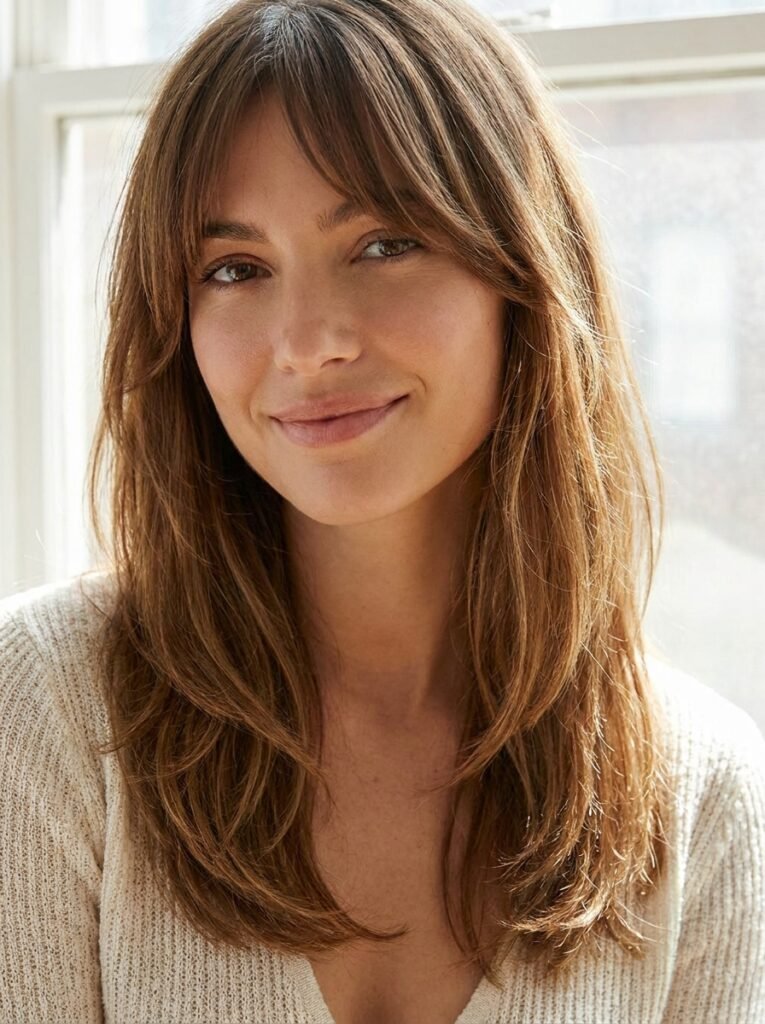
The oval pattern has no dominant width. Forehead and jaw run close, cheekbones sit slightly wider, and length exceeds width by a comfortable margin.
Nothing needs countering, which is the entire reason oval faces get called versatile. No proportion needs correcting, so other grounds can decide the cut.
Those other grounds are the useful ones here. Hair density, natural texture, and available styling time should drive the decision instead. Face shape has stopped being a constraint.
Best Medium Styles for Round Faces
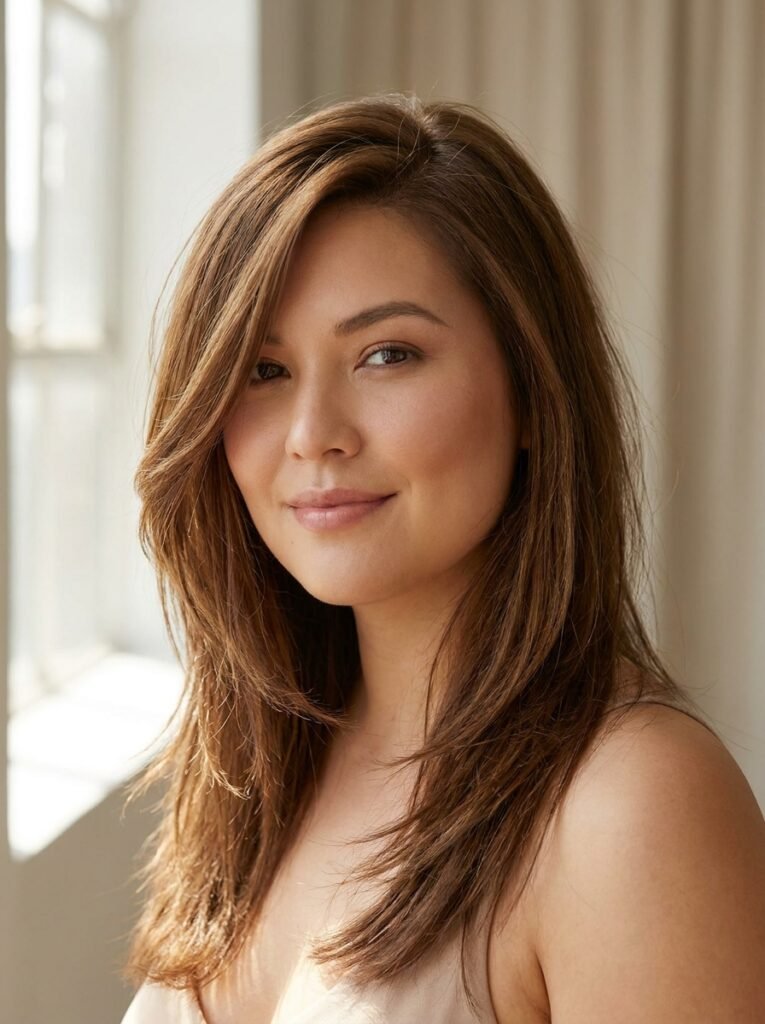
The round pattern shows length and width close to equal. The widest point sits at the cheeks, above a soft jaw.
The principle gives the instruction directly. Volume at cheek level widens the widest point. The useful move is keeping hair flat there and placing fullness above or below.
Hem placement follows the same logic. A hem finishing at the cheek or jaw draws a horizontal line across the broadest part. Dropping it to the collarbone puts that line somewhere the face is no longer widest.
Best Medium Styles for Square Faces

Square faces measure similarly across forehead, cheekbones, and jaw, with a defined corner at the jaw itself.
Lines echo each other, and that is the mechanic worth knowing. A blunt hem landing level with the jaw repeats the jaw’s horizontal line and doubles its emphasis.
Moving the hem clearly above or below removes the echo. Curved shapes work for the same reason. A wave crossing the jawline interrupts the straight line rather than repeating it.
Best Medium Styles for Heart Shaped Faces
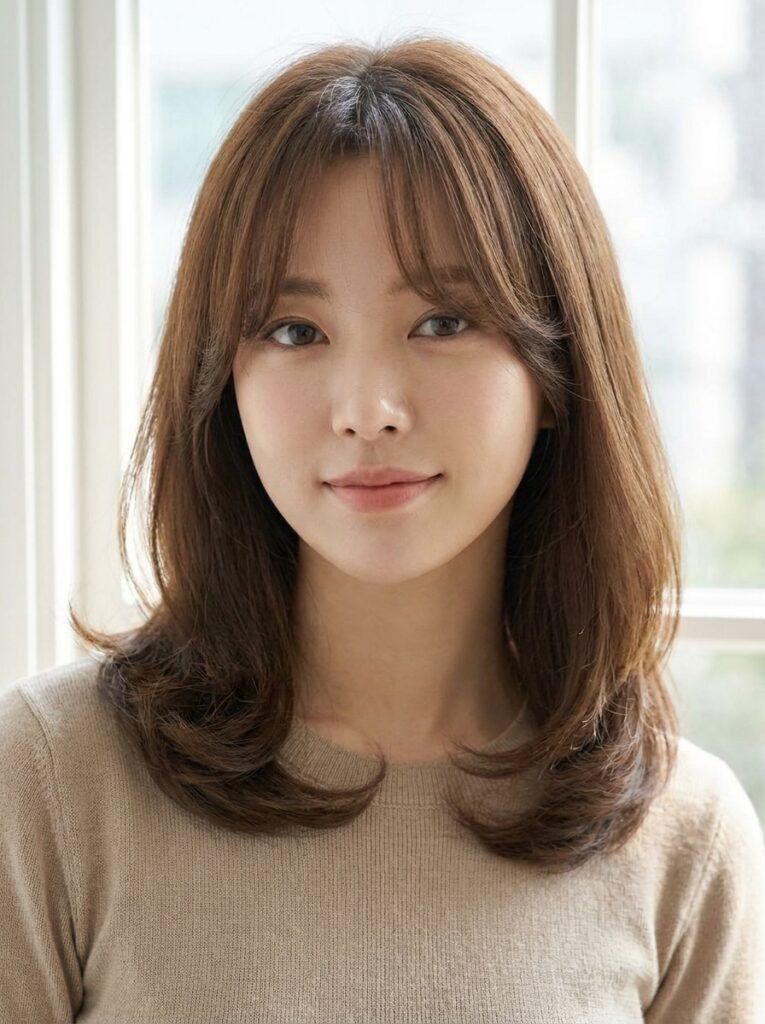
The heart pattern runs widest at the forehead and narrowest at the chin, with a noticeable difference between the two.
Mass belongs at the narrow end. A hem finishing at or below the jaw puts hair width where facial width runs out. That closes the gap between top and bottom.
The forehead needs the opposite treatment. Hair swept back off the forehead exposes the widest measurement. Anything falling forward covers part of it and narrows the read.
Best Medium Styles for Long Faces
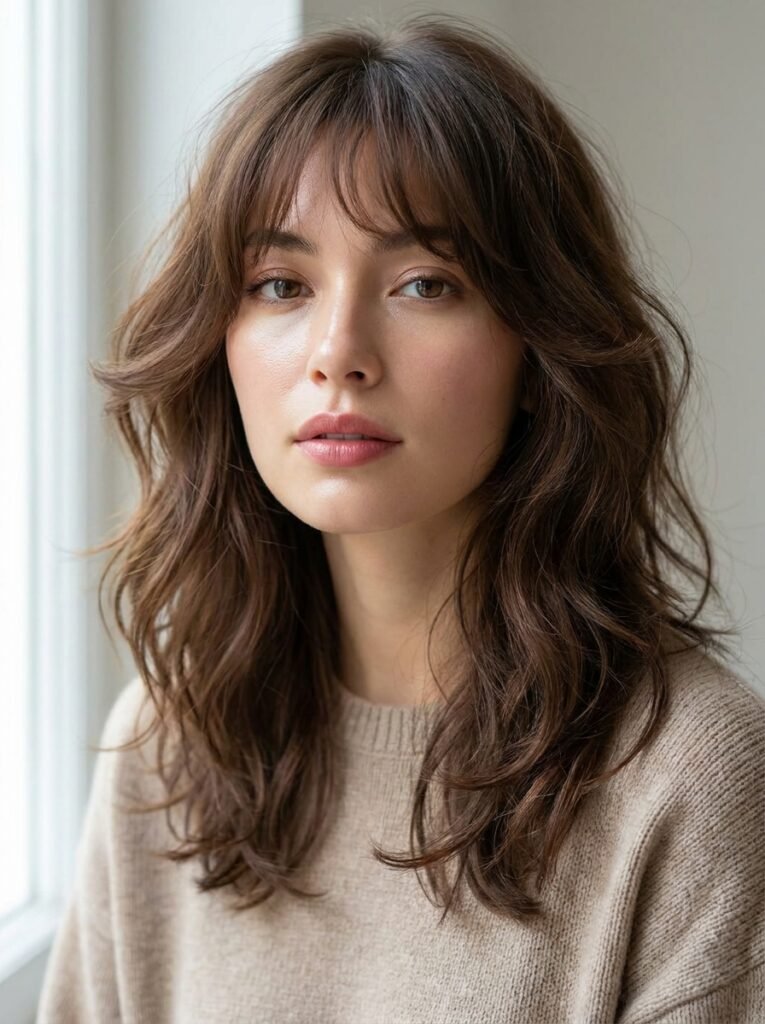
The long or oblong pattern is straightforward to spot. Length exceeds the widest width by a clear margin, and the three widths sit close together.
Horizontal lines shorten a vertical, which makes this the shape where a hem or a fringe does the most work. Any strong horizontal interrupts the run from hairline to chin.
Height at the crown does the opposite and works against this shape. Volume belongs at the sides instead, where it widens the narrower measurement and brings the two closer together.
Best Medium Styles for Diamond Faces
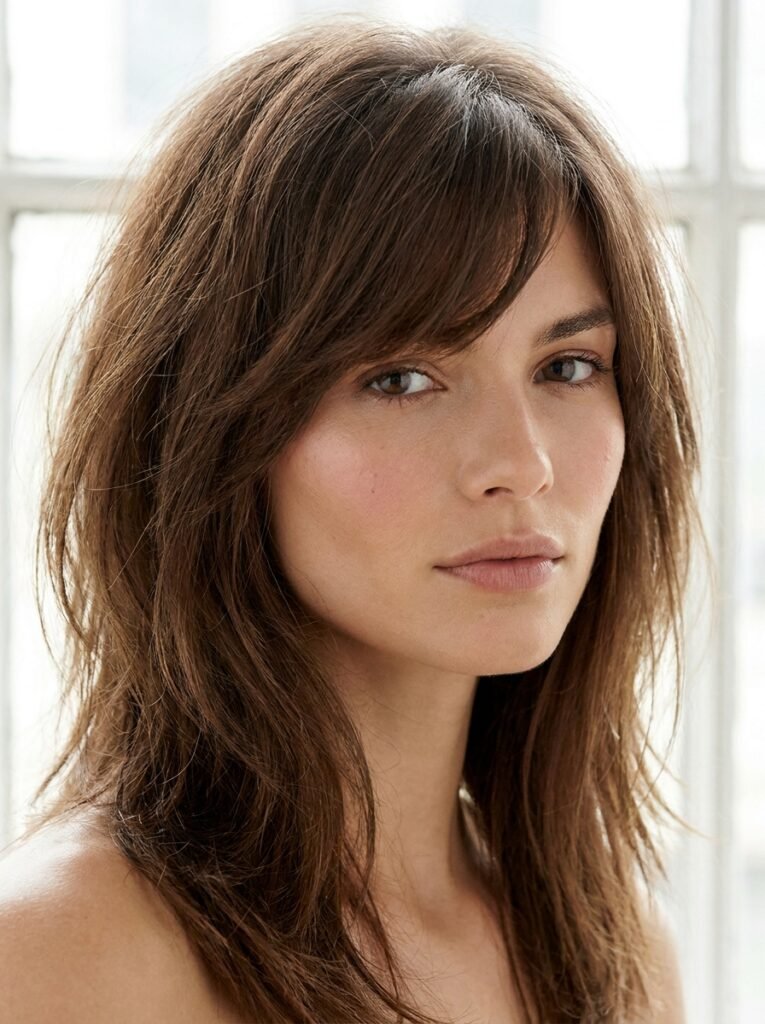
Diamond faces are widest at the cheekbones, with forehead and jaw both narrower. It is the only common pattern with two narrow points rather than one.
Two narrow points mean volume goes in two places. Fullness near the forehead and again at the jaw brings both measurements closer to the cheekbones between them.
The zone to keep flat is the middle. Layers reaching their shortest point at cheekbone height add width where the face already has plenty. The shortest layer belongs higher or lower.
The Versatile Medium Lob
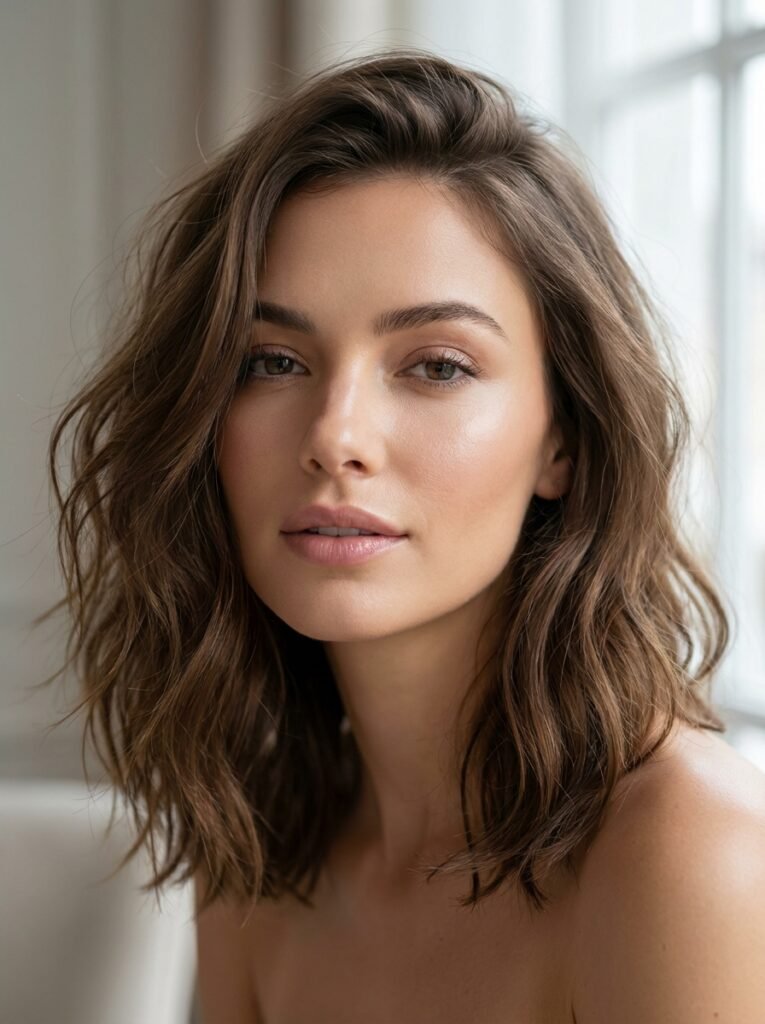
The lob suits many faces for a mechanical reason rather than a magical one. Its hem falls in a zone that moves easily.
Two or three centimetres changes which facial width the horizontal line sits beside. Higher brings it toward the jaw, lower carries it clear of the face entirely.
That adjustability is worth naming at the consultation. Ask where the hem should land, given the measurements. That produces a better result than asking for a lob and hoping. More on the cut itself appears in this guide to the most versatile medium hairstyles.
The Flattering Medium Shag
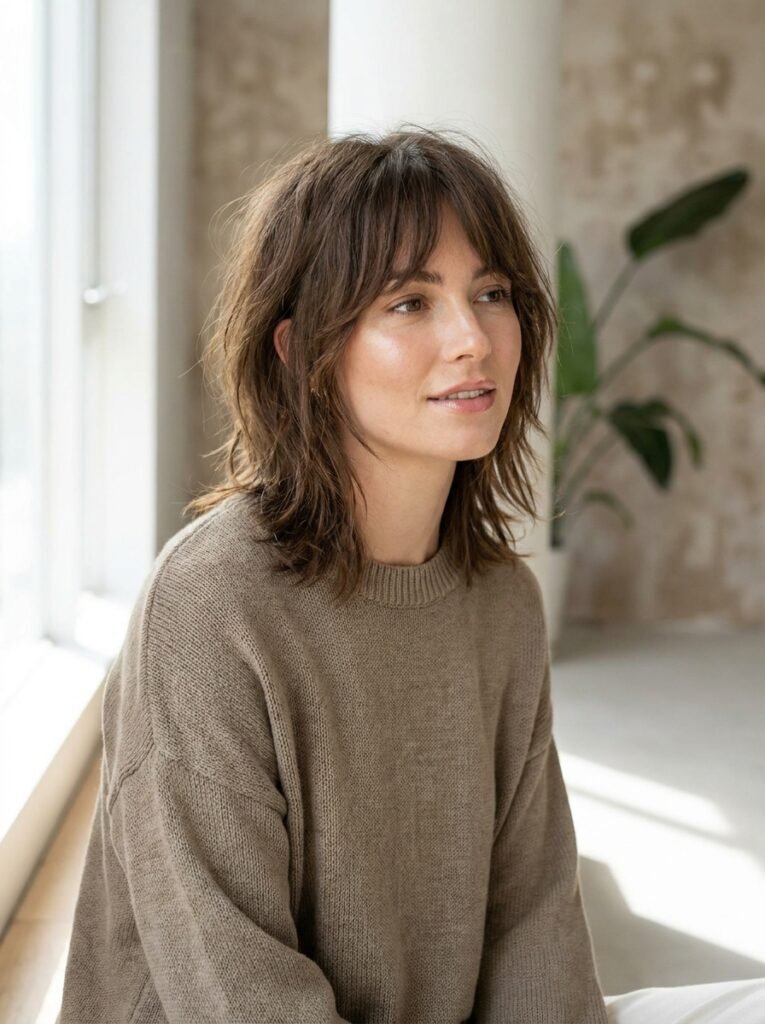
The shag distributes volume rather than concentrating it, which explains both its strength and its limit.
Spread volume creates no strong horizontal anywhere, so nothing gets emphasised by accident. That makes the shag forgiving across most measurement patterns.
The same quality limits it as a corrective. A face needing width at one specific point gets width everywhere instead. A shag balances broadly rather than targeting anything.
Choosing the Right Bangs

A fringe works on face length rather than face width. That single fact clears up most of the confusion around fringes. Covering part of the forehead lowers where the face appears to begin.
Long faces gain the most from this. Shortening the vertical is exactly the correction that pattern wants, which is why fringes suit oblong measurements so consistently.
Faces already short relative to their width gain least. A fringe shortens what is already short. A curtain style parting away from the centre serves better there than a full one.
How Your Part Changes Everything
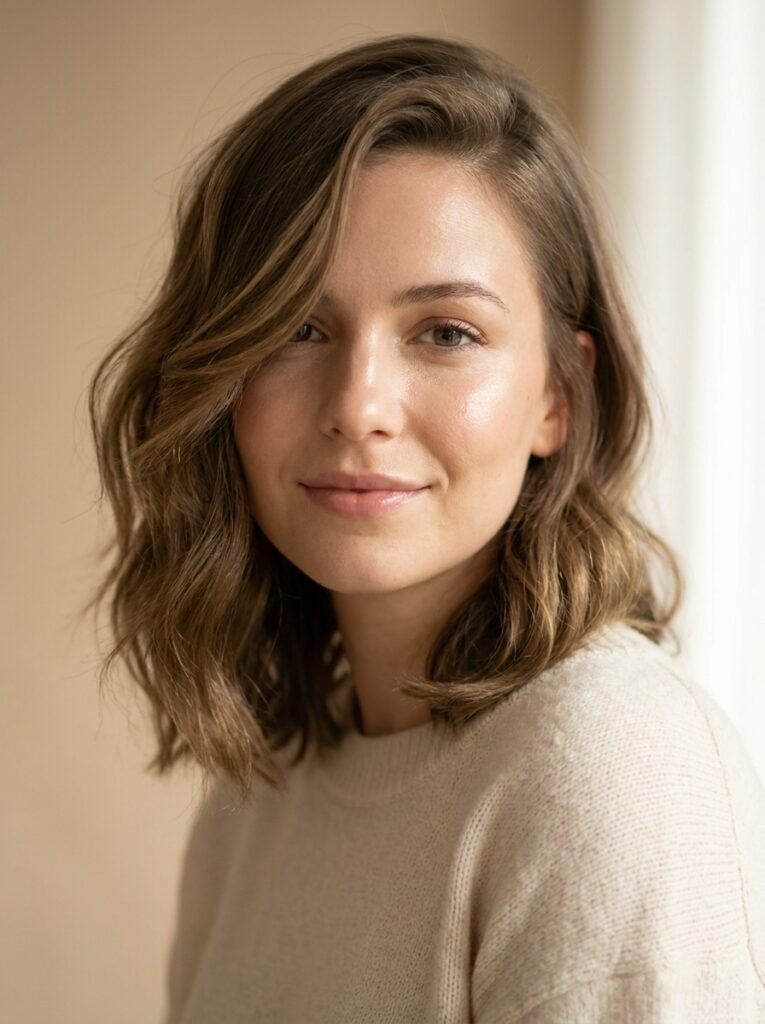
A centre part draws a vertical line down the middle and invites the eye to compare the two halves. That flatters even measurements and highlights uneven ones.
Some unevenness is close to universal. A narrative review in Symmetry puts it plainly. Subclinical facial asymmetry is very common, and slight asymmetry is the normal biological situation in humans. A centre part simply makes it easier to notice.
An off-centre part removes that invitation. It breaks the vertical and throws a diagonal across the forehead. More hair also lands on one side, and so does the extra volume.
Nothing about this costs anything. Moving a parting takes seconds, and a few days of wearing it differently is enough to judge.
Final Thoughts
Two comparisons and one principle cover the whole system. Which width is largest, and how length compares with it. Then the principle: hair widens where it has volume and lengthens where it hangs.
The category names are a convenience rather than a truth about faces. Plenty of people sit between two of them. The measurements still give a usable answer where the label does not.
Treat all of it as a starting point. The best medium hairstyles balance proportions, but balance is one consideration among several. A cut somebody enjoys wearing beats a cut that measures correctly.
Frequently Asked Questions
How do I find my face shape?
Take four measurements: forehead width, cheekbone width, jaw width, and length from hairline to chin. Then ask which width is largest and how length compares. A straight-on photograph with the hair back reads more accurately than a mirror.
Which face shape suits the most medium hairstyles?
Oval, because there is no dominant width to counter. That frees the decision to rest on hair density, natural texture, and available styling time instead.
What medium hairstyle slims a round face?
One that keeps hair flat at cheek level, since volume there widens the widest point. Dropping the hem to the collarbone also moves the horizontal line away from the broadest part of the face.
Are curtain bangs good for every face shape?
They suit most, because parting away from the centre softens the effect. A fringe shortens apparent face length. It helps long faces most, and adds least where the face is already short relative to its width.
Is a lob good for all face shapes?
Largely, and the reason is adjustability. Moving the hem two or three centimetres changes which facial width sits beside that horizontal line. One cut therefore tunes to different measurements.