
Bouncy Curly Haircuts to Show Off Your Natural Curls
Cutting curly hair involves a gap that straight hair never has. Where the scissors close and where the end finally sits are two different places.
Curls contract as they dry, sometimes by half their wet length. Shorter sections spring more than longer ones, because less weight pulls them down. A stylist is therefore cutting for a shape that does not exist yet.
Every one of these bouncy curly haircuts depends on that compensation. Each section below covers what the cut does and what shrinkage does to it.
The Layered Curly Cut

Layers behave unevenly on curls, and the reason is weight. A short layer carries almost none, so it contracts fully. The length below it carries more and hangs looser.
The gaps therefore widen once the hair dries. Two layers cut a few centimetres apart can end up sitting much further apart than that.
Good curly layering allows for it. A stylist working on curls leaves the shorter pieces longer than the target. Those are the ones that will travel furthest upward.
The Curly Bob
Shrinkage bites hardest at short lengths, which makes the bob the riskiest cut here. A bob measured to the chin while wet can dry level with the ear.
Naming the dry target avoids the shock. Ask for a bob that finishes at the chin once dry. The stylist can then add the extra length shrinkage will take back.
The triangle is the other risk. Curls widen through the mid-lengths while the crown stays flat. A bob therefore needs weight taken from inside, not just along the perimeter.
The Long Curly Cut

Long curls face the opposite problem. Weight stretches the pattern, so the ends read looser and straighter than the curls near the crown.
That is not damage, and it is not a product failure. It is gravity acting on a longer column of hair.
Removing weight from underneath restores the pattern without losing the length. This guide to long layered cuts for thick and thin hair covers how interior weight removal works.
The Curly Shag

Curls hide the thing that makes a shag risky on straight hair. A visible step between layers is obvious on a smooth surface and invisible on a textured one.
That tolerance is why the shag suits curls so well. A stylist can cut more aggressively, because the texture absorbs any hard line the layers would otherwise draw.
Crown volume is the payoff. Layers carried right through the top lift the roots, and lifted roots are where curl volume actually comes from.
Curly Hair with Bangs
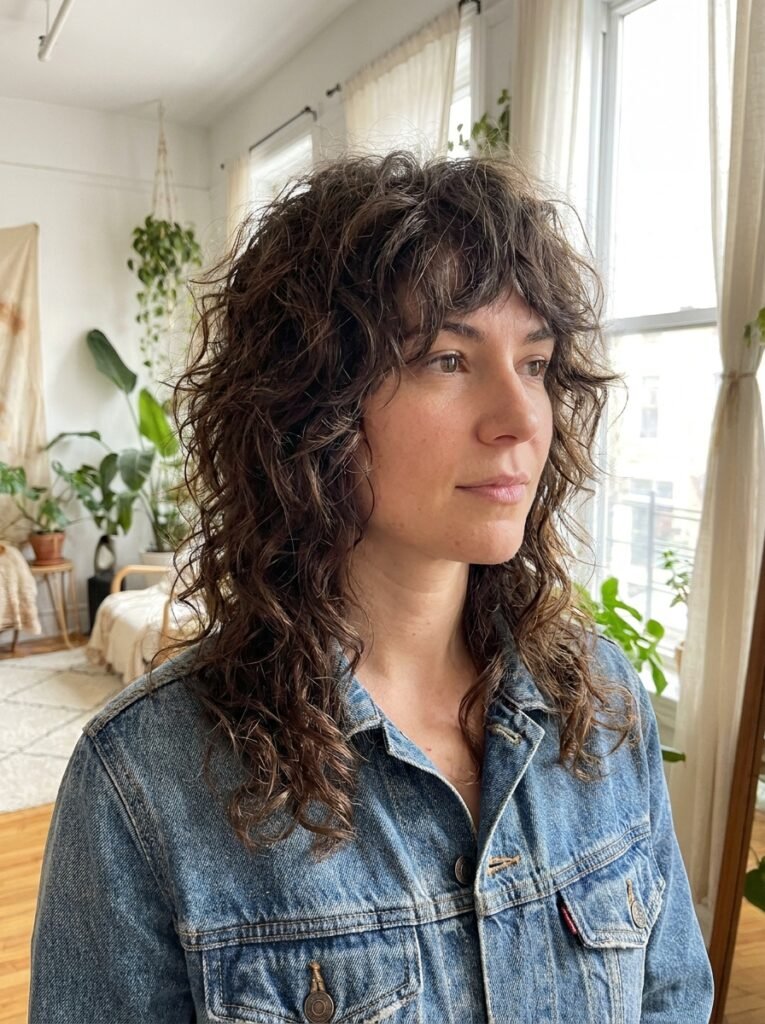
A fringe is the shortest hair on the head, so it shrinks the most. Bangs cut level with the eyebrows while wet can dry several centimetres higher.
The safe method has three steps. Cut long, dry completely, then refine. Anything else is guesswork with no way back.
Curl pattern at the hairline also differs from the rest of the head, often looser. Testing how those front pieces behave before committing prevents an unpleasant surprise.
The Pixie Curl Cut
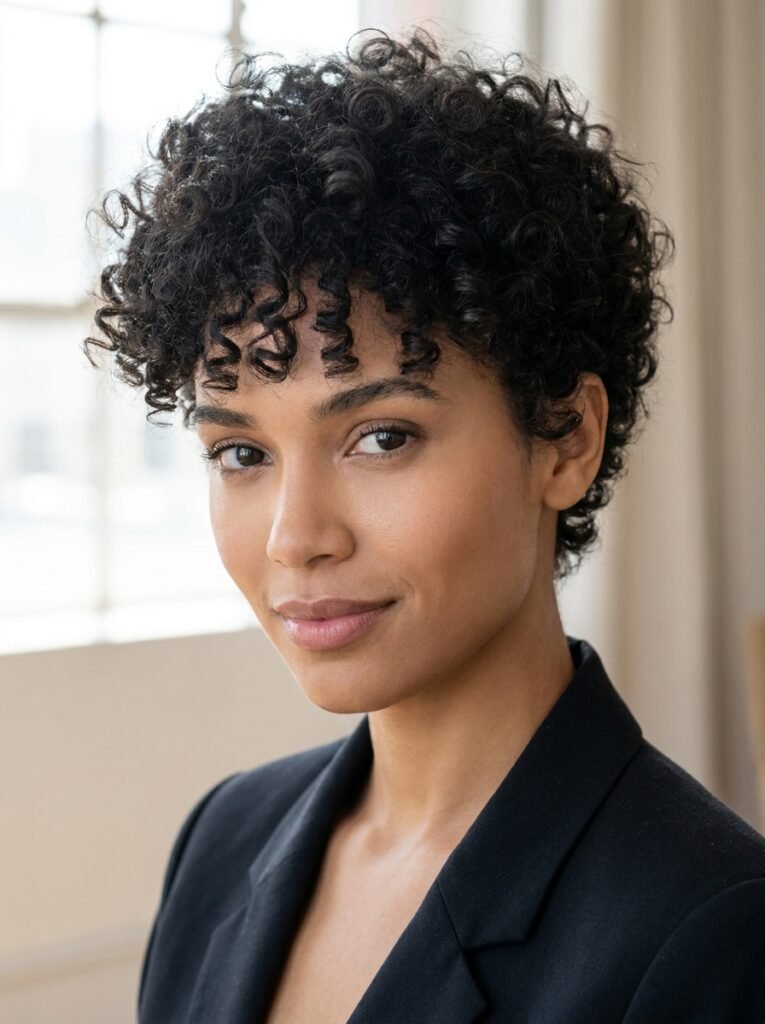
A pixie exposes something longer hair conceals. Most heads carry more than one curl pattern, and the nape is frequently looser than the crown.
Length hides that variation by letting everything hang together. Cut short, each zone shows its own behaviour, and the difference becomes part of the shape.
Good curly pixies account for it rather than fighting it. Cutting each zone to suit its own pattern produces a shape that holds, where one uniform length does not.
Layered Curls with Face Framing

Face-framing pieces need cutting to where the curl sits, not where the hair hangs. Those are rarely the same point.
A piece cut level with the jaw while wet will spring to the cheekbone. That is a difference of several centimetres in the most visible place on the head.
Dry cutting removes the problem entirely here. Working on hair already in its curled state means the stylist can see exactly where each piece will land.
The Curly Lob

The lob sits at the balance point between the two problems above. There is enough weight to stop extreme spring-up, and not enough to flatten the pattern.
That makes it the most forgiving curly length. Shrinkage still happens, but a few centimetres of error matters far less here than on a bob.
It also suits anyone unsure about going shorter. The lob reveals how a given curl pattern behaves with less weight, before a bob commits to it.
Voluminous Curly Layers
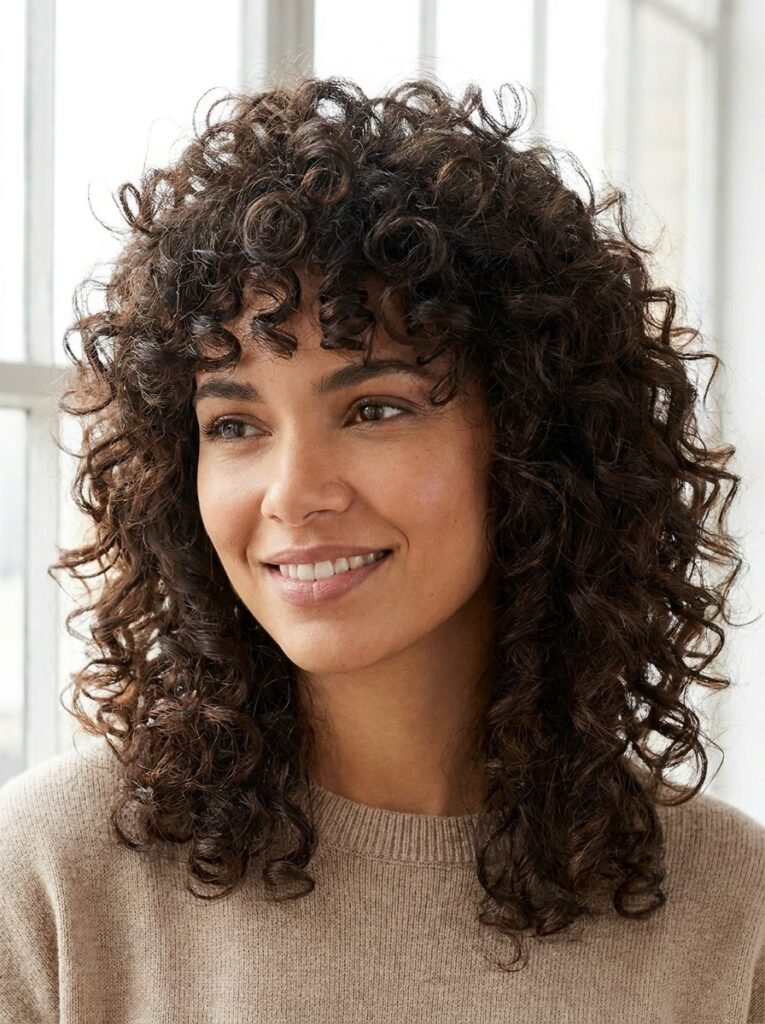
Volume on curly hair starts at the root. A curl lifting away from the scalp creates height, while one weighed flat sits down whatever happens further along.
Layers left too long therefore fail at the one job they were cut for. The weight above the root never comes off, and the crown stays flat.
Over-layering causes the opposite failure. Too many very short pieces create a halo of frizz above the rest. That reads as damage rather than volume.
The Tapered Curly Cut
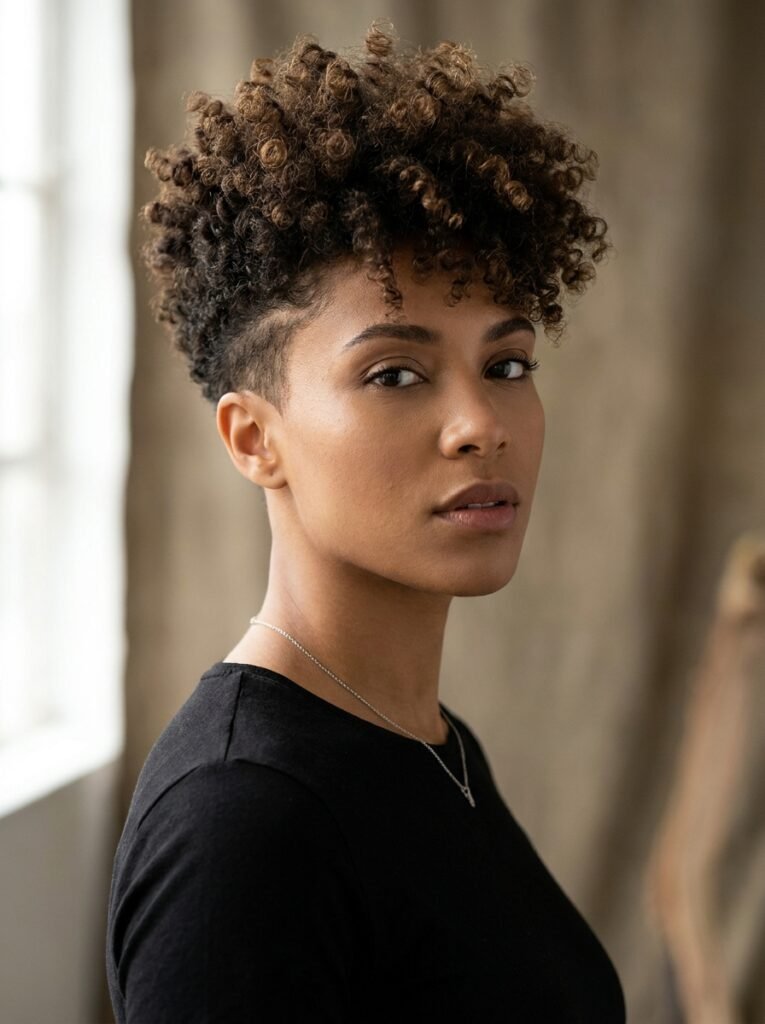
Tapering depends on the curl holding a shape. Tight coils do this well. Each one stays where it lands, and the outline reads as a clean line.
Looser waves cannot hold a taper in the same way. They shift and separate, so the sculpted edge blurs into something that looks uneven rather than deliberate.
Curl pattern therefore decides whether this cut is available. It is one of the few shapes here that genuinely does not suit every texture.
Embracing Your Natural Curl Pattern

Curl shape is set below the skin rather than along the strand. A review in Proceedings of the Royal Society A explains the mechanism. A curved follicle with an asymmetric internal structure produces a curved, elliptical fibre. A straight follicle at right angles to the scalp produces a round one.
Follicles vary across a single scalp, which is why one head carries several patterns. Tighter at the crown and looser at the nape is entirely ordinary.
A good curly cut treats those zones separately. Applying one length rule across a head with three patterns produces a shape that fights itself.
Caring for Your Curly Cut

Shrinkage disguises growth, and that catches people out. Hair grows at the same rate whatever its texture, but curls hide two months of it inside the spring.
Judging by shape rather than length solves it. A cut that has lost its outline needs attention. The hair may still look the same length as it did in the salon.
Split ends matter more here than on straight hair. A split interrupts the clump that holds a curl together, so one damaged end can break up a whole spiral. This guide to versatile curly hairstyles for all hair types covers styling the result.
Final Thoughts
One idea covers all twelve. Curls contract, shorter pieces contract more, and the finished shape only appears once everything dries.
That explains the recurring advice. Name the dry target rather than the wet one. Cut a fringe long and refine it afterwards. Ask for dry cutting where placement matters most.
The best bouncy curly haircuts come from stylists who plan for that gap rather than discovering it. Asking how a cut allows for shrinkage is the single most useful question at a consultation.
Frequently Asked Questions
What is the best haircut for natural curls?
The lob, for most people. It sits at the balance point. Enough weight to prevent extreme spring-up, and not enough to flatten the pattern. A few centimetres of error matters far less there than on a bob.
Do layers help curly hair?
Yes, though they behave unevenly. Shorter layers carry less weight and contract further, so the gaps between them widen as the hair dries. A stylist has to leave the short pieces longer than the target to allow for it.
Should curly hair be cut wet or dry?
Dry, wherever placement matters. Face-framing pieces and fringes both land several centimetres higher than they hang wet. Cutting them in their curled state removes the guesswork.
How do I keep my curls bouncy?
Volume starts at the root, so weight there is what flattens curls. Beyond the cut, protecting the clumps matters most. A split end breaks up the spiral that holds a curl together.
Can short cuts work for curly hair?
They can, with one caveat. Short cuts expose pattern variation that longer hair conceals, and most heads are looser at the nape than the crown. A good short cut treats each zone on its own terms.