Minimalist Nail Designs for an Elegant Look
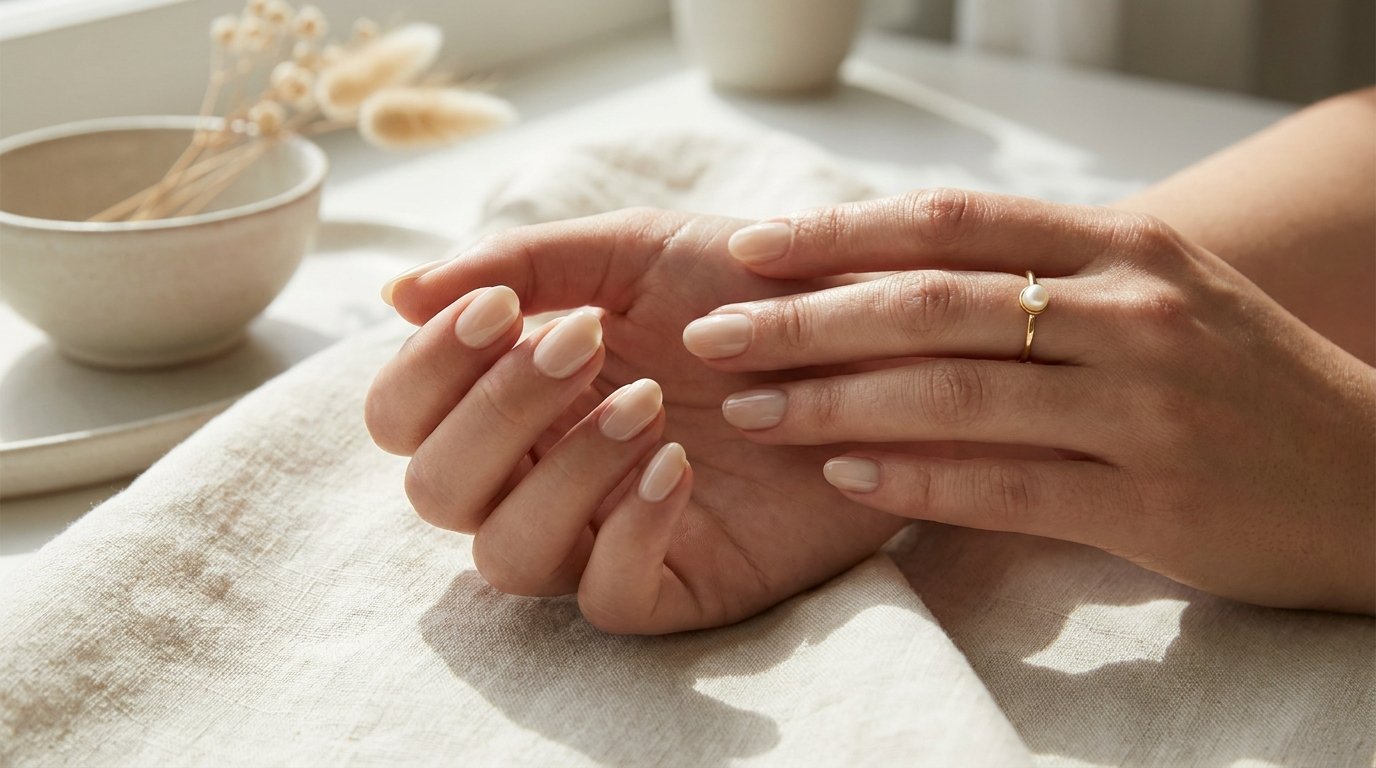
Minimalist nail designs look easier than they are. Strip away the glitter and nothing remains to hide behind. Every wobbly line and every ridge in the nail plate shows. That is the trade the style asks for. It also explains why a plain nude manicure done properly reads as more expensive than a busy one.
Why Less Really Is More When It Comes to Nails
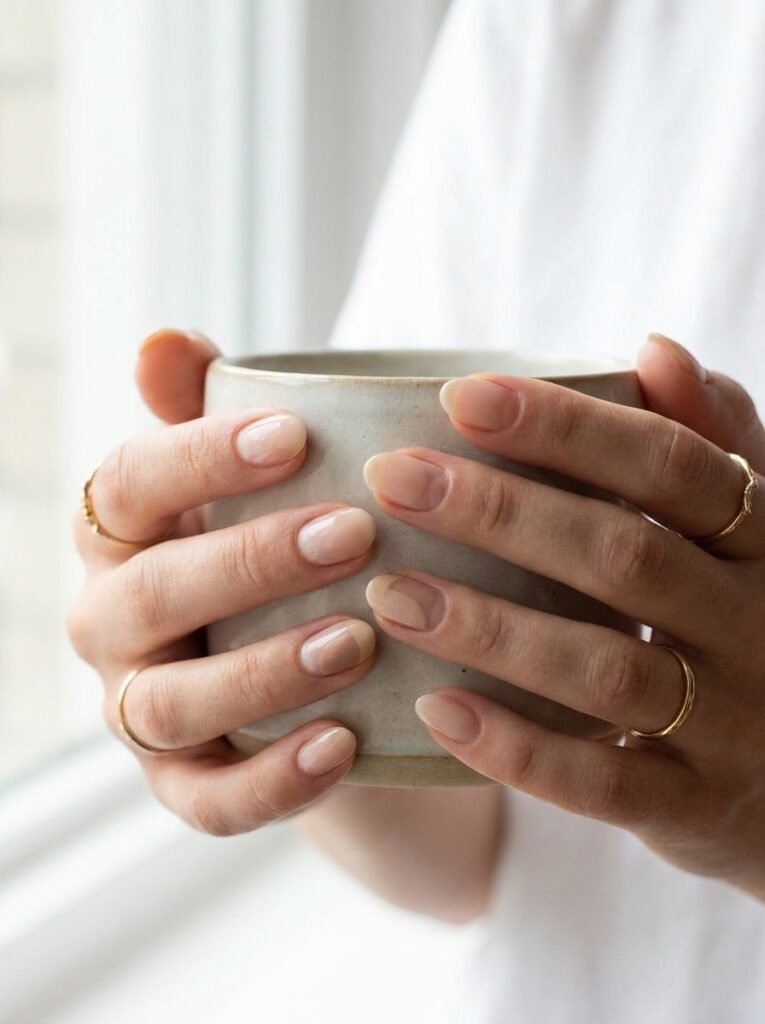
Restraint shifts the work elsewhere. With no design competing for attention, the eye lands elsewhere. It finds the cuticle line, the free edge, and the evenness of the colour. Those three things carry the whole manicure.
Durability behaves differently than most people assume. Minimal manicures do not necessarily survive longer, but they hide wear far better. A chip in a soft nude barely registers. The same chip in navy or red announces itself across a room.
That forgiveness is the real practical argument. Anyone hard on their hands gets several extra days of looking presentable rather than several extra days of intact polish.
The Classic French Tip Gets a Modern Upgrade
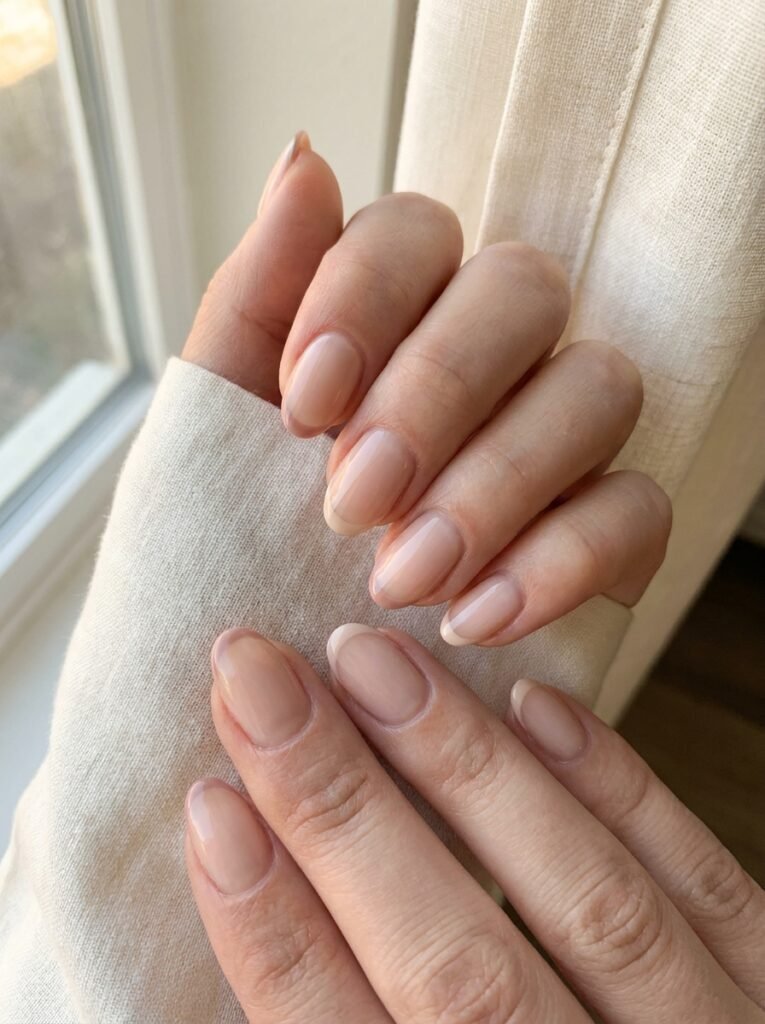
Proportion is what dates a French manicure. The old version took a thick band across the tip. The current one keeps the depth to roughly a fifth or a sixth of the visible nail.
Curve shape matters as much as depth. Traditional smile lines dip deeper at the sidewalls than at the centre. Modern tips tend to track the free edge itself, which sits shallower and reads as far more contemporary.
Colour distance controls how loud the result feels. A tip only a shade or two from the base gives a soft French that barely announces itself. Dusty lavender, sage, or a muted terracotta keeps the same proportions while adding a little character.
Negative Space Designs That Feel Like Art
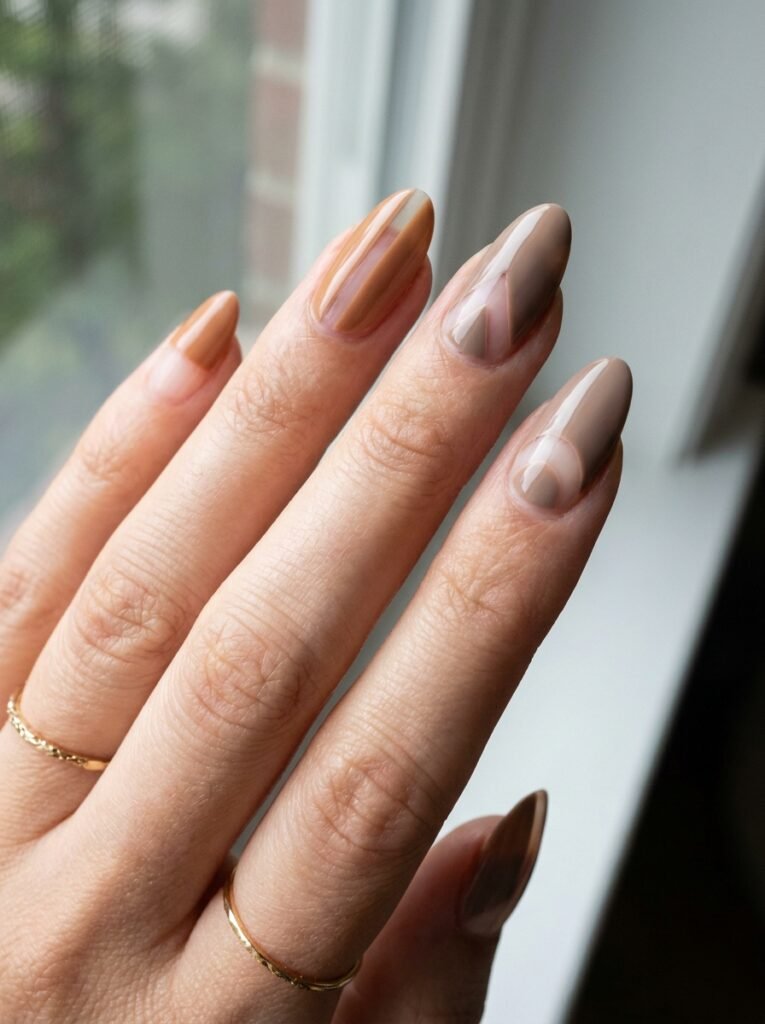
The bare portion is not one colour. A natural nail runs pink over the bed and pales toward the free edge. A design exposing the tip therefore reads lighter and cooler than one exposing the base.
That transition rewards a deliberate choice. Leaving the base bare keeps a warm pink against the polish. Leaving the tip bare produces a cool, almost translucent contrast.
Nail condition sets the ceiling here. Ridges, staining from dark polish, and white spots all sit on display in the exposed area. Negative space rewards a healthy plate and punishes a neglected one. More approachable variations appear in this guide to simple nail art ideas anyone can do at home.
Single-Line Nail Art That Looks Effortlessly Chic
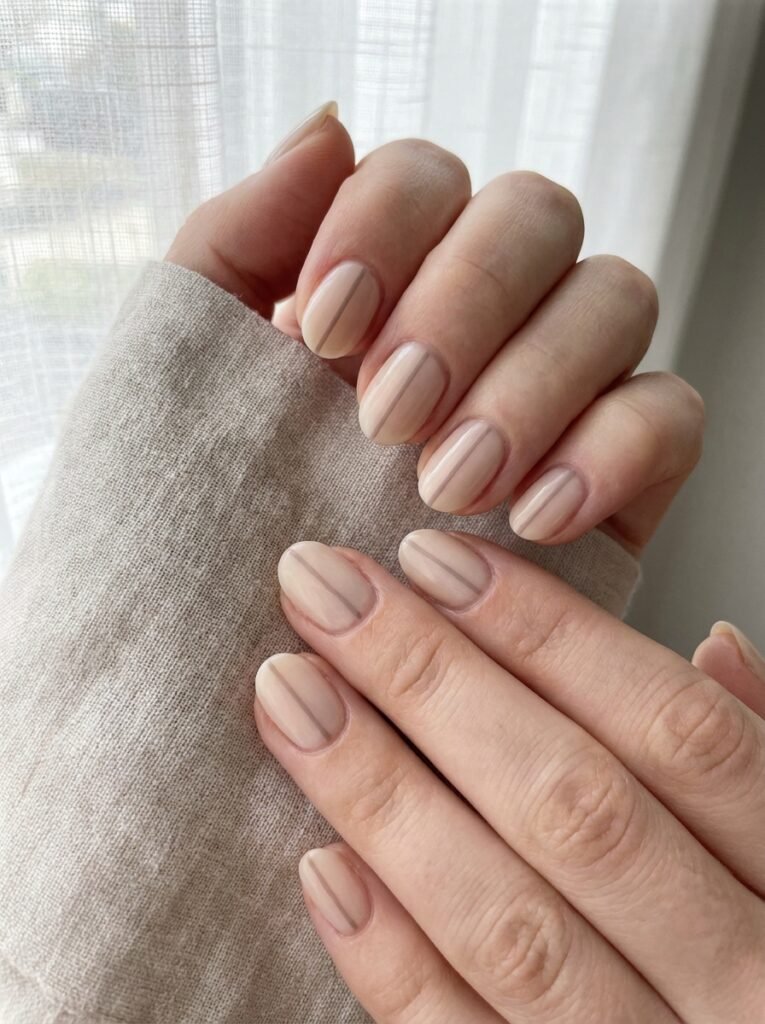
Consistency across ten nails is the difficulty, not the line itself. One good line is easy. Ten lines of matching weight and placement is what separates this from a doodle.
Brush length does more than skill here. Long-bristled liner brushes hold considerably more polish than short ones, so a single load carries across the whole nail. Short brushes run dry midway and the line thins at the end.
Placement should respect the nail’s own curvature. A line echoing the cuticle curve or the free edge looks deliberate. A ruler-straight line across a curved surface reads as a slip.
Tonal Nudes and Skin-Matching Polish
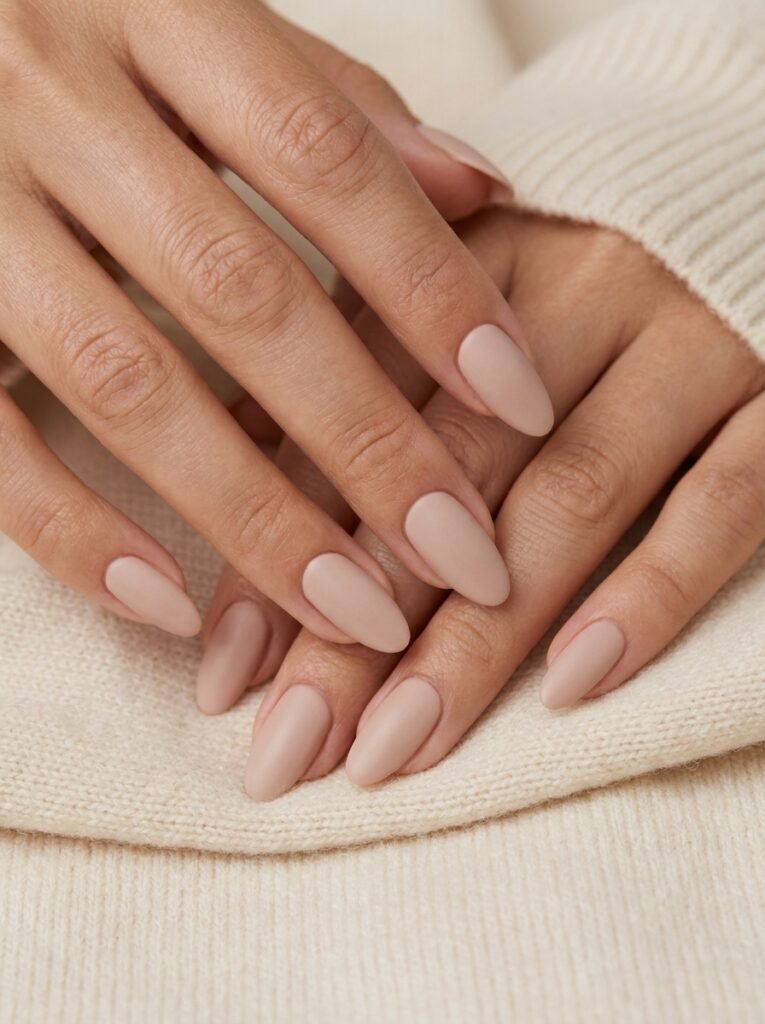
Testing a nude against the back of the hand gives the wrong answer. That skin runs darker and more weathered than the sides of the fingers. The sides are where the comparison actually happens.
Undertone decides the rest. Pink-based nudes suit cool skin, while yellow and peach-based nudes suit warm. Getting this backwards is what produces the ashy or muddy result people blame on the shade being wrong.
Opacity affects application difficulty. Sheer nudes need three coats and show every ridge in the plate. Creamy nudes cover in two and level out minor imperfections along the way.
Half-Moon Manicures for a Vintage-Modern Hybrid
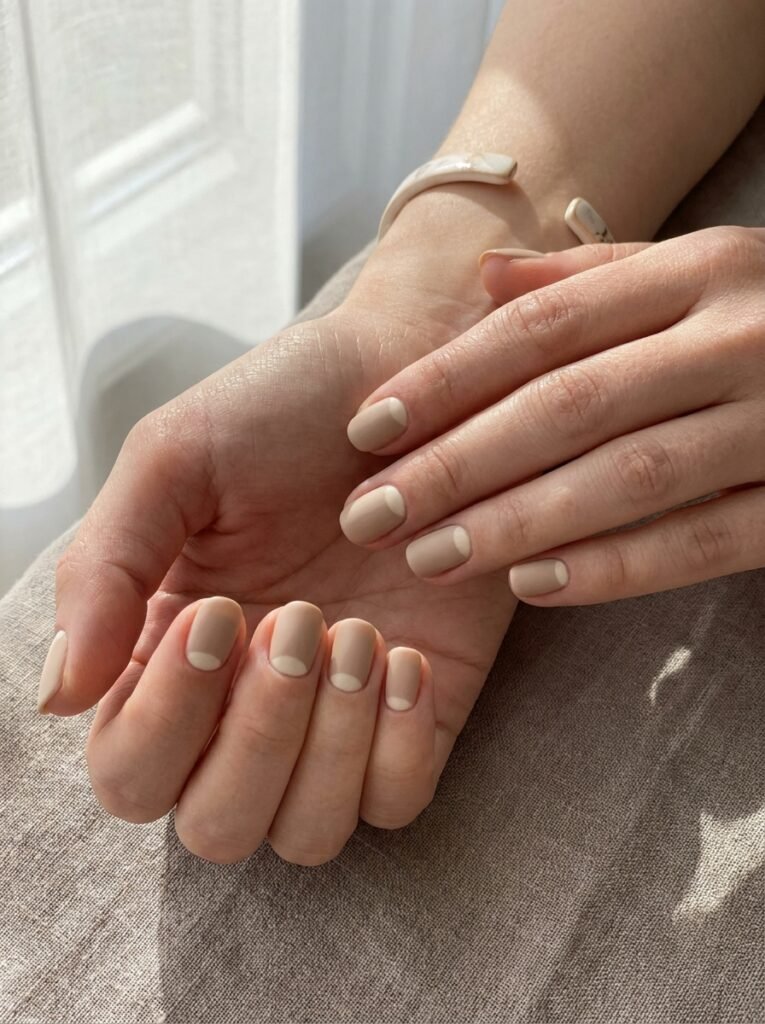
The design borrows its name from the lunula, the pale crescent at the base of the nail. Actual lunulae vary enormously between people and between fingers, and some barely show at all.
Following the real one would therefore produce ten mismatched moons. The manicure instead uses a drawn crescent of consistent size across every nail, which is why it looks so tidy.
Reinforcement stickers give that consistency cheaply, provided the base colour underneath has fully hardened. Applied to touch-dry polish they lift the layer beneath when peeled. Keeping both shades within one neutral family turns the look refined rather than graphic.
Sheer and Jelly Nails for Effortless Glam
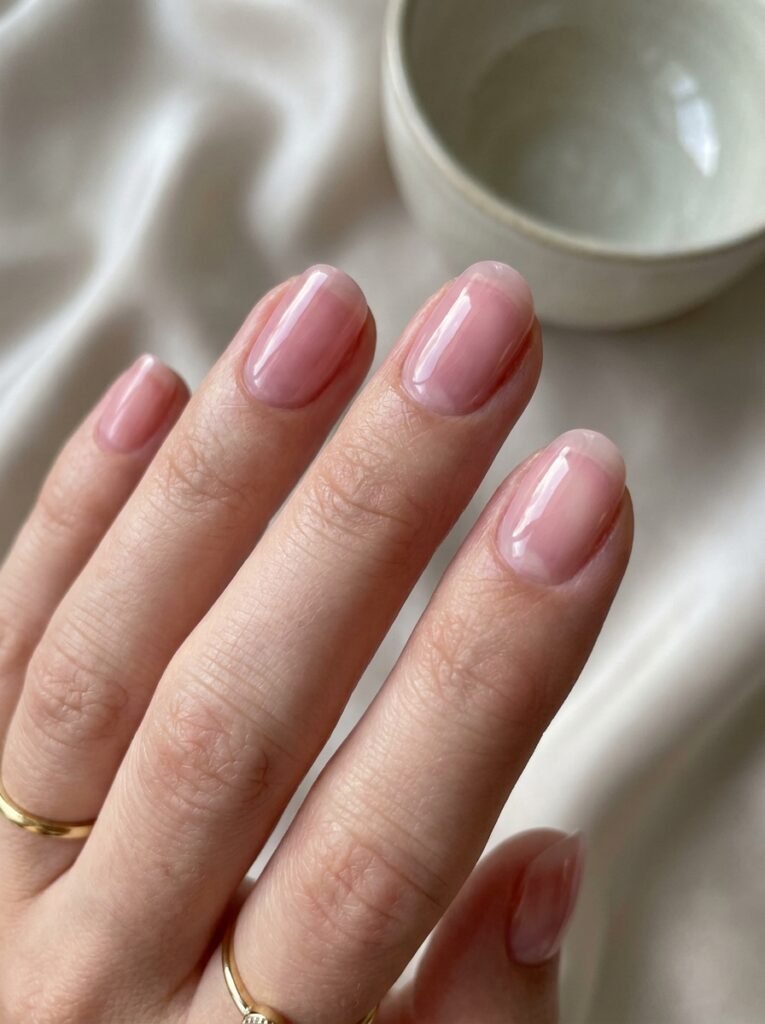
Sheer formulas expose brush strokes that opaque polish would cover. Each pass leaves a faint line where the coats overlap. Building more coats darkens those lines rather than hiding them.
Floating the polish solves it. A generous bead pushed gently across the nail, with the brush barely touching, spreads evenly. Pressing and dragging is what creates the streaks.
One bottle produces several looks. Two coats give a barely-there wash, while four or five build genuine depth and the glassy jelly effect. Staining from previous dark polish shows straight through, so a sheer manicure needs a clean plate underneath.
Dot Accents: Small Detail, Big Impact
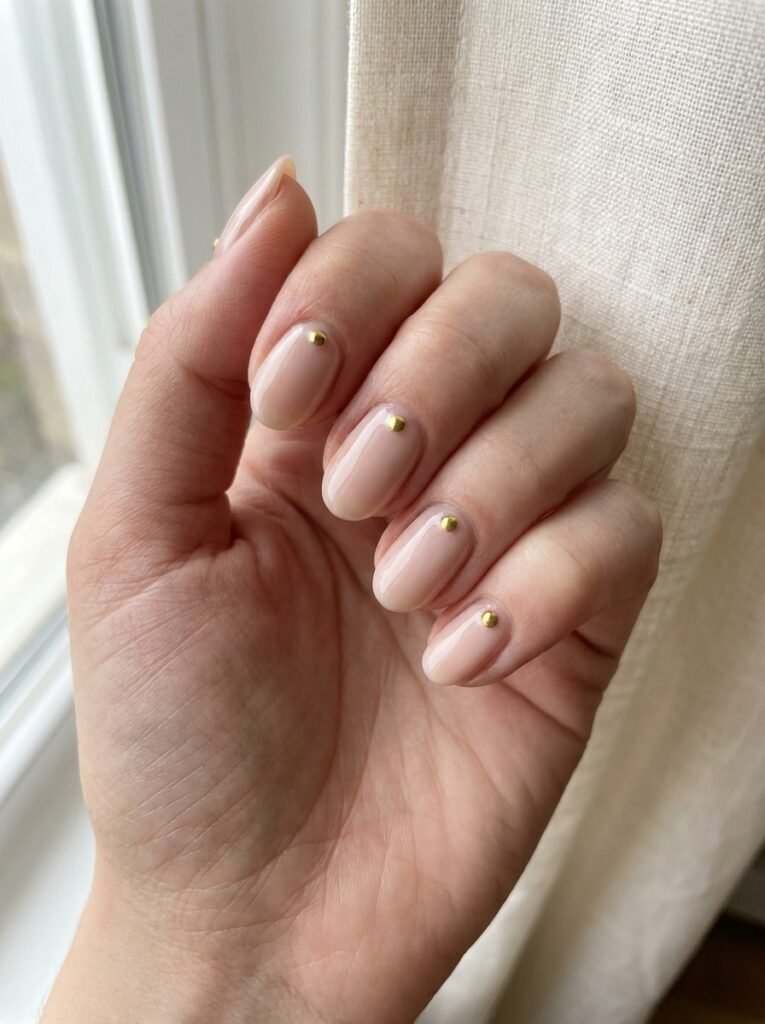
Placement changes the proportion of the nail. A dot near the cuticle pulls the eye upward and lengthens. A dot at the tip stops the eye short and makes the nail read shorter.
Size should relate to nail width rather than to the tool. A dot wider than about a fifth of the nail stops being an accent and becomes the design.
Metallics need a level surface beneath them. Gold and silver pick up any bump in the base coat and scatter the reflection. A crisp dot then becomes a smudge of light.
Monochromatic Nail Sets for a Coordinated Look
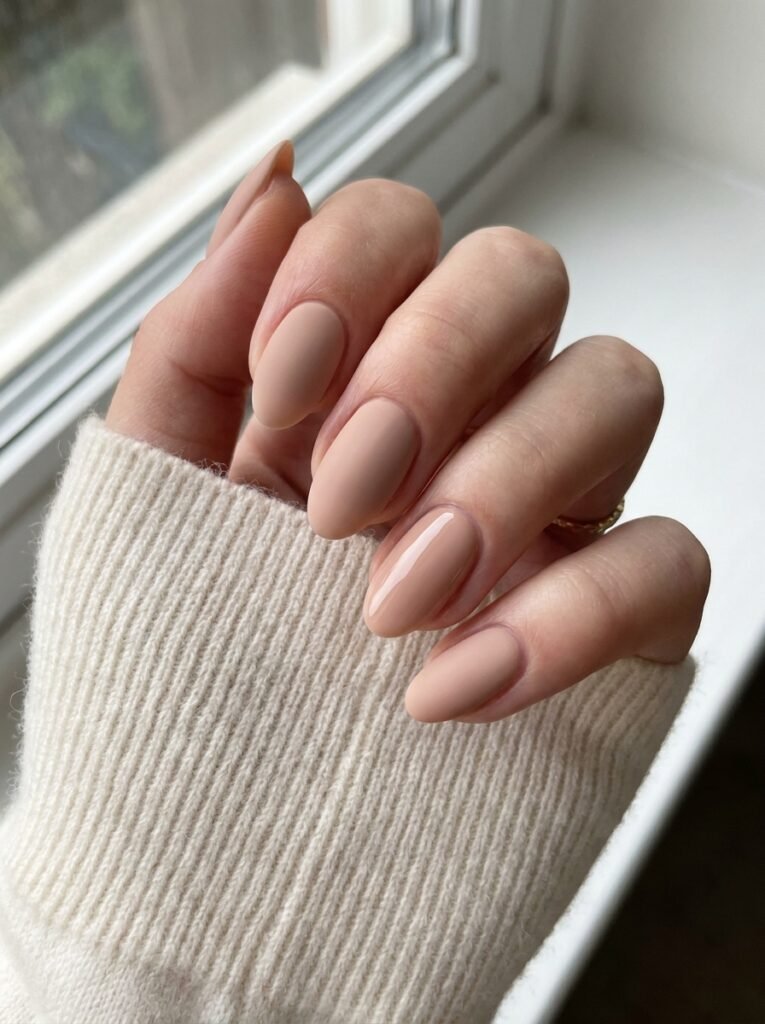
Mixing finishes within one shade produces a surprise worth knowing about. A matte top coat mutes and slightly darkens the colour beneath it. The same polish then stops looking like the same polish.
That shift is an advantage rather than a problem. Eight matte nails against two glossy ones in one bottle of polish gives visible contrast with no second colour involved.
Removing colour from the equation puts the attention on shape and application. Monochromatic sets suit anyone who finds nail art intimidating, since nothing needs drawing at all.
Minimalist Nail Shapes That Complement Elegant Designs
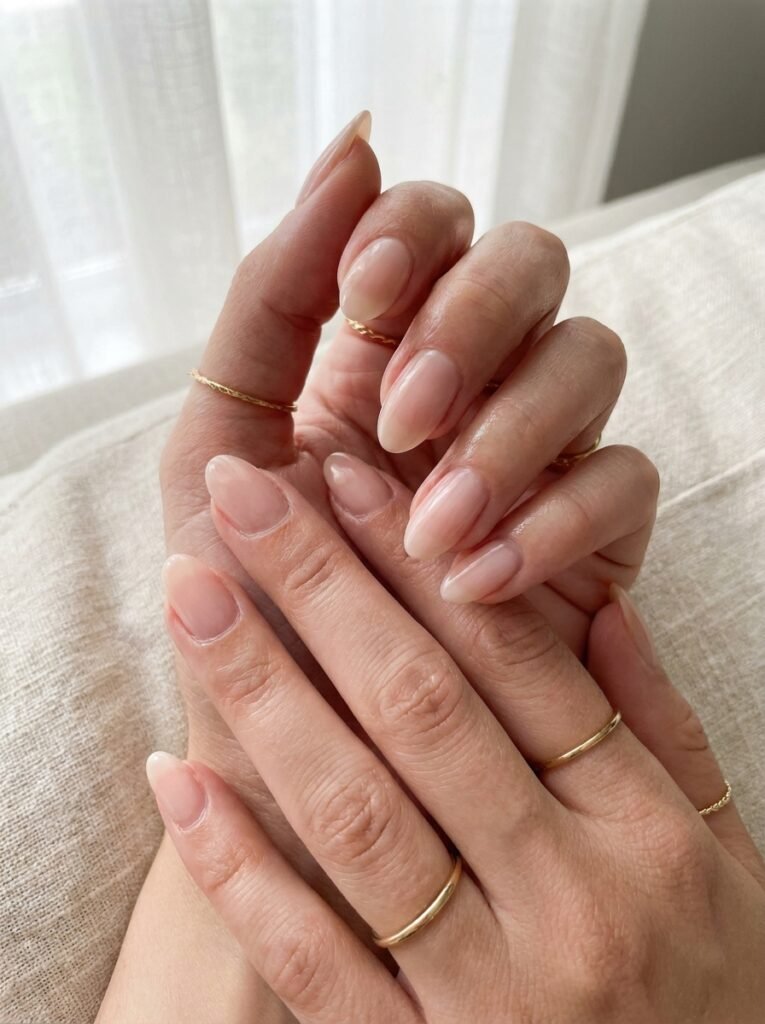
Nail bed width should guide the shape more than preference does. A wide bed suits a squoval or a gentle almond taper. A narrow bed carries a rounder shape comfortably.
Filing into the sidewalls to force a taper weakens the nail at exactly the point that takes lateral stress. That is where breaks start, and the shape rarely lasts long enough to justify it.
Sharp stiletto and extreme coffin shapes fight a minimal design, because the drama already sits in the outline. Short nails have no such problem. This collection of short nail designs covers what suits a smaller canvas.
Caring for Your Nails Between Minimalist Manicures
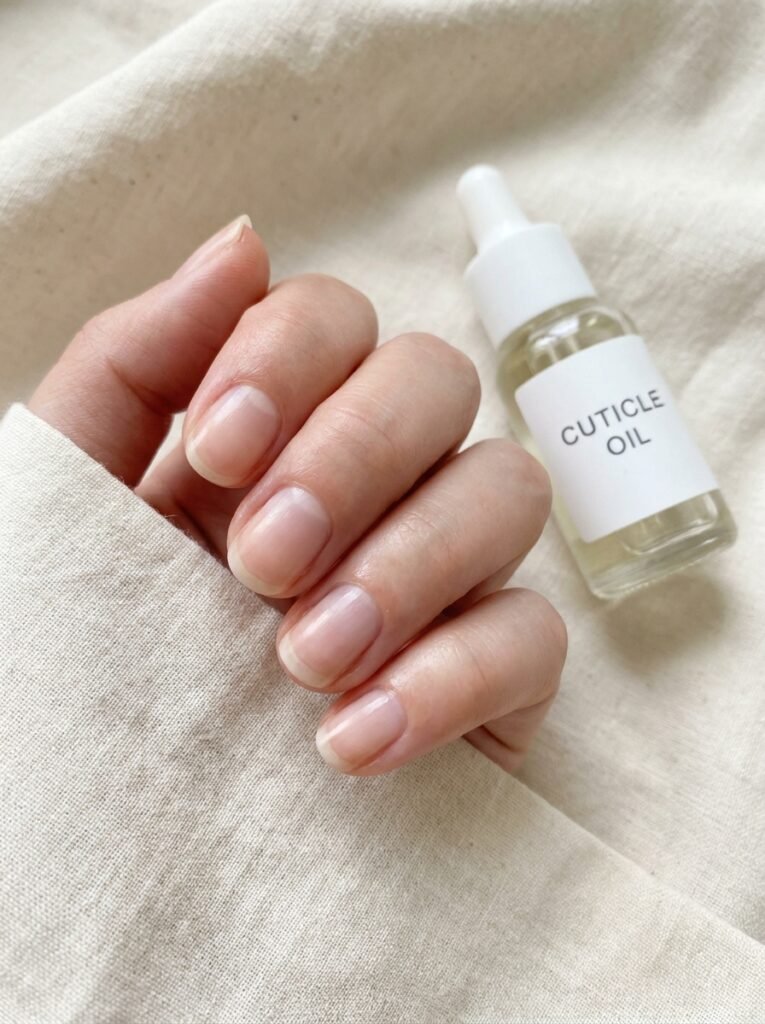
Two different tissues get confused under one word. The cuticle proper is a thin layer of dead skin sitting on the nail plate. The eponychium is the living fold behind it, and the two need very different handling.
That distinction has a health consequence. The Mayo Clinic advises against biting nails or picking at cuticles. Those habits damage the nail bed, and even a minor cut beside the nail lets germs in. Pushing back gently after a shower achieves the tidy line without removing the seal.
Oil works on the surrounding skin rather than the plate. Applied daily around the nail fold, it keeps the skin flexible. Flexible skin does not snag and tear into hangnails.
Base coat earns its place for a second reason beyond adhesion. Pigment from dark polish stains the keratin directly. That yellow tinge ruins every sheer and negative space look until it grows out.
Building Your Minimalist Nail Polish Collection
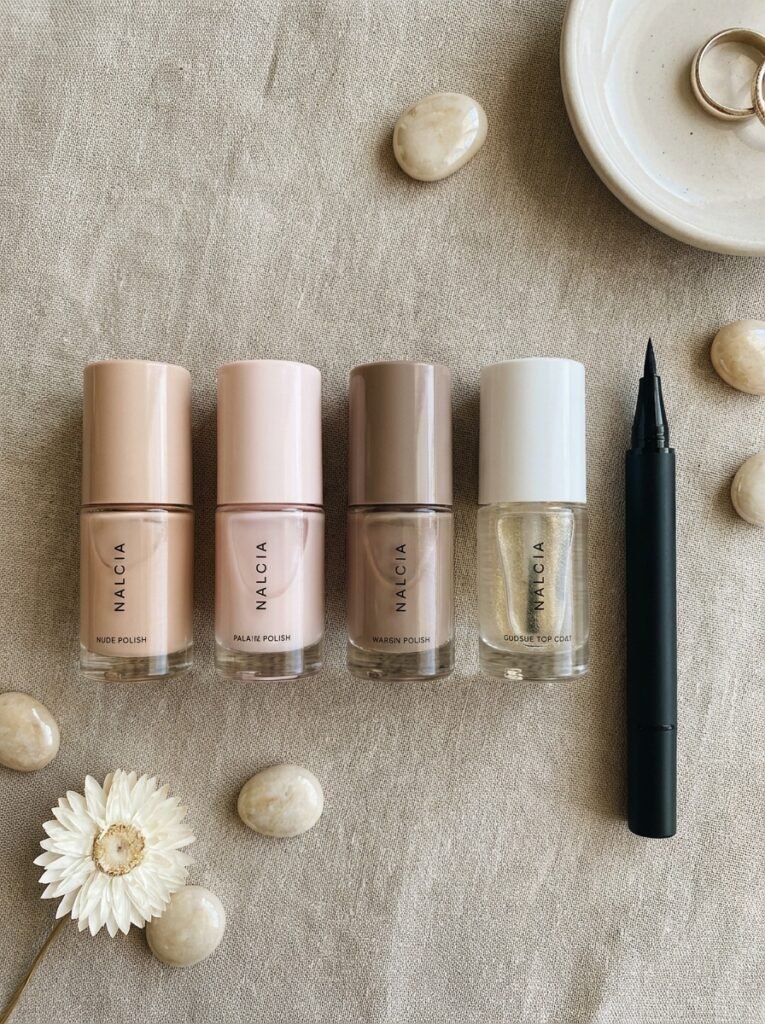
A short list covers nearly everything in this article. Two nudes in different undertones, a clean white, a soft blush, and a warm taupe. Then a shimmer-flecked top coat and fine art pens in black and gold.
Polish thickens as solvent escapes through the neck of the bottle. Nail polish thinner restores it. Acetone or remover appears to work for a day, then breaks the formula down permanently.
Storage extends usable life considerably. Bottles kept upright, cool, and out of direct light thicken far more slowly. Wiping the neck before capping also stops the lid seizing shut.
Final Thoughts
Minimalist nail designs concentrate the difficulty rather than removing it. Every element that a busier manicure could disguise now sits in plain view.
That is why preparation matters more than artistry here. A level base coat, a clean cuticle line, and an even shape carry most of it. All three happen before any design goes on.
The range covered above runs from genuinely easy to moderately technical. Nude polish and monochromatic sets need patience alone. Negative space, half-moons, and single-line work reward practice. All of them rest on the same principle: restraint only looks effortless when the basics underneath are right.
Frequently Asked Questions
What are the best nail shapes for minimalist designs?
Oval, almond, and squoval, chosen according to nail bed width rather than preference. Wide beds suit a squoval or gentle taper. Filing into the sidewalls to force a narrower shape weakens the nail where breaks usually start.
Can minimalist nail designs work on short nails?
Yes, and often better. Short nails have less surface to keep flawless, which matters when nothing hides an uneven application. Single-line work, nudes, and dot accents all scale down without losing anything.
How long does a minimalist manicure last?
Around seven to ten days with a proper base and top coat. That matches any other manicure. The difference is visibility. Chips in nude and neutral shades stay almost invisible, so the set keeps looking presentable for longer.
Which finishes suit this style best?
Satin, sheer, and soft matte all sit naturally within the aesthetic. Worth knowing: a matte top coat mutes and darkens the shade underneath. One bottle can therefore produce two visibly different finishes.
Are special tools necessary?
A long-bristled liner brush helps most, since it holds enough polish to complete a line in one stroke. Nail tape gives clean edges on negative space. Beyond those two, a good base coat matters more than any tool.