
12 Stunning Updos for Long Hair That Will Turn Heads Everywhere
Long hair changes the physics of an updo. There is more weight to lift, more length to hide, and more mass pulling downward all day. A technique that holds beautifully at shoulder length can slide loose within an hour on hair that reaches the waist. The twelve styles below all suit long hair specifically, and each one comes with the detail that keeps it from collapsing.
1. The Classic French Twist
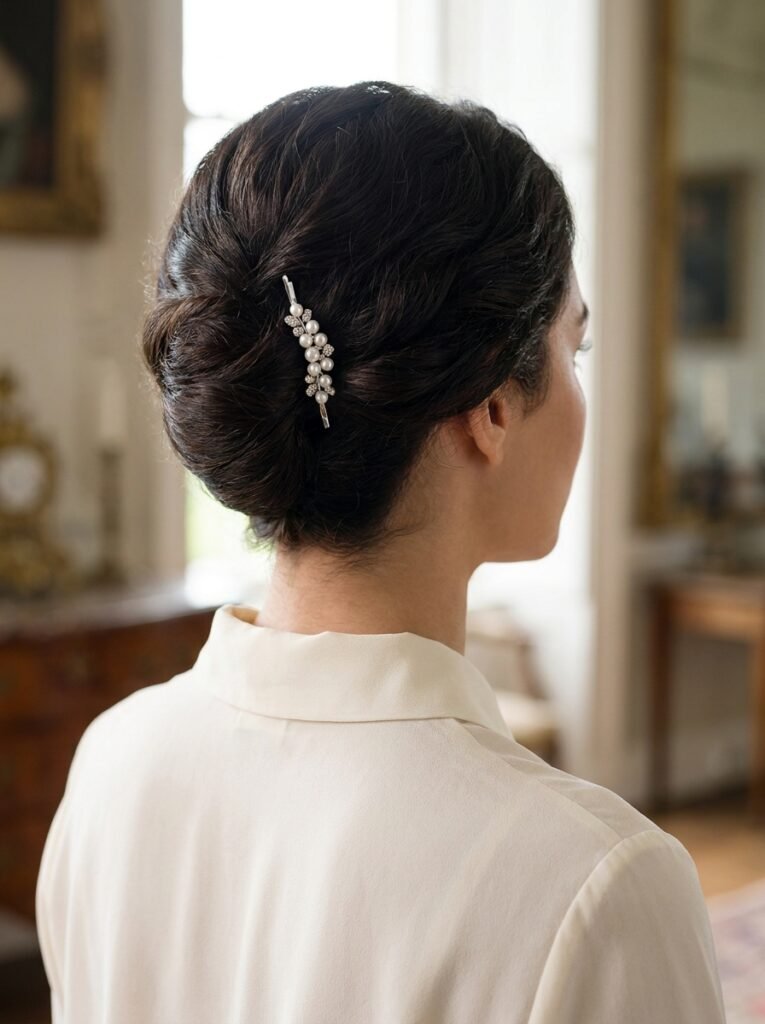
A French twist is a vertical roll, not a bun. Hair gathers at the nape and turns upward against the head. The fold that forms along the back is the entire structure.
Pins belong in that fold, and their direction decides everything. Each pin should enter through the outer edge of the roll and catch hair from the scalp underneath. Pins pushed straight into the roll grip only the roll. The whole twist then slides down as one piece.
Very long hair leaves a surplus at the top. That surplus tucks down into the hollow of the roll rather than fanning out above it. Six to eight pins usually suffice, spaced evenly up the seam.
2. A Loose and Romantic Low Bun
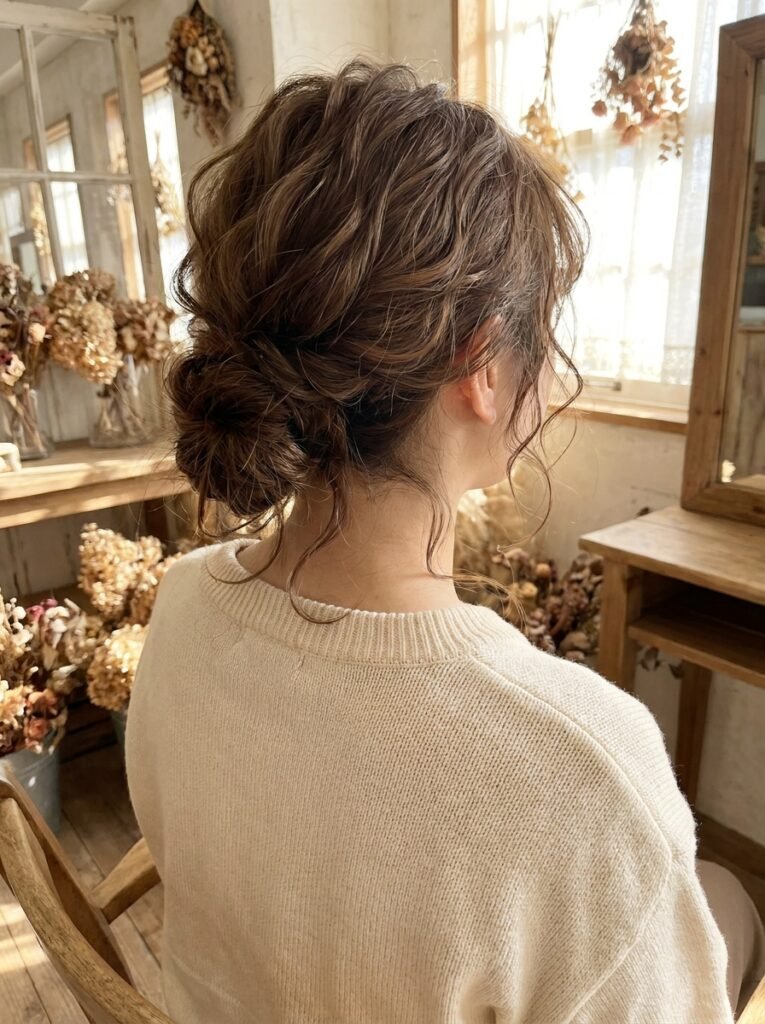
Weight is the enemy here. A low bun made from long hair carries real mass, and gravity works on it all day.
Two elastics beat one. The first gathers a low ponytail. The second goes around the finished bun and catches a little hair from the scalp beneath it. That second anchor point stops the bun drifting downward as the hours pass.
Softness comes from what happens before the pinning, not after. Pieces pulled loose at the temples first will sit naturally. Pieces yanked out at the end tend to look like escapees.
3. The Braided Crown
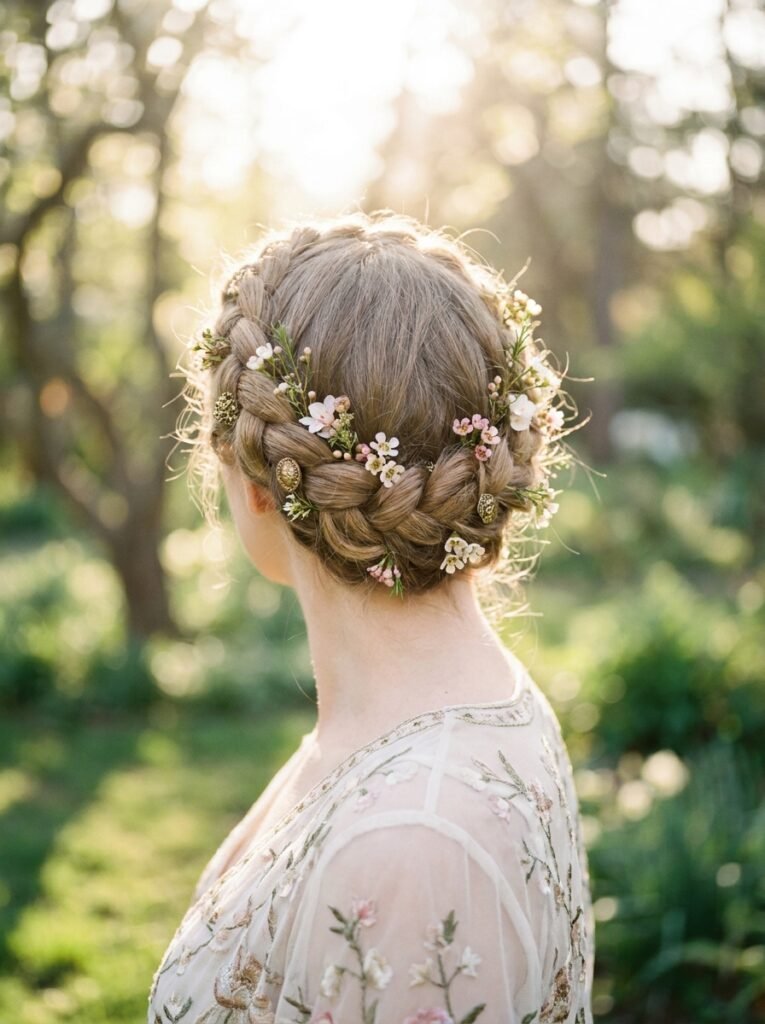
Two braids travel over the head and meet on the opposite side. Long hair complicates this in one specific way. The braids often run longer than the distance they need to cover.
Excess length tucks underneath the opposite braid rather than wrapping a second time. A double wrap builds a visible ridge across the crown. Tucking keeps the line clean.
Braid tension matters more than usual because these braids are load-bearing. A loose braid sags across the head within an hour. Braiding firmly and loosening only the outer loops afterwards gives volume without sacrificing the hold.
4. The Messy Top Knot
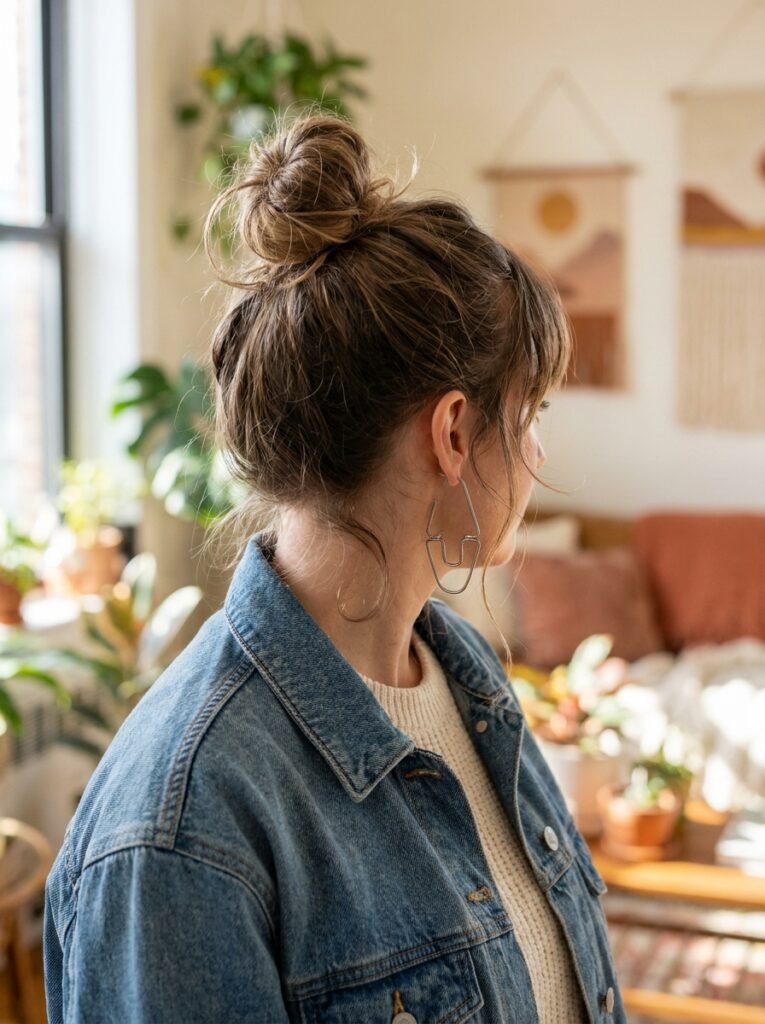
Long hair produces an enormous top knot. All that length wraps into one place, and the result can look top-heavy rather than casual.
Splitting the ponytail into two sections solves it. Each section wraps around the base separately, in opposite directions. The knot then sits wider and flatter instead of towering. It also distributes the weight, which matters over a long day.
Speed genuinely helps the look. Repeated tugging flattens the texture the style depends on. Quick versions of this and other fast styles appear in this guide to easy hairstyles under five minutes.
5. The Sleek High Ponytail
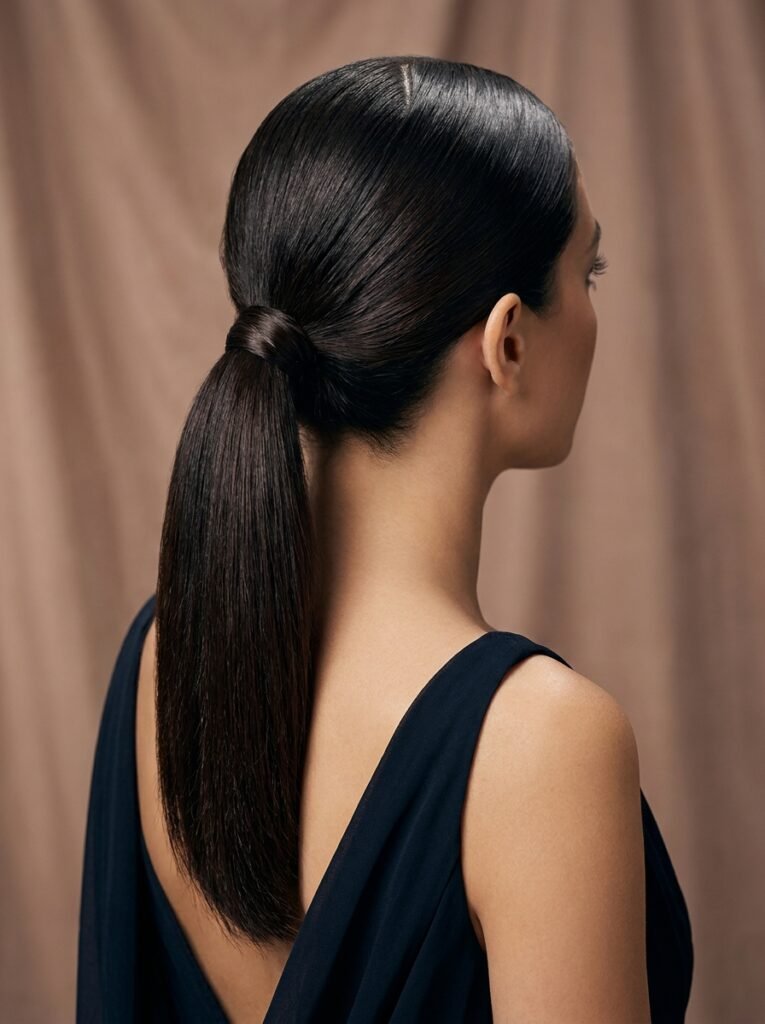
A high ponytail on long hair drops. The weight pulls the base downward within an hour, and the crisp lift disappears.
Two crossed pins fix it. They go into the hair directly beneath the elastic, angled upward, and prop the base from below. Salons use this constantly and almost nobody mentions it.
Tension deserves genuine caution at this length. Long hair is heavier, so it pulls harder on the roots than short hair does. The American Academy of Dermatology notes exactly this, advising shorter braids and locs because longer hair weighs more and pulls more. The same logic applies to a daily high ponytail. Any style that aches is already too tight.
6. A Knotted Half-Up Style
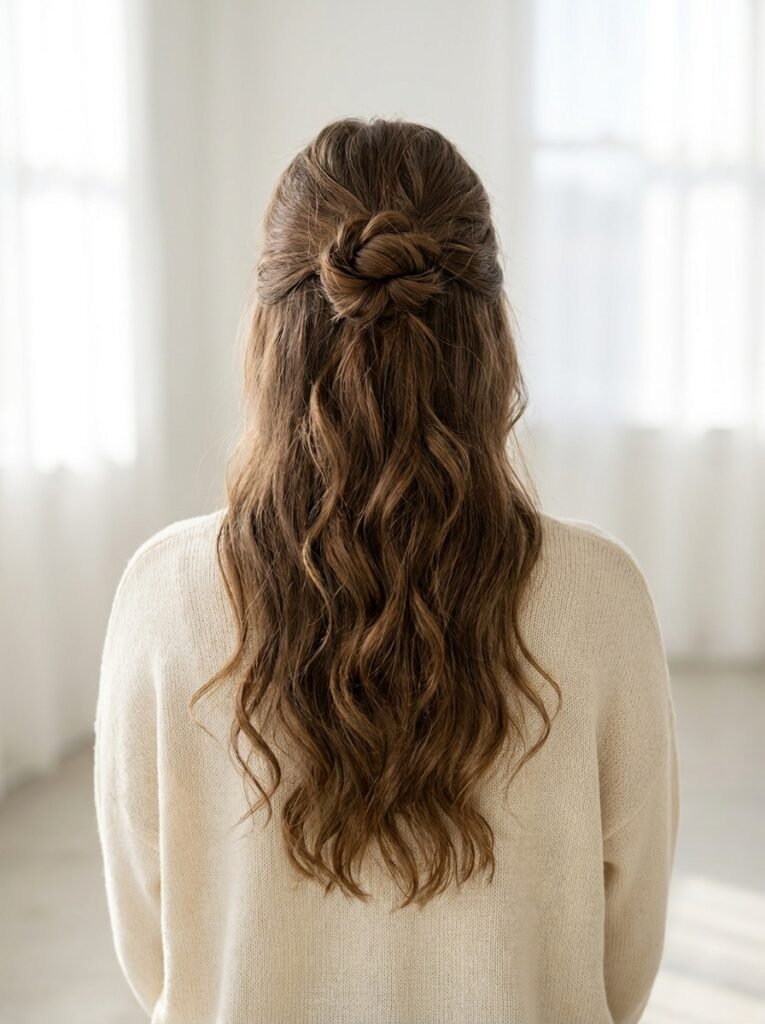
Knots in hair are not real knots. They hold by friction alone, and long smooth hair supplies very little of it. That is why this style unravels so often.
A small clear elastic under the knot removes the problem entirely. The knot then becomes decorative rather than structural. Nobody sees the elastic once the length falls over it.
Long hair also allows a second and third knot down the same two sections. Each one needs its own elastic. The stacked version reads as far more deliberate than a single loop.
7. The Bohemian Fishtail Braid Updo
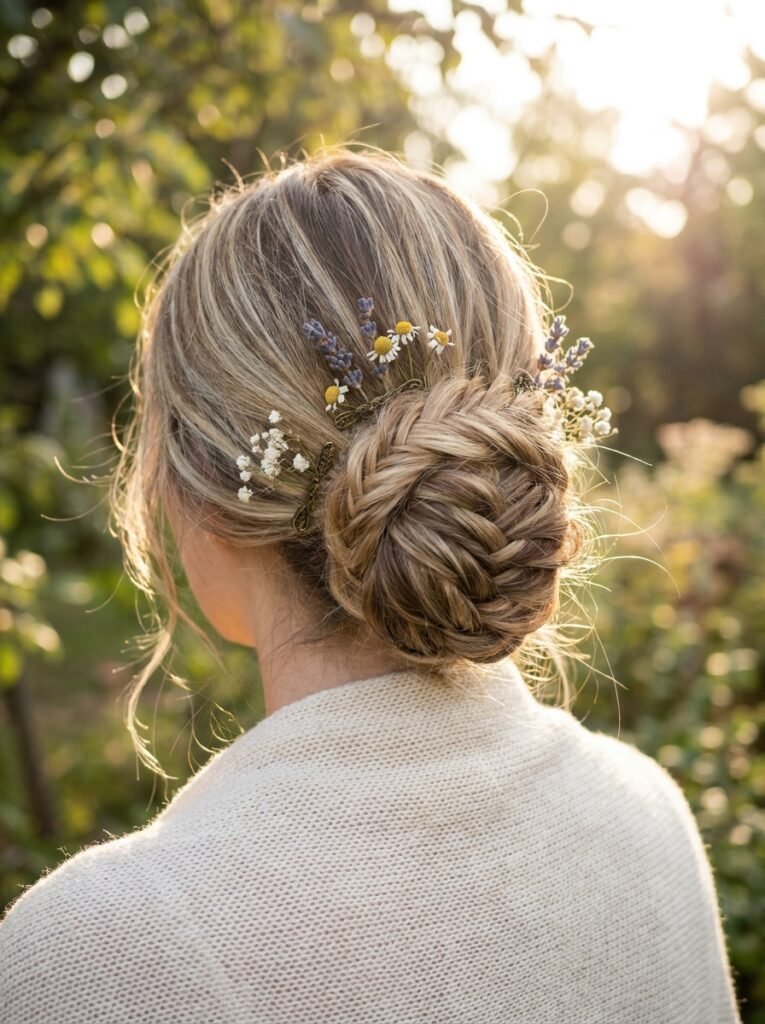
Coiling a fishtail into a bun costs length. A braid shortens the hair considerably, and coiling swallows more. Long hair is what makes this version work at all.
Widen the braid before coiling it, never after. Pulling at the loops once the bun sits in place drags the whole coil out of shape. Widening first also makes the finished bun look fuller for the same amount of hair.
The braid should start low, near the nape. A fishtail begun at the crown wraps too high and the bun ends up sitting above the hairline.
8. The Chignon
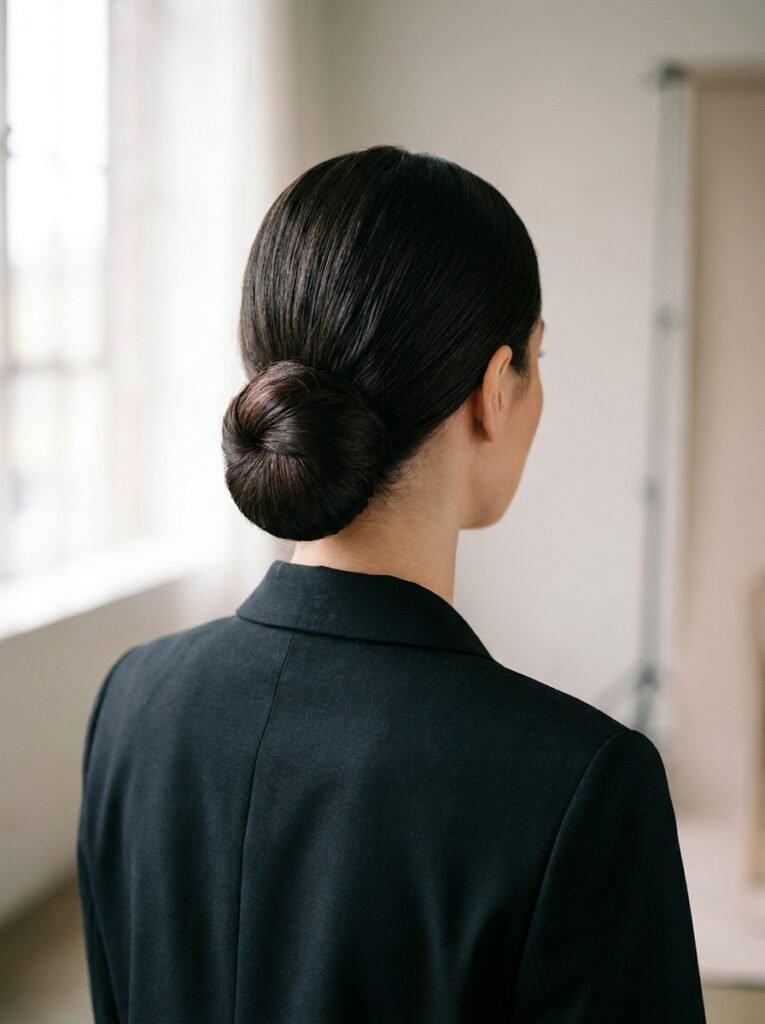
Surface separates a chignon from an ordinary bun. The shape is similar. The finish is not.
Every stroke of the brush should run in one direction before the hair gathers. Brushing back and forth lifts the cuticle and raises the fine hairs that ruin a smooth surface. A boar bristle brush lays those hairs down better than a plastic one.
Long hair gives the roll enough substance to shape properly. It also means the ends need somewhere to go. Tucking them into the centre of the roll keeps the outline unbroken, which is the whole point of the style.
9. The Double Dutch Braid Updo
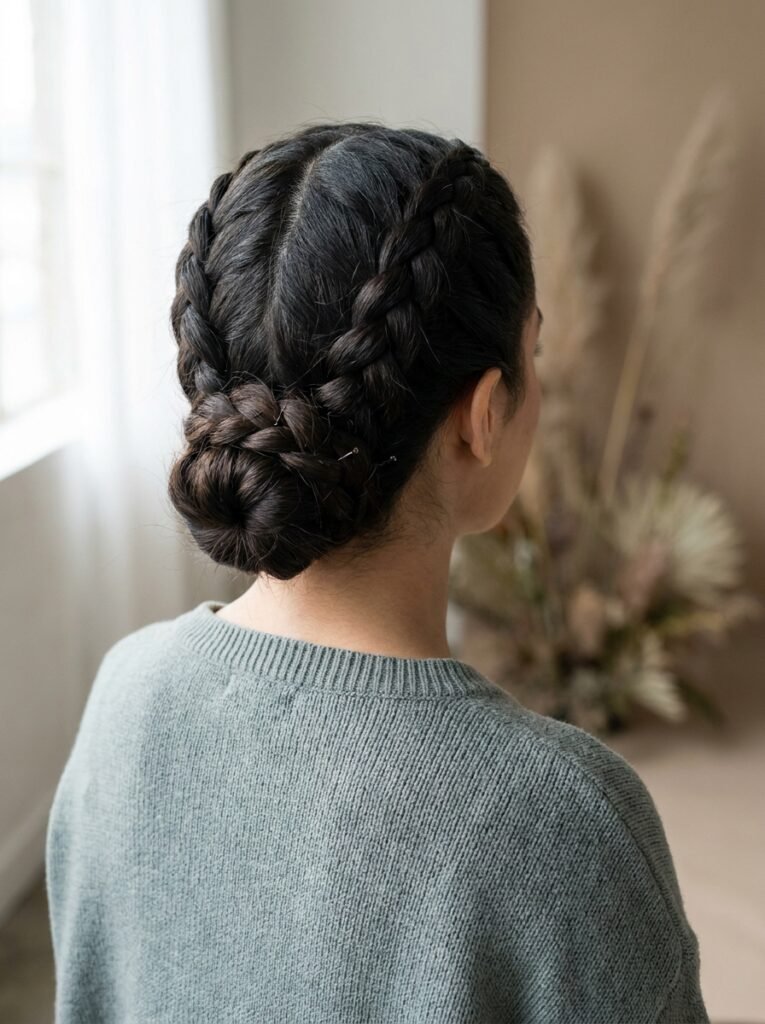
A Dutch braid crosses strands underneath rather than over. That single reversal lifts the braid onto the surface of the hair, where it stays visible after coiling.
The parting carries the result. A wandering centre part produces two braids of different thickness, and the finished coils never match. A comb tail drawn from forehead to nape takes ten seconds and prevents that.
This updo holds longer than almost any other on the list, because the braids stay put even as the coils loosen. Curly and textured hair suits it particularly well, and this guide to beautiful long curly hairstyles covers more options in that direction.
10. A Twisted Rope Braid Bun
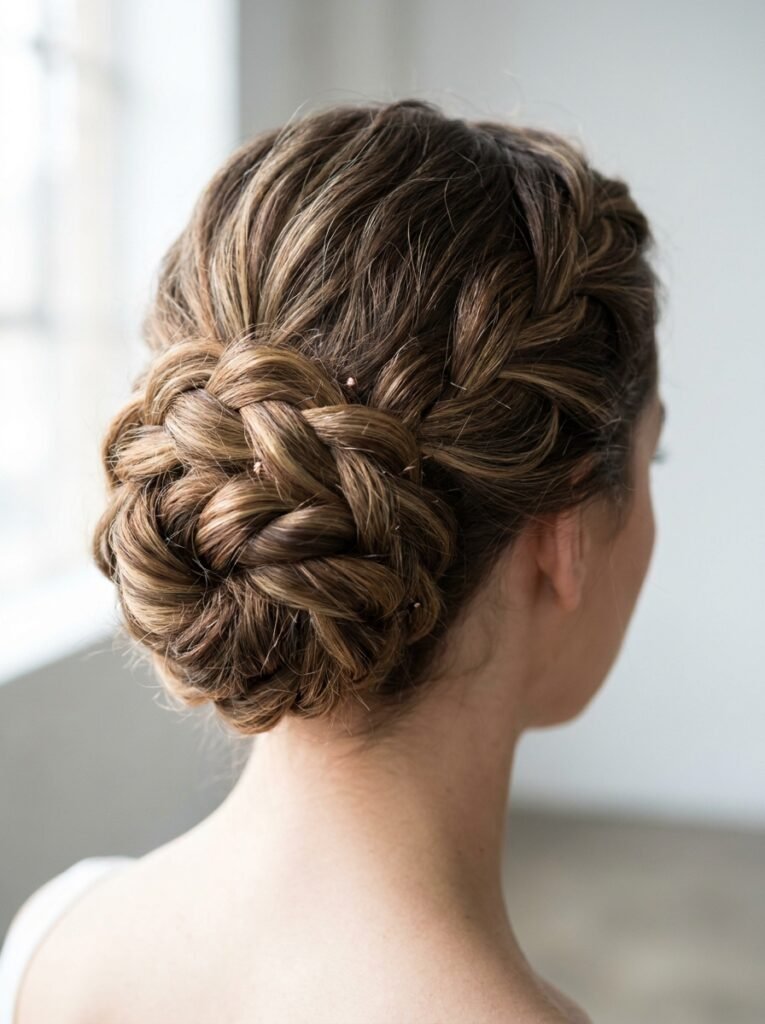
A rope braid uses two sections rather than three. It also shortens the hair by roughly a third, which long hair absorbs easily.
Section size decides whether the rope looks even. Two sections of different thickness produce a lopsided spiral, and no amount of coiling hides it. Splitting the ponytail with a comb rather than by feel keeps them equal.
Coiling direction matters at the end. Winding the rope around its base in the same direction as the original twist tightens the whole structure. Winding against it loosens the rope while the bun forms.
11. The Waterfall Braid Half-Up
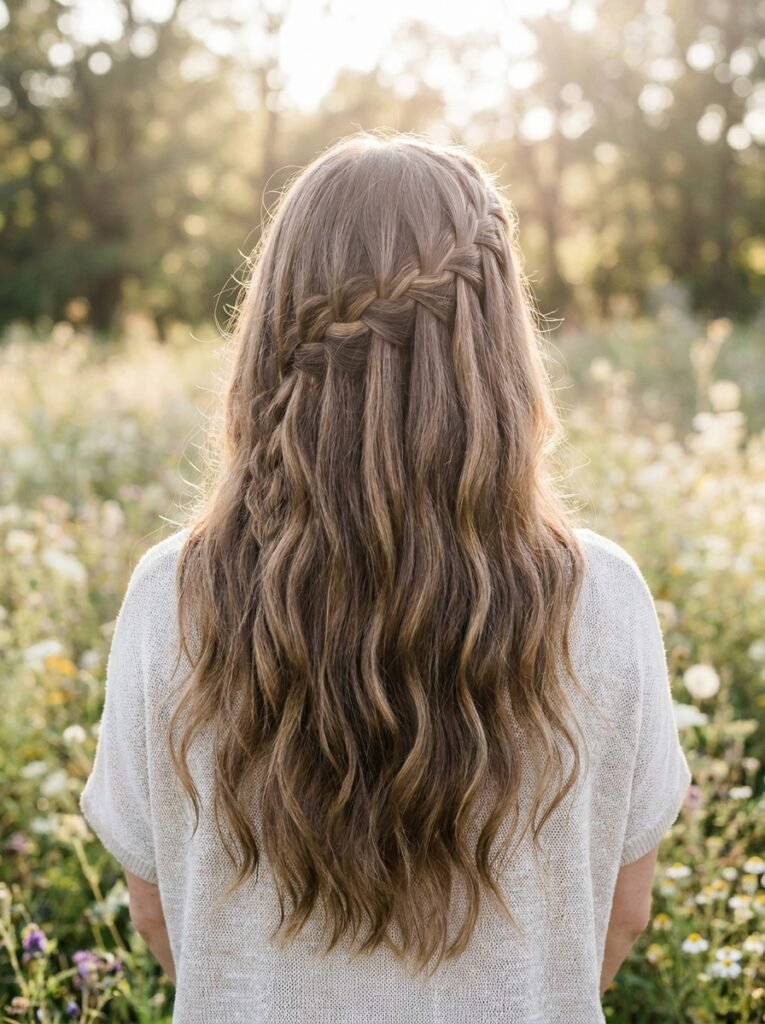
One rule governs the waterfall braid, and most failed attempts break it. Every strand dropped from the braid must be replaced by a fresh strand picked up from above.
Skip that replacement and the braid runs out of hair within a few crossings. The dropped strands are the cascade. The picked-up strands keep the braid alive long enough to reach the other side.
Long hair gives the dropped sections room to fall properly, which is why the effect reads best at this length. A slight wave underneath helps too, since poker-straight hair lets the dropped strands disappear into the mass below.
12. The Pinned Waves Updo
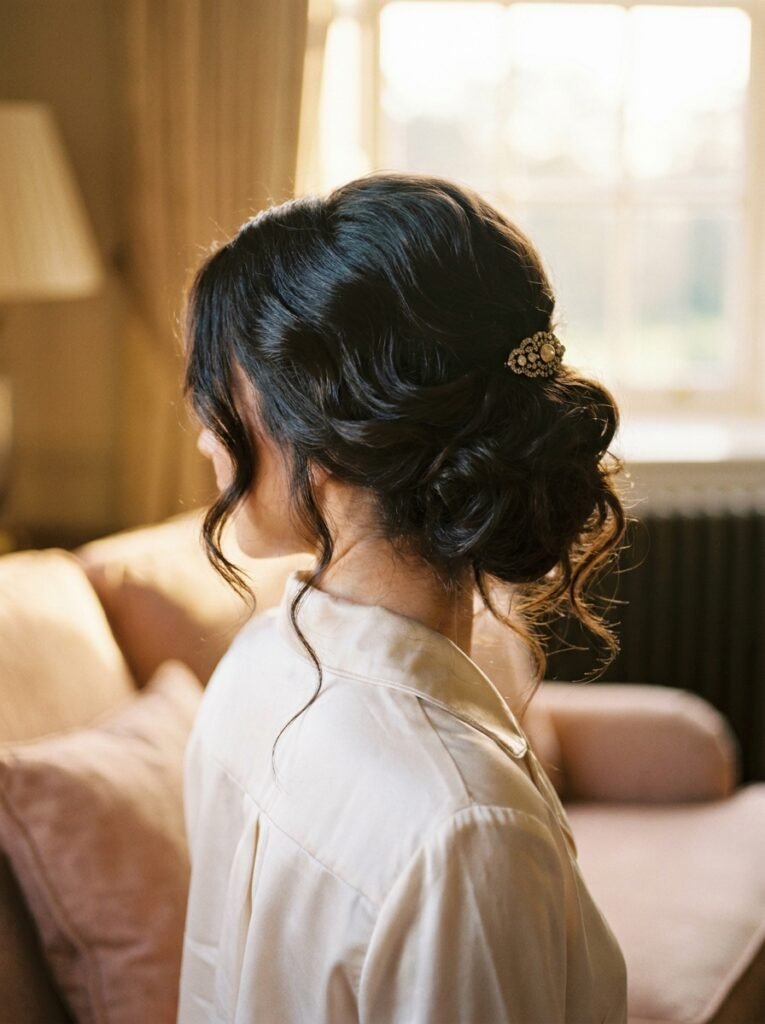
Curls on long hair drop faster than curls on short hair. The extra weight pulls the bend out. Curling tighter than the finished look requires builds that loss into the plan.
Cooling time is not optional. Each curl needs to set completely before anything touches it, and pinning a warm curl flattens it permanently. Clipping each one against the head while it cools protects the shape.
Hairspray goes on before the pinning, not after. Sprayed early, it gives the pins something to grip. Sprayed at the end, it only coats a structure that has already started to slip.
Final Thoughts
Nearly every style here comes back to the same two variables. One is weight, which long hair has in abundance. The other is anchoring, which means catching hair from the scalp rather than only from the style itself.
Those principles transfer. Pin direction works the same way in a French twist and a chignon. Twist direction governs ropes and buns alike. Learning two things improves a dozen styles at once.
Practice belongs on an ordinary afternoon rather than an hour before an event. Most of these techniques feel awkward twice and automatic by the fourth attempt.
Frequently Asked Questions
Which updos suit an uncooperative hair day? The messy top knot and the loose low bun both improve on second-day hair. A little natural oil gives the strands grip, and neither style depends on a smooth surface. Freshly washed long hair tends to slide out of both.
Why do updos slip out of long hair? Usually because the pins grip only the style and not the scalp. Every pin should catch a little hair growing from the head underneath. Crossing pairs of pins into an X also holds far better than sliding two in side by side.
Do these work on very thick hair? Most of them do, and several improve with it. The French twist, the rope bun, and the Dutch braid updo all need substance to hold their shape. Thick hair simply needs more pins, and a top knot benefits from splitting into two wraps.
Which style works best for a wedding? The chignon and the pinned waves updo both photograph cleanly, since neither relies on texture that flattens under a veil. Guests wanting something simpler can rely on the French twist, which reads as formal without competing with the bride.
Is heat necessary for any of these? Only the pinned waves updo. Every braided style, both buns, the knotted half-up, and the French twist rely on technique alone. Overnight braids or rollers can produce the waves without a hot tool.



One Comment