Chic Retro Hairstyles for Modern Women
Retro hair goes wrong in one specific way. It reads as costume, and the reason is almost always uniformity.
Original vintage styles were hard-set and highly regular, because that was the standard of the day. Salons produced identical waves on both sides, symmetrical rolls, and volume held rigid with lacquer. That regularity is what a modern eye reads as fancy dress.
Every chic retro hairstyle below comes in two parts. What the original technique actually did, and which piece of its regularity to break. Understanding the first makes the second obvious.
Classic Hollywood Waves
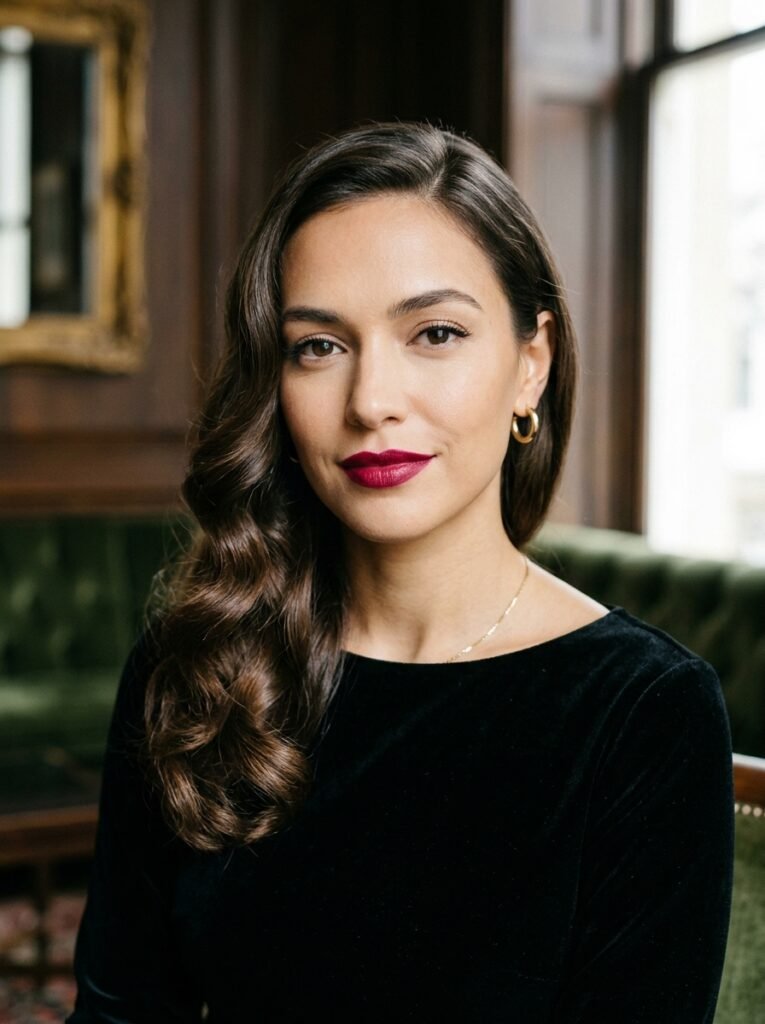
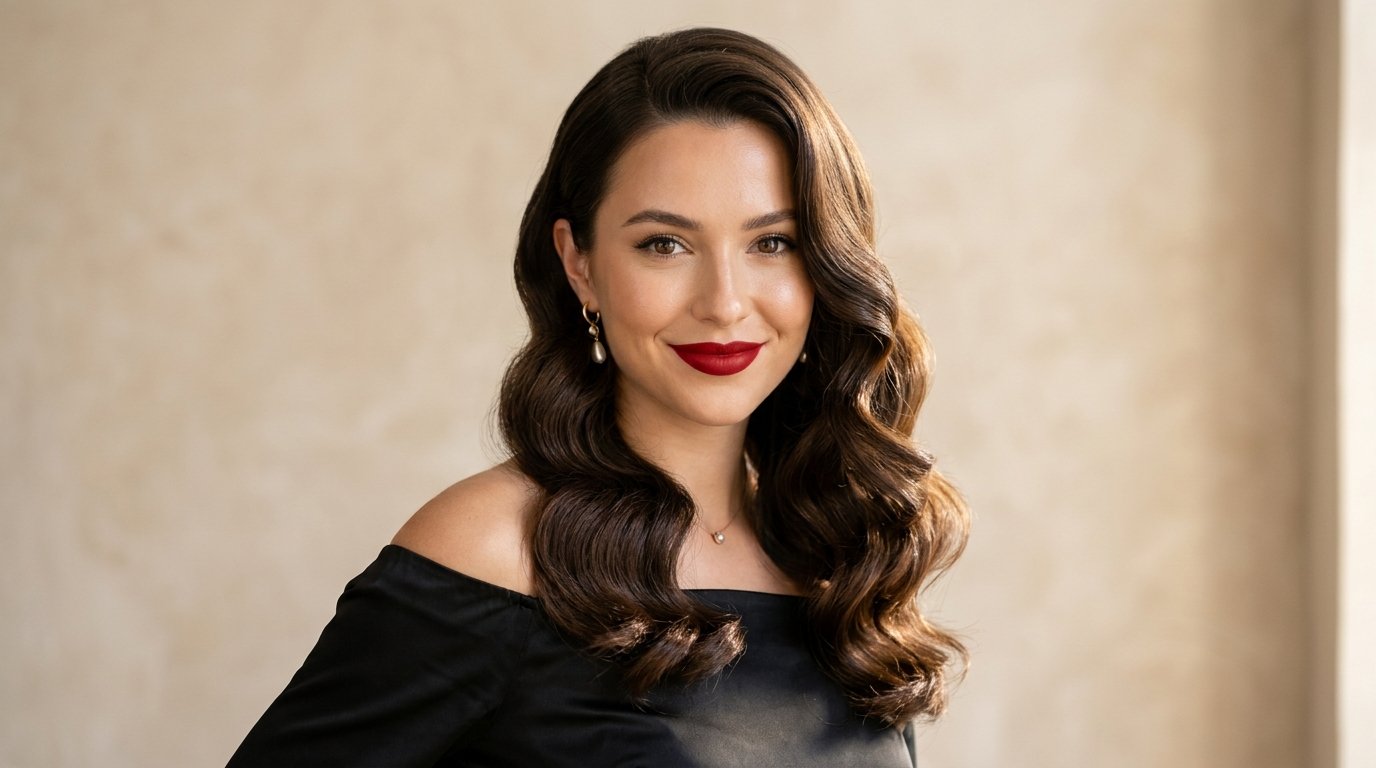
The original was a wet set, not a curling-iron job. Hair went onto rollers or pin curls with setting lotion and dried under a hood. A brush-out followed, then clamps moulded the waves into place.
That process produced matching S-waves running down both sides at identical intervals. The symmetry is the part that dates it.
Two changes modernise it. Sweeping the whole set to one side removes the mirrored effect. Leaving the last few centimetres straight, rather than curled under, softens the ends.
The Modern Victory Roll
Victory rolls were rarely built from hair alone. A rat sat inside the roll to give it size and hold the shape. That was a small pad of stuffed fabric or collected hair.
They also came in matched pairs, one either side, which is exactly the symmetry that reads as dress-up now.
One roll works better than two. A single roll on the heavier side of a deep parting keeps the reference and drops the costume. Leaving the rest of the hair down helps further.
Sixties Inspired Volume
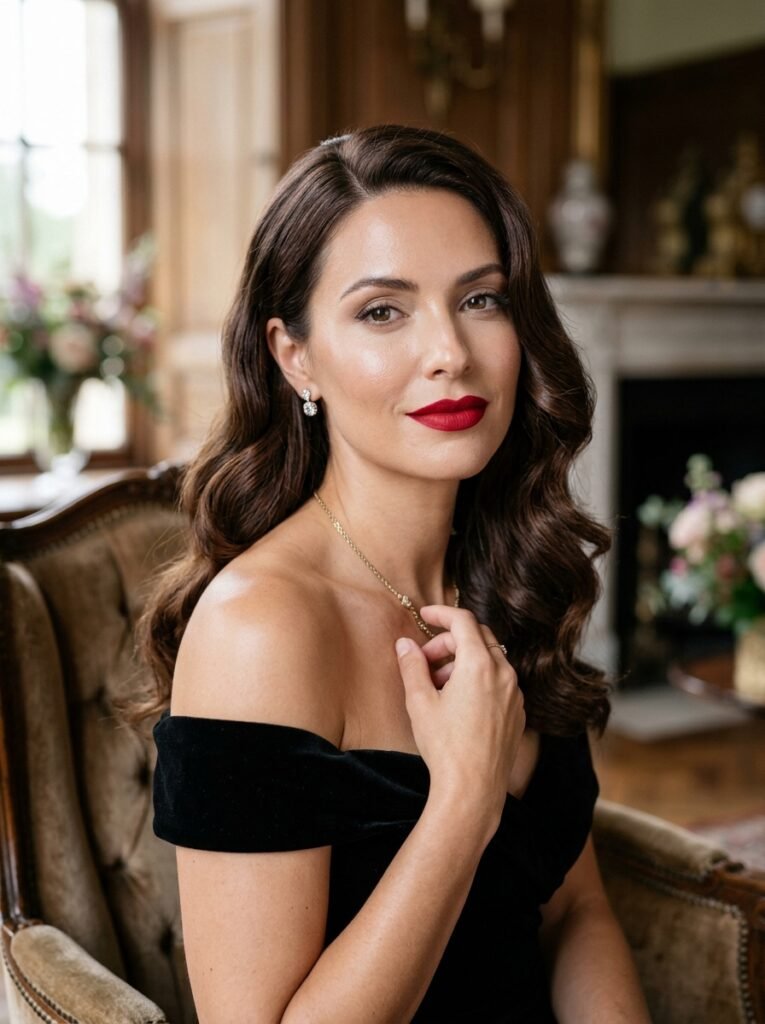
Bouffants were built from backcombing plus lacquer, and often a hairpiece underneath. The finish was rigid by design and survived a full evening because nothing in it moved.
The technique worth borrowing is which layer gets backcombed. Tease only the sections underneath, then smooth the top layer over them. That gives height with a surface that still looks like hair.
Backcombing the outer layer produces the opposite. It roughens the visible surface, which is the exact texture that dates a modern version instantly.
Retro Pin Curls
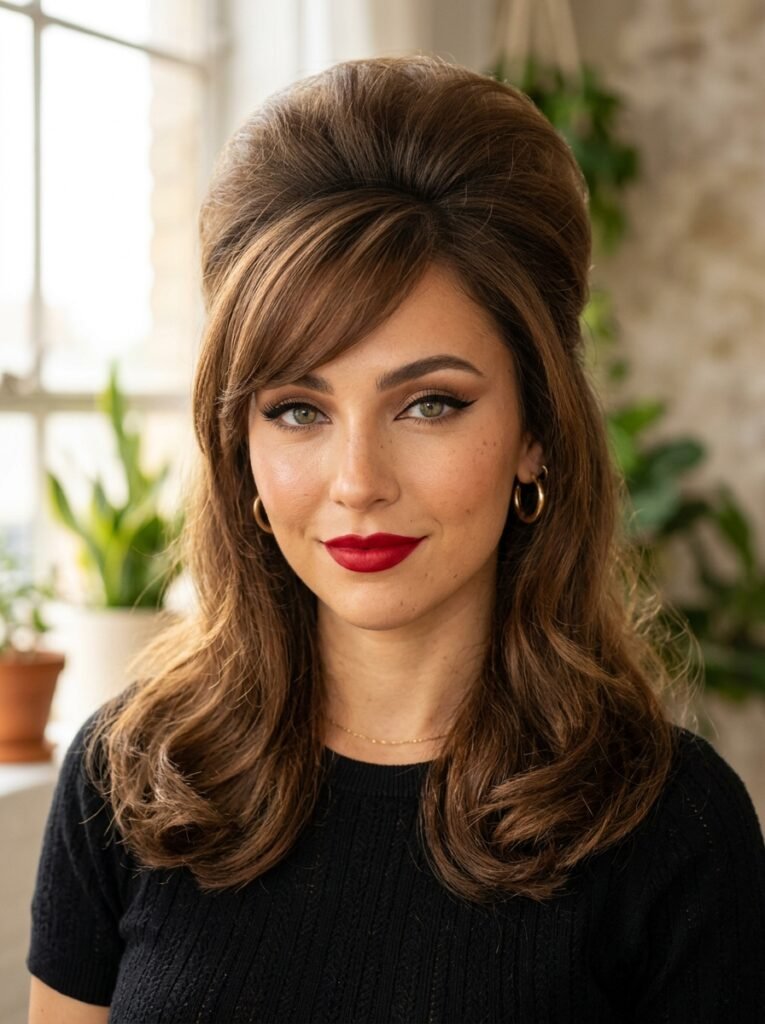
Pin curls are a set rather than a finished style, and skipping that distinction is why most attempts disappoint. Released from the pins, they come out as tight, separate corkscrews.
Brushing is the step that makes them vintage. A bristle brush merges the individual curls into continuous waves, which is what produced the soft look in old photographs.
Curl direction controls the result. All curls wound the same way give uniform waves. Alternating the direction row by row produces something looser and considerably more modern.
The Sleek Retro Bob
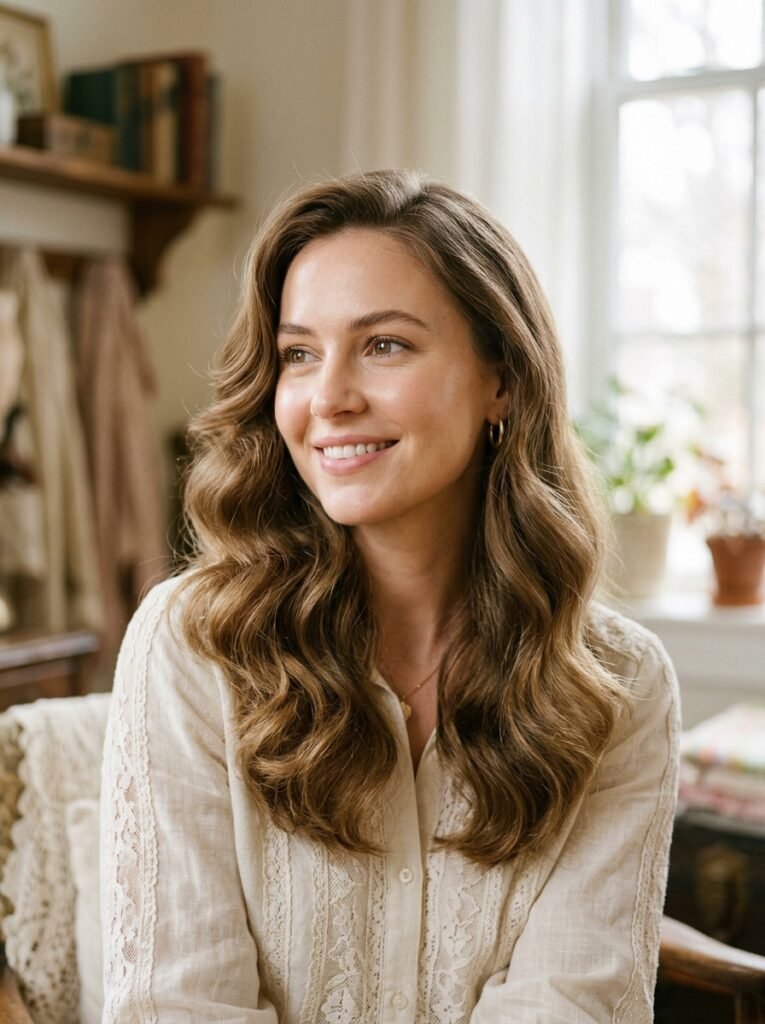
Shine carried this cut long before volume did. Brilliantines and pomades gave the twenties bob its polished surface, and that gloss is what the silhouette depends on.
A matte bob of the same shape simply reads as a modern bob. The finish, rather than the cut, is what places it in a decade.
Tucking one side behind the ear breaks the symmetry cheaply. It also stops the two sides framing the face identically. That identical framing is what makes a sleek bob look severe.
Seventies Soft Layers

The seventies flick was a mirrored effect. Face-framing pieces turned away on both sides at matching angles. That symmetry created the instantly recognisable frame.
Breaking the mirror updates it immediately. Flicking one side back and letting the other fall forward keeps the movement while removing the symmetry.
Parting depth does similar work. A deep side parting throws the whole shape off-centre. A centre parting restores exactly the balance that defined the era.
The Retro Headscarf
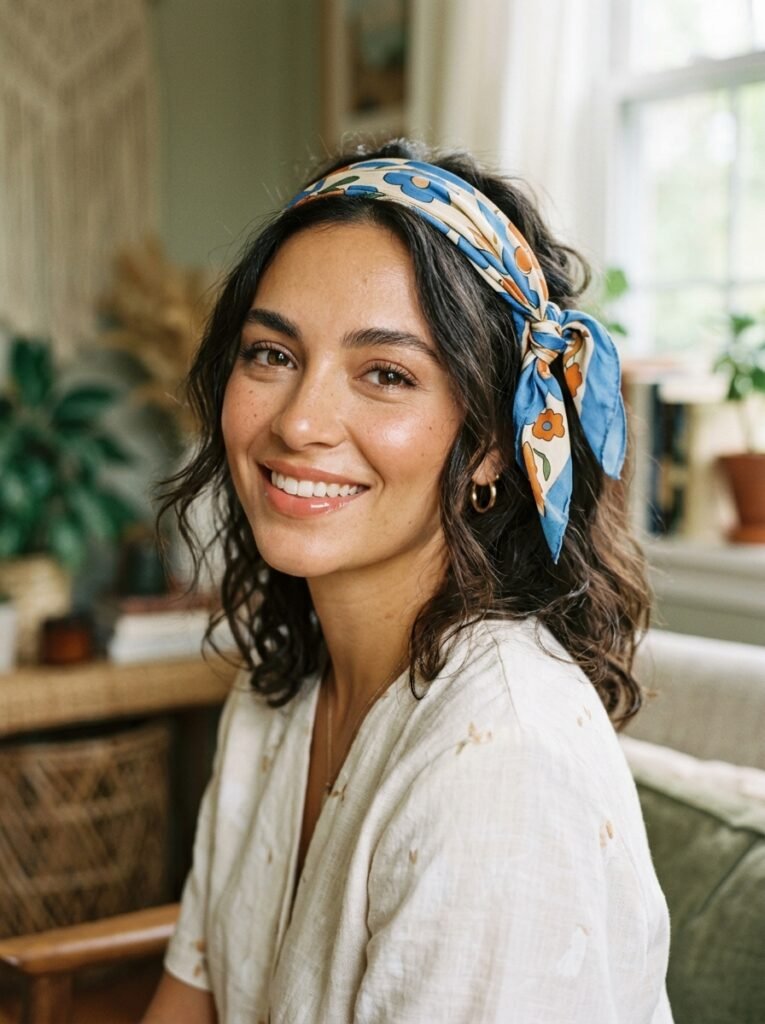
Fabric decides whether a scarf stays put. Cotton and rayon grip hair. Silk slides off within the hour unless something anchors it underneath.
Knot position does the styling. A knot sitting dead centre at the front reads as pin-up costume. The same scarf knotted off to one side, or tucked at the nape, reads as an accessory.
Scarves also served a practical purpose originally. Tied over a set overnight, they protected the waves, which is why they appear so often alongside the styles above.
Vintage Inspired Updos
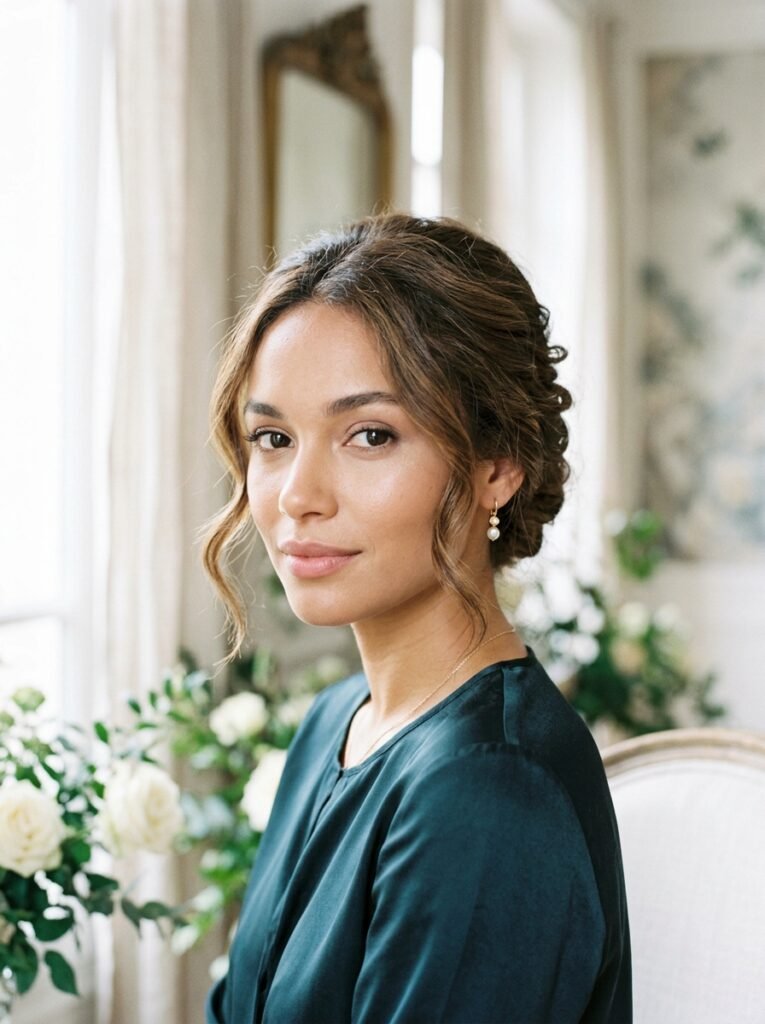
Vintage updos were frequently built over padding. Rolls and chignons of that era sat higher and rounder than hair alone allows. Something inside was holding the shape.
Modern versions use the hair’s own bulk, so they sit lower and softer. That difference is a feature rather than a shortfall.
Leaving pieces out completes the update. Vintage updos contained everything with nothing loose. A few strands at the nape or temples therefore signal the modern version. This guide to stunning updos for long hair covers the pinning in detail.
The Bardot Bombshell

The Bardot look runs on contrast. Volume sits at the crown while everything below stays deliberately undone. That gap between polished and messy is the whole effect.
Treating the lengths as carefully as the crown kills it. Curling the ends neatly turns the look into a straightforward bouffant, and the tension disappears.
A fringe changes where the volume starts. With one, the height can begin close to the hairline. Without one, it needs to start further back so the crown does not read as a bump on the forehead.
Retro Ponytails
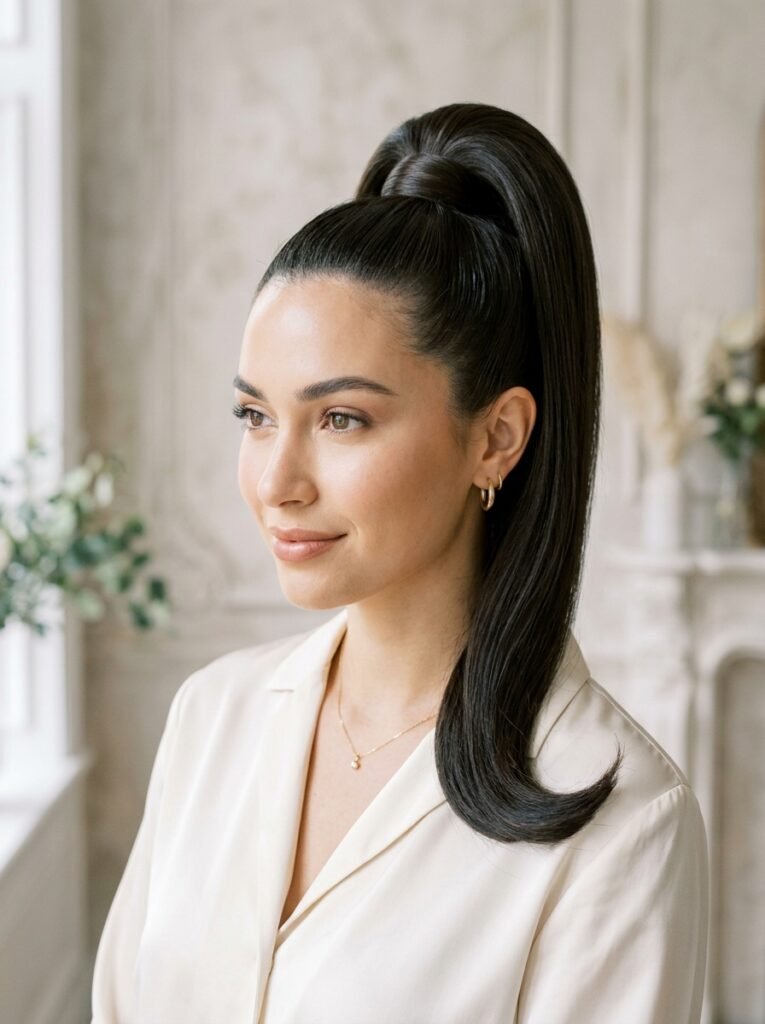
One detail separates a retro ponytail from a modern one, and it is not the height. The tail itself carried curl.
A smooth crown above a poker-straight tail reads as contemporary. The same ponytail with the length set in soft curls immediately places it decades earlier.
Crown lift came from teasing underneath, exactly as with the bouffant. Smoothing the top layer over that tease is what keeps the finish glossy rather than rough.
Soft Finger Waves
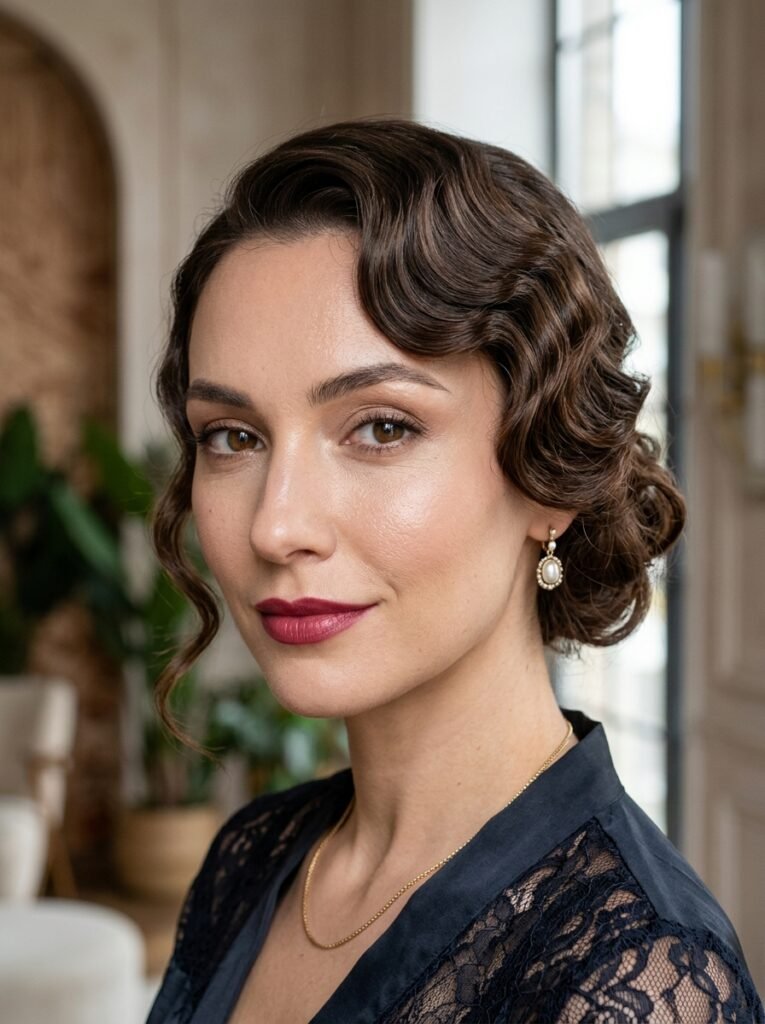
Finger waves involve no heat at all, which surprises people. A comb and the fingers mould the waves into wet hair. Nothing then touches it until it dries.
They also differ from the Marcel wave, despite looking similar. Denver Public Library’s archive draws the line clearly. Finger waving shapes dampened hair with the fingers and a comb, giving a softer, looser wave than the Marcel iron. The Marcel used heated tongs; finger waving used lotion and patience.
Hair texture sets the limit here. Fine, slippery hair struggles to hold a ridge, while coarser or slightly textured hair grips readily. Confining the waves to the hairline gives the reference without committing the whole head.
Tips for Modern Retro Styling
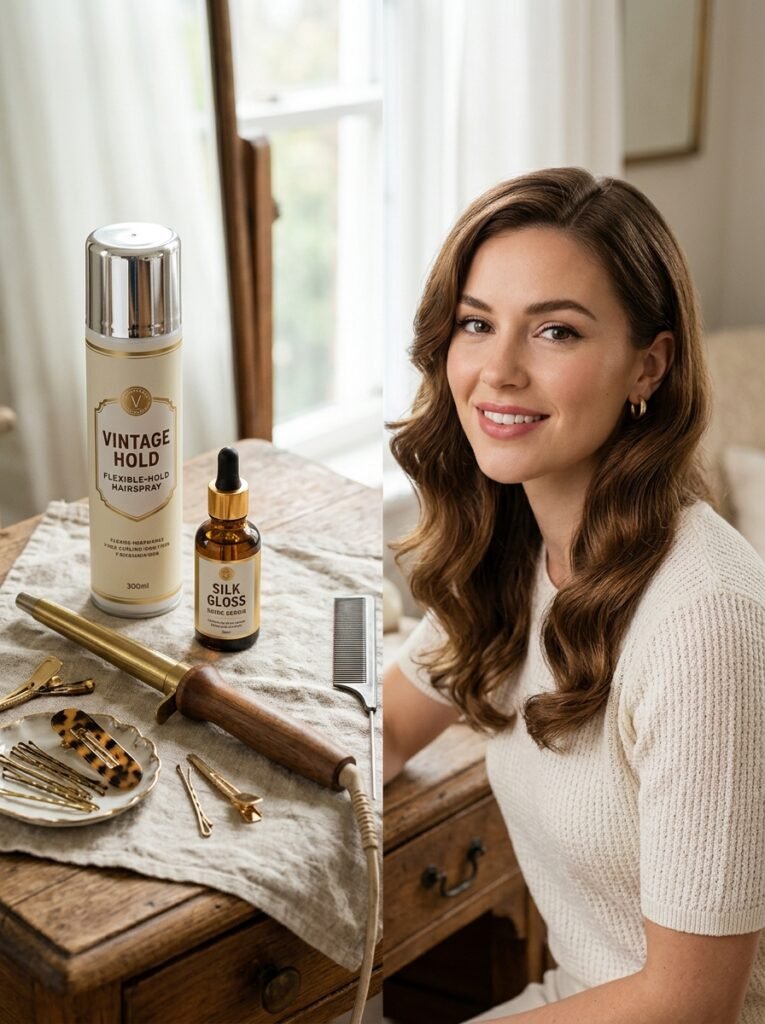
One rule covers all twelve. Find the symmetry in the original and break it. One roll instead of two, waves on one side, a parting off-centre, one ear tucked.
Hold level does the rest. Vintage sets used lacquer that dried hard and immobile, and that rigidity is half of what reads as costume. Flexible hold keeps the shape while letting the hair move.
Setting lotion still earns its place for the wet-set styles. Pin curls and finger waves both need something holding the shape while it dries. Modern gel does the same job the old lotions did.
Final Thoughts
Vintage hair was not a style so much as a process. Wet sets, hood dryers, weekly salon visits, and hair washed far less often than it is now. Those conditions produced the regularity that defines the look.
None of those conditions apply today, which is why a faithful recreation reads as fancy dress. The techniques still work; the standard of finish is what changed.
So the useful approach to any chic retro hairstyle is to borrow the technique and abandon the uniformity. Set the curls, then brush them out further than feels right. Build the volume, then let one side fall.
Frequently Asked Questions
What makes a hairstyle look retro?
Regularity, mostly. Vintage sets produced matching waves, symmetrical rolls, and rigid volume. Salons of the period worked to that standard. Those patterns are what the eye recognises as a decade.
How do I make retro hair look modern?
Break the symmetry. One victory roll rather than a pair, waves swept to one side, a deep parting instead of a centre one. Softer hold helps too, since immobile hair is the other half of the costume effect.
Which retro hairstyle is easiest to try?
A headscarf, provided the fabric grips. Cotton and rayon stay put where silk slides. Knotting it off-centre or at the nape reads as an accessory rather than a costume.
Do retro hairstyles work for everyday wear?
Several do. Brushed-out pin curls, a tucked sleek bob, and crown volume with undone lengths all suit ordinary days. The elaborate sets belong to occasions, largely because of the drying time they need.
What products help with retro styling?
Setting lotion or gel for anything wet-set. A bristle brush for merging pin curls into waves, and a flexible-hold spray to finish. A shine product matters for the bob, since gloss is what places that cut in its era.