Romantic Wedding Dress Ideas for the Perfect Bride
Behaviour defines a romantic gown more than shape does. Soft fabric moves, sheer fabric glows, and light passes through layers instead of bouncing off them. Most romantic wedding dress ideas come down to material behaviour. How it looks in daylight, in a breeze, and after four hours of sitting down.
1. Why Romantic Styles Never Go Out of Fashion
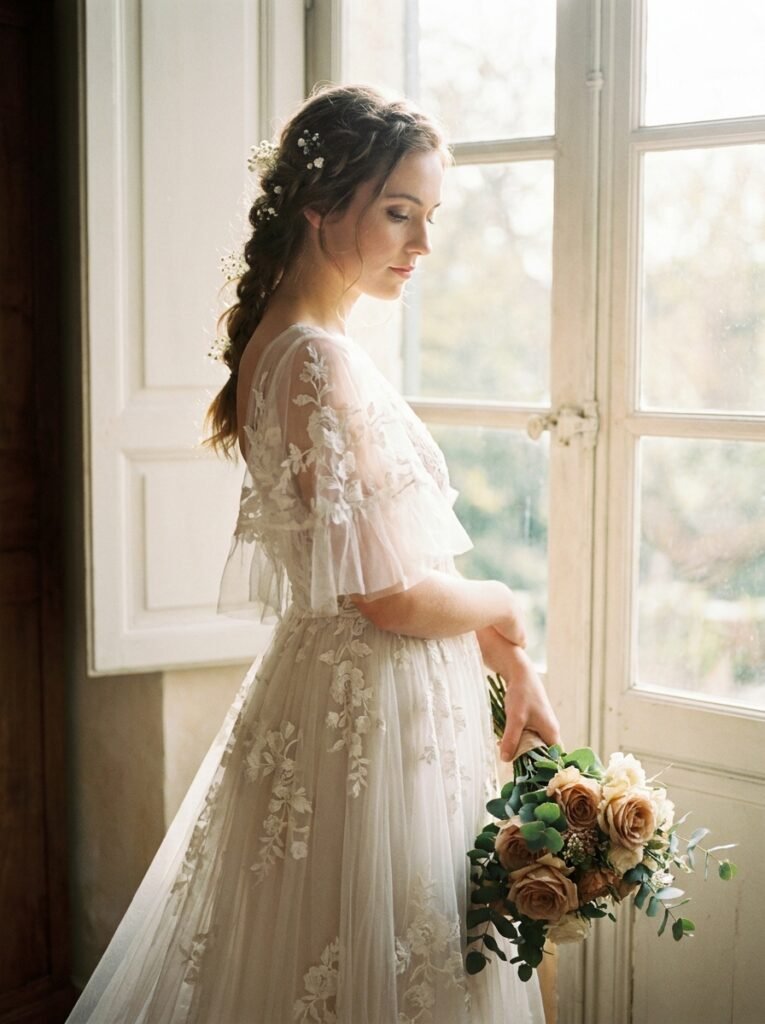
Structure is where fashion dates. Shoulder width, waist height, and skirt volume are the details that pin a photograph to a decade.
Soft drape carries fewer of those markers. A gown shaped by how fabric falls has less to go out of date. Nothing holds it out, so nothing dates it.
That is the practical case for romantic styling. It photographs well across decades because there is less era-specific engineering in it.
2. The Magic of Lace
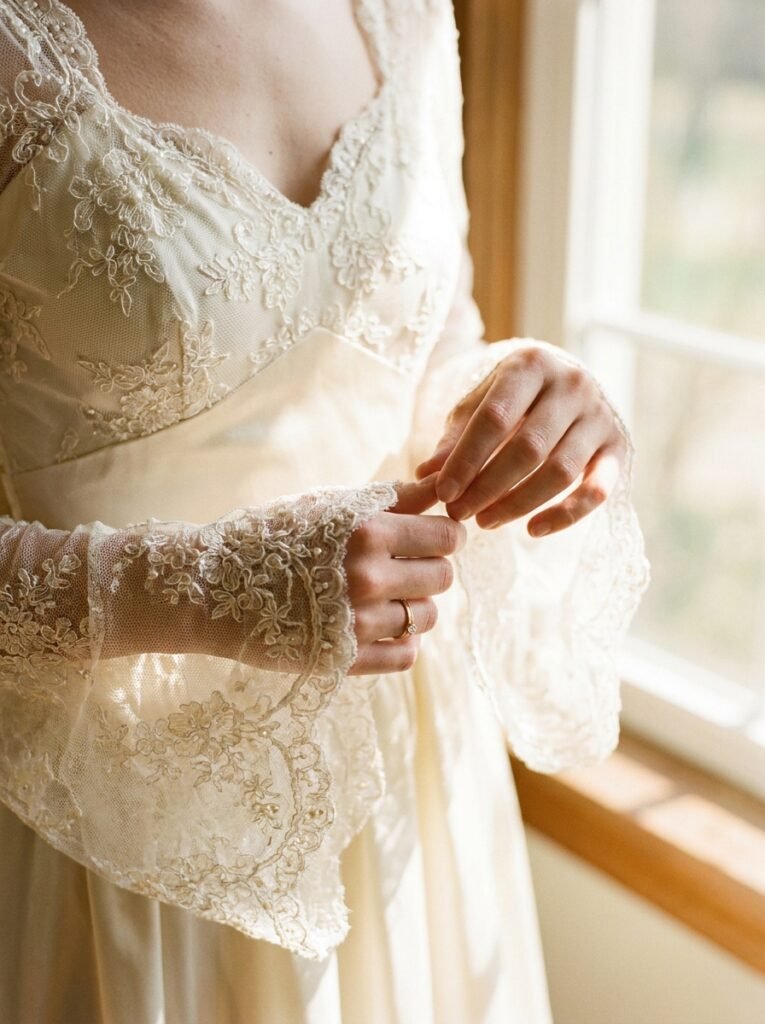
What sits behind lace changes it more than the lace itself does. The same panel reads three different ways over three different linings.
Nude lining makes the pattern appear to sit directly on skin. A matching ivory lining produces a tonal, textured effect. A contrasting lining turns the motifs graphic and bold.
Lace also snags. Rings, bracelets, and cufflinks catch the open ground. Nobody can mend a pulled thread invisibly on the day. Worth knowing before the receiving line.
3. Flowing Silhouettes That Move Like a Dream
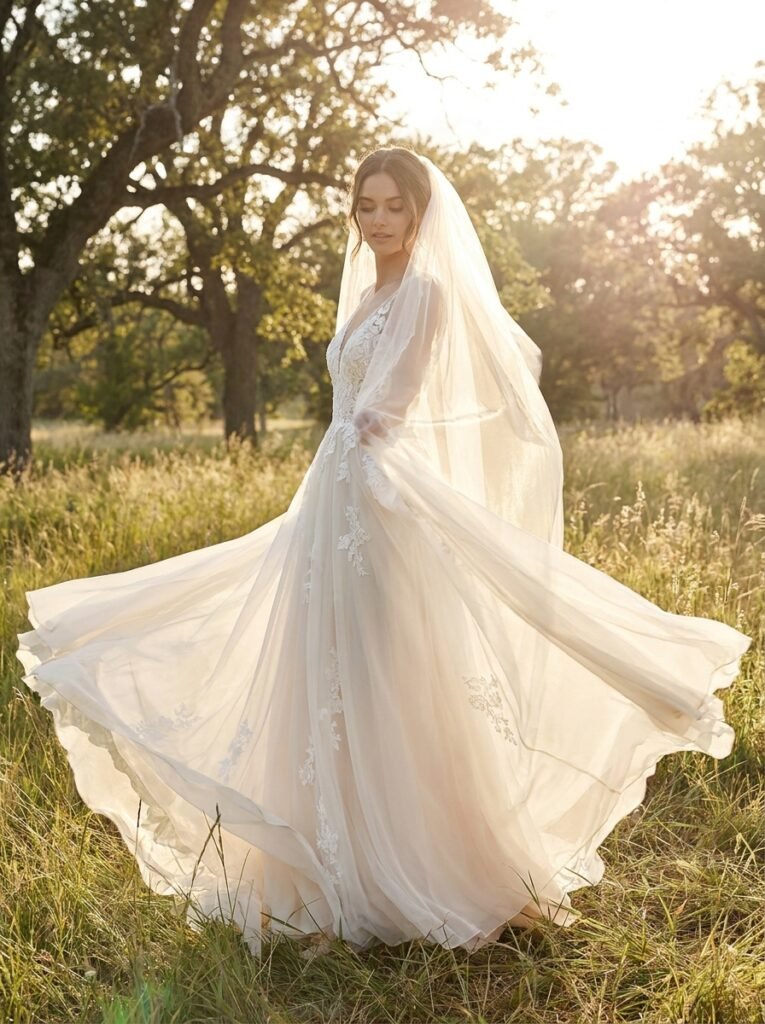
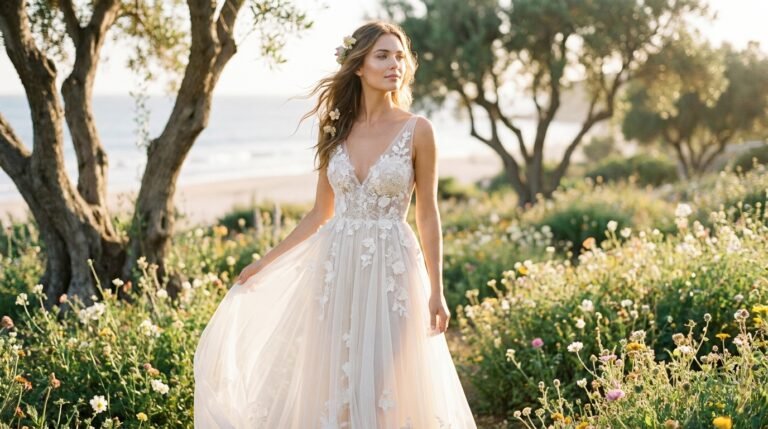
Flow and float are two different behaviours, and fabric weight decides which one a gown does. Light chiffon lifts at the slightest breeze. Heavier crepe swings in a slower arc.
Outdoor ceremonies expose the difference immediately. Very light fabric presses against the body in wind. That is the opposite of the intended effect.
A weighted hem solves it without changing the gown. Small weights sewn into the hem allowance keep a light skirt hanging properly outdoors. Most seamstresses add them on request.
4. Off-the-Shoulder Necklines for a Soft, Feminine Look
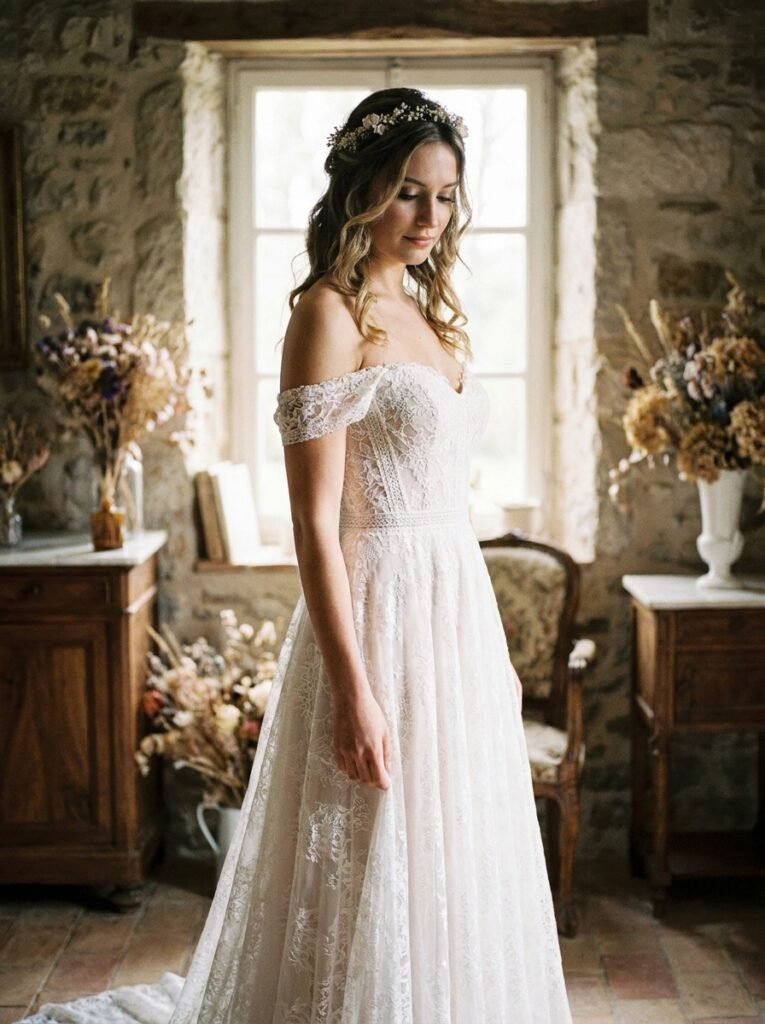
Band width and placement decide how much movement this neckline allows. A narrow band sitting high on the arm restricts far less than a wide one placed lower.
Testing it in the fitting room takes seconds. Raise both arms fully, then hug someone. That reveals whether the band holds or slides, and whether the shoulders move at all.
This neckline also puts the back on show. Guests view the entire ceremony from behind, so the back detail matters more here than with almost any other neckline. Structural questions like this appear in more depth in this guide to timeless wedding dress styles.
5. Tulle Skirts That Make You Feel Like You Are Floating
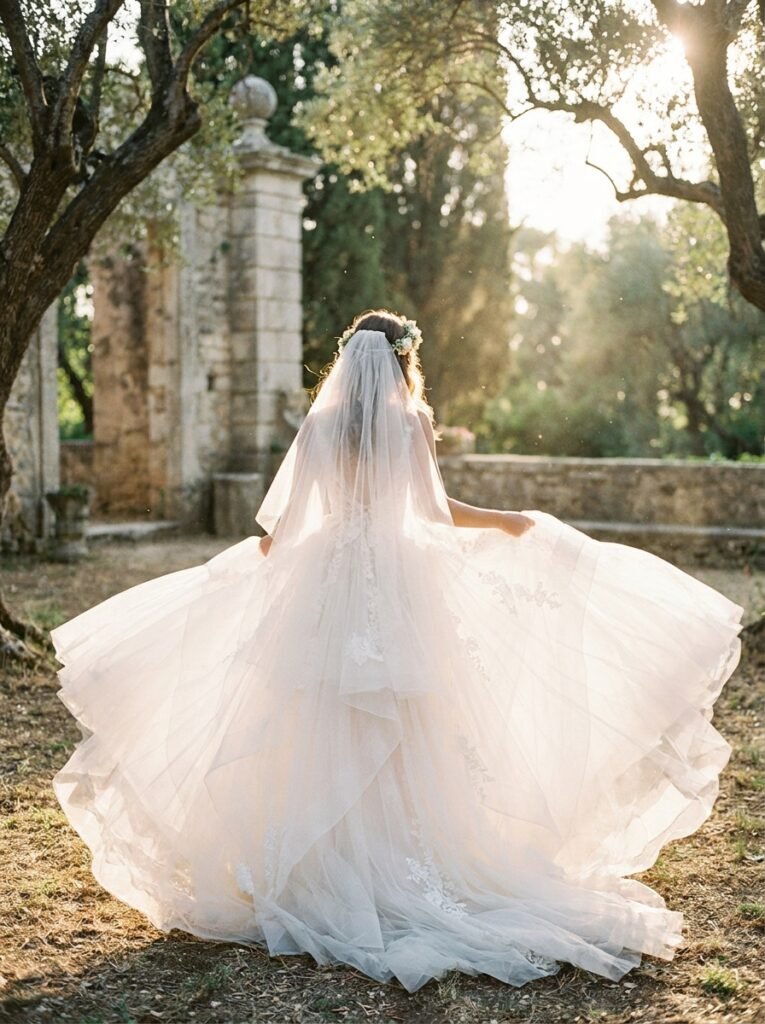
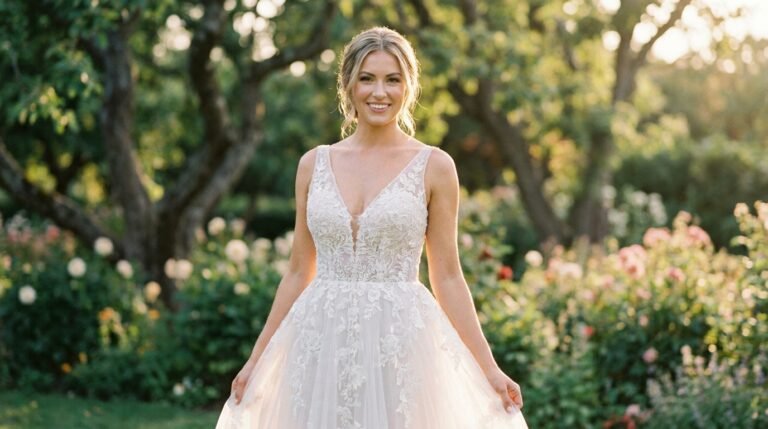
Tulle is a category rather than a single fabric. Nylon tulle holds a crisp shape but scratches. Silk tulle drapes softly and costs considerably more. Illusion tulle is the fine, near-invisible version used for sleeves and necklines.
Volume comes from layer count rather than from stiffness. Many soft layers give a cloud. Fewer stiff layers give a shape that stands away from the body and rustles.
Snagging is the practical caution. Tulle pulls easily on rough surfaces, jewellery, and chair edges, and a pulled thread shows. A smooth lining underneath also stops the top layers clinging to tights or skin.
6. Corset Bodices and Their Undeniable Allure
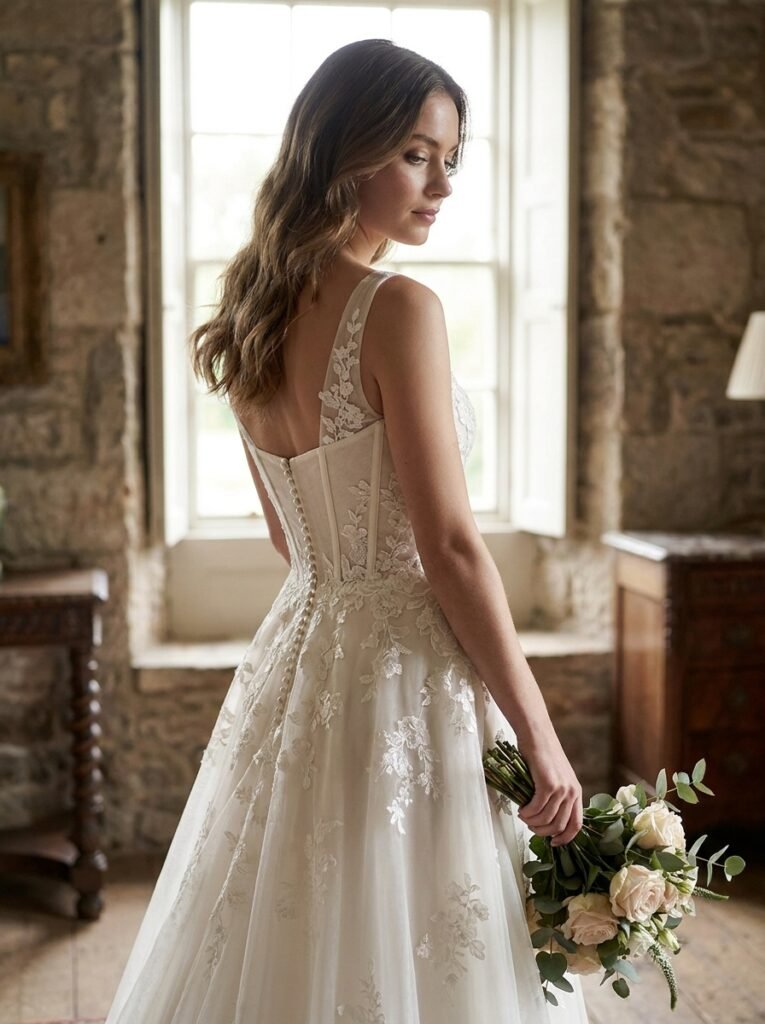
The fastening is the real decision among romantic wedding dress ideas involving a corset. A laced back adjusts on the day. A zip does not.
That flexibility matters more than it sounds. Heat, nerves, a large meal, and simple bloating all change measurements over a fourteen-hour day, and lacing absorbs the difference.
A modesty panel belongs behind the lacing. It is a strip of fabric sitting between the ribbon and the skin. Without one, the gap opens whenever the lacing loosens.
7. Floral Embellishments That Add Life to Your Gown
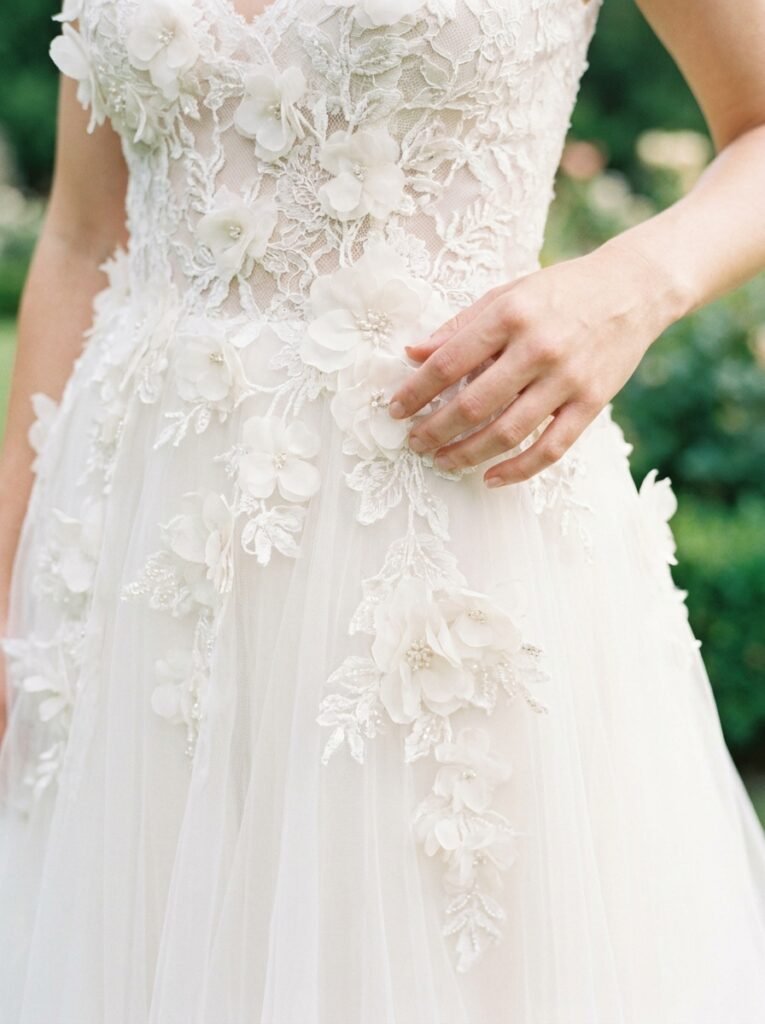
Someone attaches three-dimensional appliqués one at a time by hand. That labour explains most of the price difference between a floral gown and a plain one in the same fabric.
Placement then decides whether they survive the day. Blooms across the seat get crushed flat the first time the bride sits down, and they do not recover.
Flat embroidery avoids the problem entirely. It gives the same garden reference, sits smooth under a seatbelt or a chair, and costs less to produce.
8. Dreamy Sleeve Styles to Consider
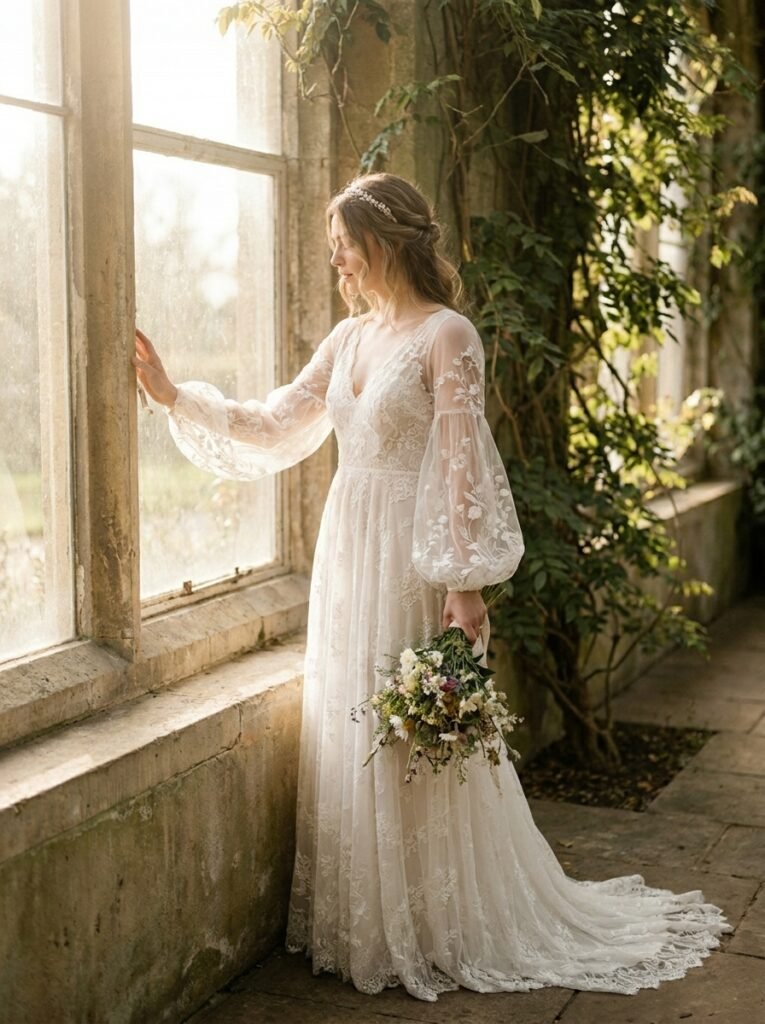
Sleeves restrict arm movement more than any other element, and the armhole is where that happens. A high, tight armhole actually allows more lift than a low, loose one.
Bishop sleeves bring their own logistics. All that volume gathers at the wrist. It trails through food, catches on chair arms, and needs pushing back all evening.
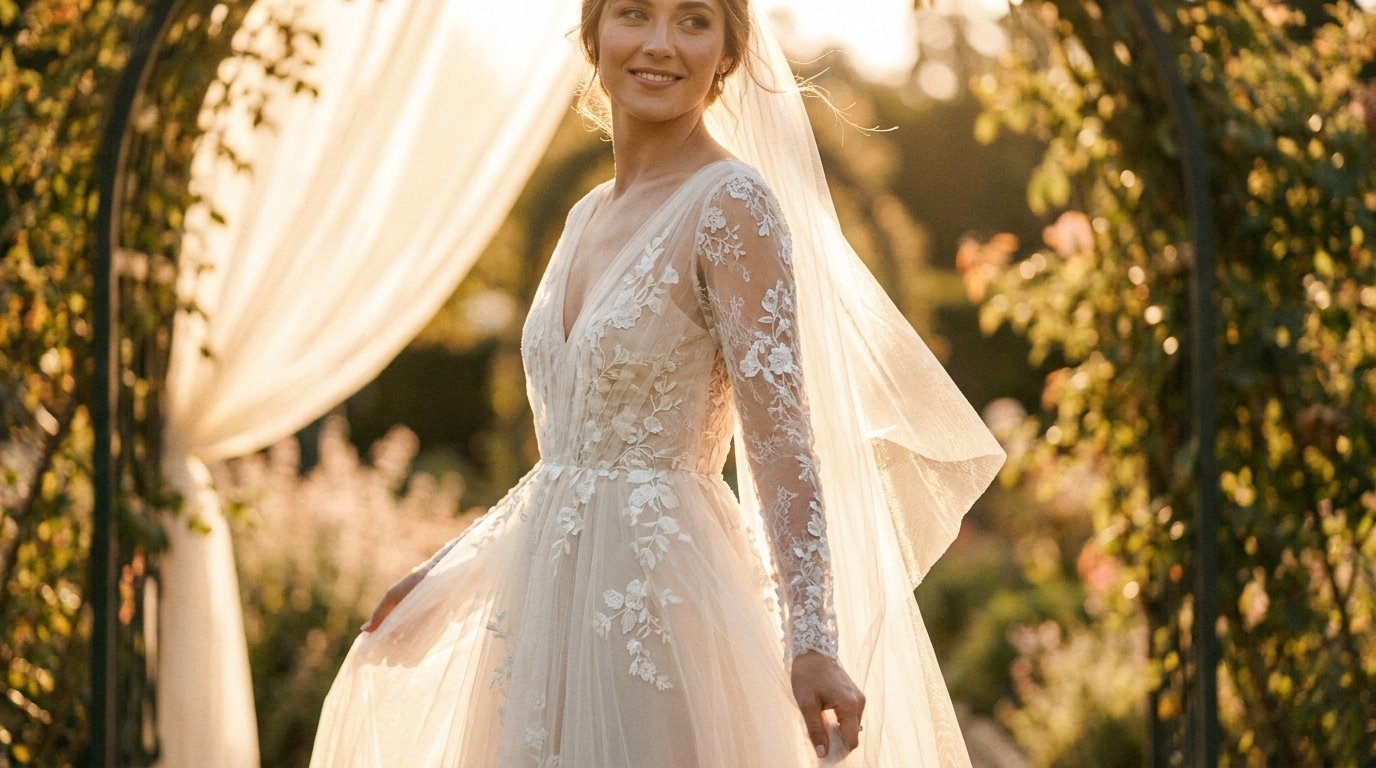
Detachable sleeves solve the split neatly. Long sheer sleeves for the ceremony, removed before dinner, give two looks from one gown without a second dress.
9. The Beauty of a Long, Dramatic Train
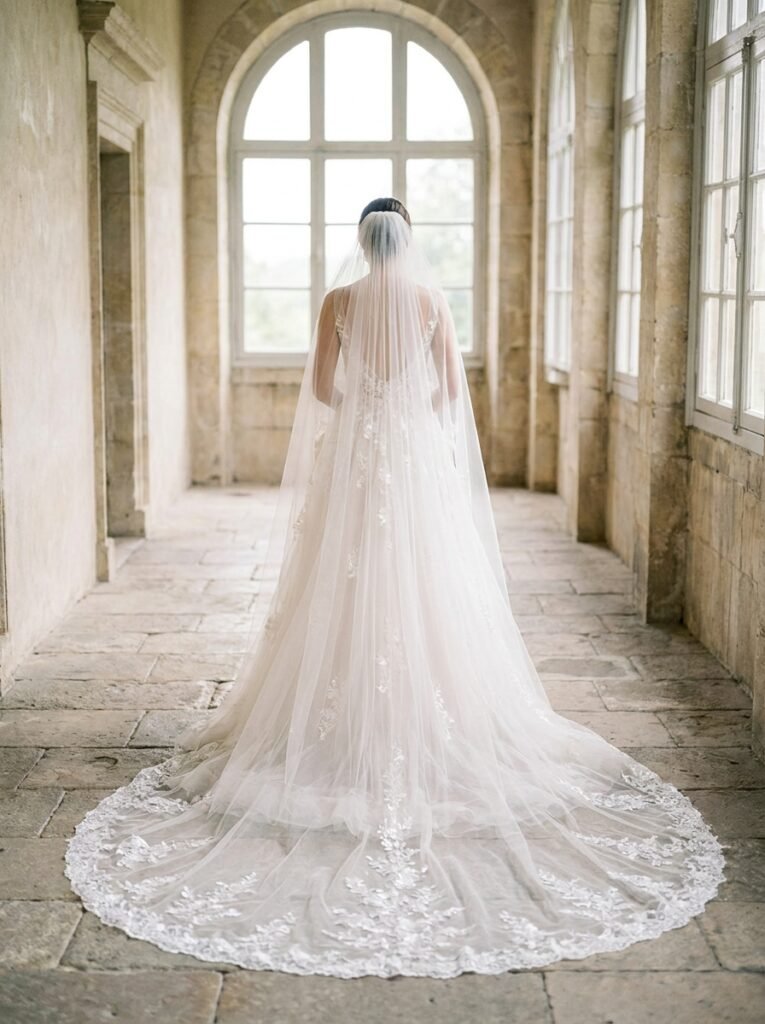
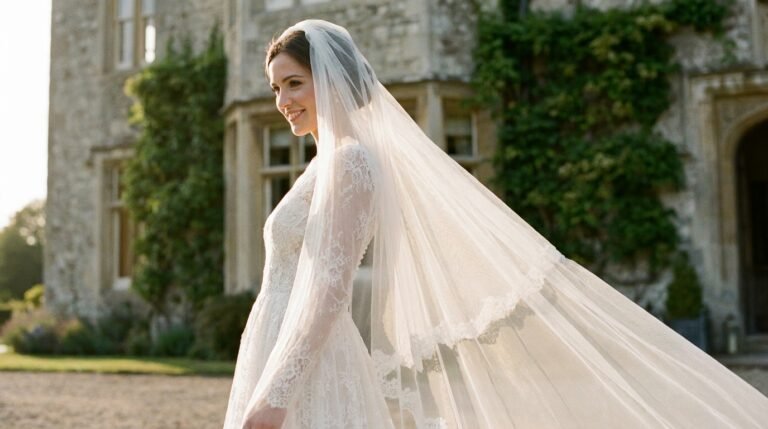
Train names are measurements rather than moods. A sweep brushes the floor. A chapel extends roughly a metre. A cathedral runs two metres or more behind the hem.
Every train needs a bustle for the reception, and the type depends on the fabric. An over-bustle pins the train on top and suits structured fabrics. An under-bustle ties beneath and suits soft ones.
Someone has to learn it before the day. Bustling is fiddly and it happens in a rush. Whoever does it should practise at the final fitting, not discover the loops during the drinks reception.
10. Soft Blush and Ivory Tones Beyond Classic White
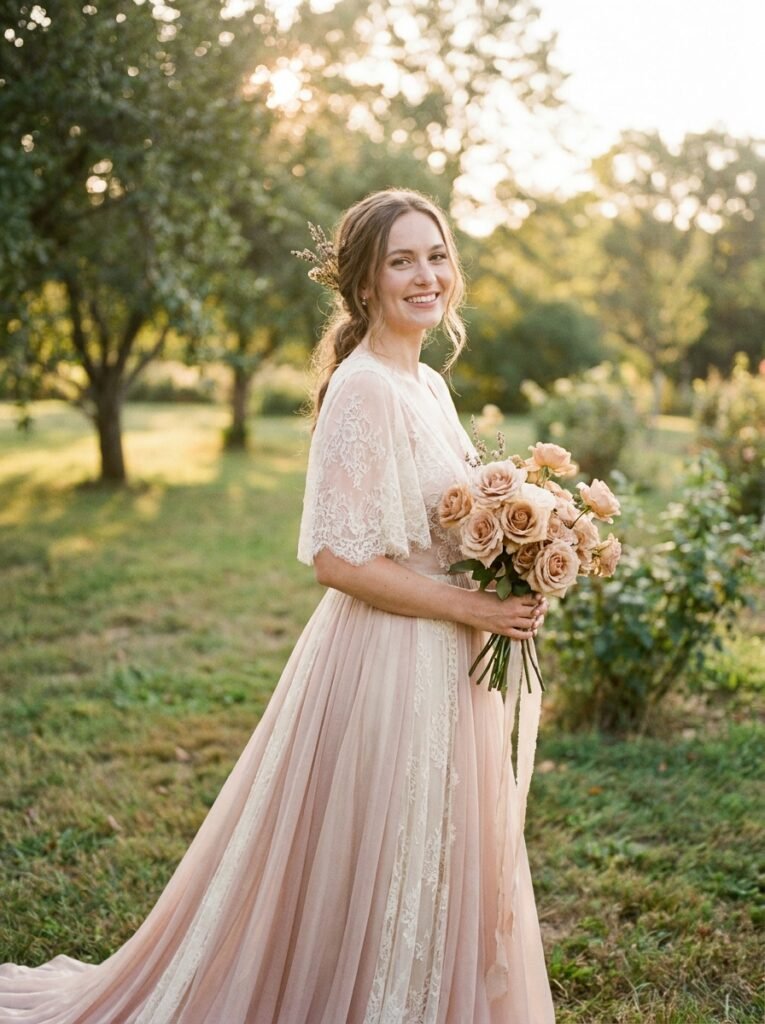
Coloured bridal gowns have far deeper roots than white ones. The Metropolitan Museum of Art notes that white was not a commonplace colour for early nineteenth-century wedding attire. Brides usually chose a coloured gown they could wear again.
Tone matching matters more than the shade chosen. Optical white sitting beside ivory makes the ivory look grubby, so the veil, shoes, and gown all need to agree.
Different fabrics also take dye differently. Lace, tulle, and satin labelled ivory vary noticeably between suppliers. Check accessories against the gown in daylight rather than ordering by name.
11. Boho Romantic Styles for the Free-Spirited Bride
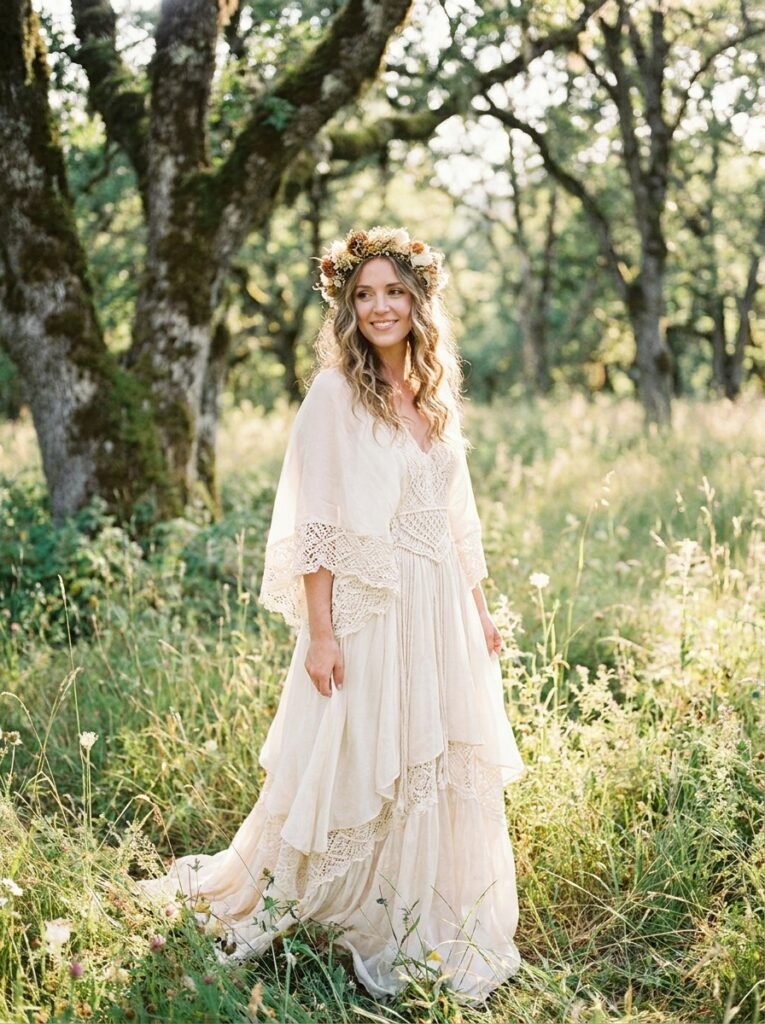
Boho gowns trade structure for comfort, and the trade has consequences worth knowing. Loose, lightly lined dresses move well and stay cool, which suits an outdoor day.
Light lining also shows more underneath. Seams, undergarments, and the outline of the body all read through a single thin layer. The lining question therefore belongs in the fitting.
Creasing is the other trade. Silk, viscose, and linen blends all crease heavily. A gown that looks perfect at the ceremony shows every hour of the car journey by the reception.
12. How to Find the Romantic Wedding Dress of Your Dreams
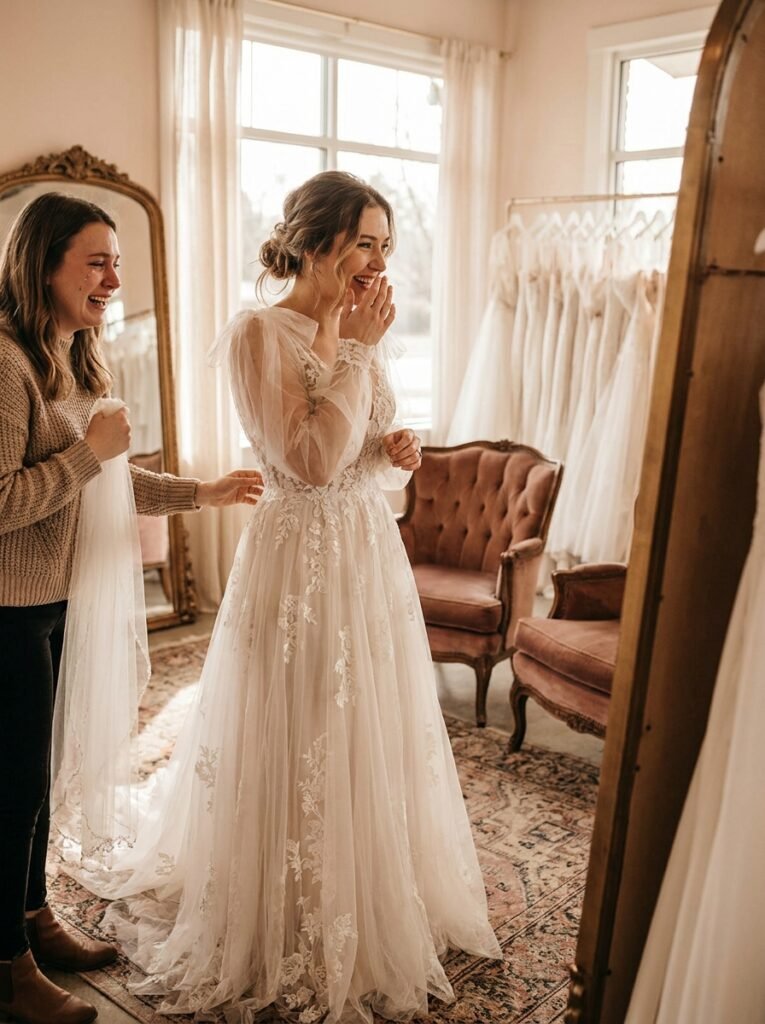
Gowns blur after the fourth one. Photograph each one in the mirror and note the boutique and style name. That prevents the confusion that sets in by the end of a long appointment.
Fittings need the real accessories. The actual shoes set the hem length, and the actual undergarments change the fit through the bodice. Bringing substitutes produces a hem that is wrong on the day.
Timing follows from production. Most designers ask for nine to twelve months. The final fitting should sit close to the date, so the fit reflects the body wearing it.
Everything above is a filter rather than a rule. The gown that produces a reaction in the fitting room is usually the right one. These romantic wedding dress ideas simply explain why.
Final Thoughts
The romantic look is a set of material behaviours rather than a single silhouette. Fabric that drapes, layers that let light through, and surfaces that catch it softly.
Those behaviours come with practical consequences. Light fabric needs weighting outdoors. Lace snags. Tulle pulls. Appliqués crush when someone sits on them. None of it argues against the style, and all of it is easier to manage when expected.
Knowing the trade-offs also makes the shopping simpler. A bride who understands why a gown behaves as it does picks better. Venue, weather, and the shape of the day all come into it.
Frequently Asked Questions
1. What makes a wedding dress romantic?
Soft drape rather than internal structure. Fabric that falls and moves, layers that light passes through, and details with depth such as lace or appliqué. The defining quality is that the shape comes from the material rather than from what holds it out.
2. What fabric is best for a romantic wedding gown?
That depends on the venue. Light chiffon floats indoors but presses against the body outdoors. Heavier crepe swings rather than lifts and handles wind far better. Tulle adds volume through layer count, and silk tulle drapes more softly than nylon.
3. Are romantic wedding dresses suitable for small weddings?
Yes, and often better suited than structured gowns. Soft fabrics need no supporting understructure, so they weigh less and move more freely in a small venue. A shorter train also handles a tight space more easily than a cathedral length.
4. How far in advance should I order my romantic wedding dress?
Nine to twelve months covers most designers, and hand-applied appliqués or custom work need longer. The final fitting should sit close to the date, and whoever bustles the train should practise at that appointment.
5. Can I personalise a romantic wedding dress to suit my style?
Most boutiques expect it. Detachable sleeves, a changed lining tone, added hem weights, or a modesty panel behind a corset are all common requests. Changes to the lining or the fastening tend to affect the day more than decorative additions do.