Beautiful Long Layered Cuts for Thick and Thin Hair
A layered cut is a weight-removal exercise before it is anything else. Where the weight comes out, and how much, decides everything that follows. Beautiful long layered cuts succeed or fail on that one variable. It explains why identical photographs produce different results on different heads.
Why Layers Are the Best Thing You Can Do for Your Hair
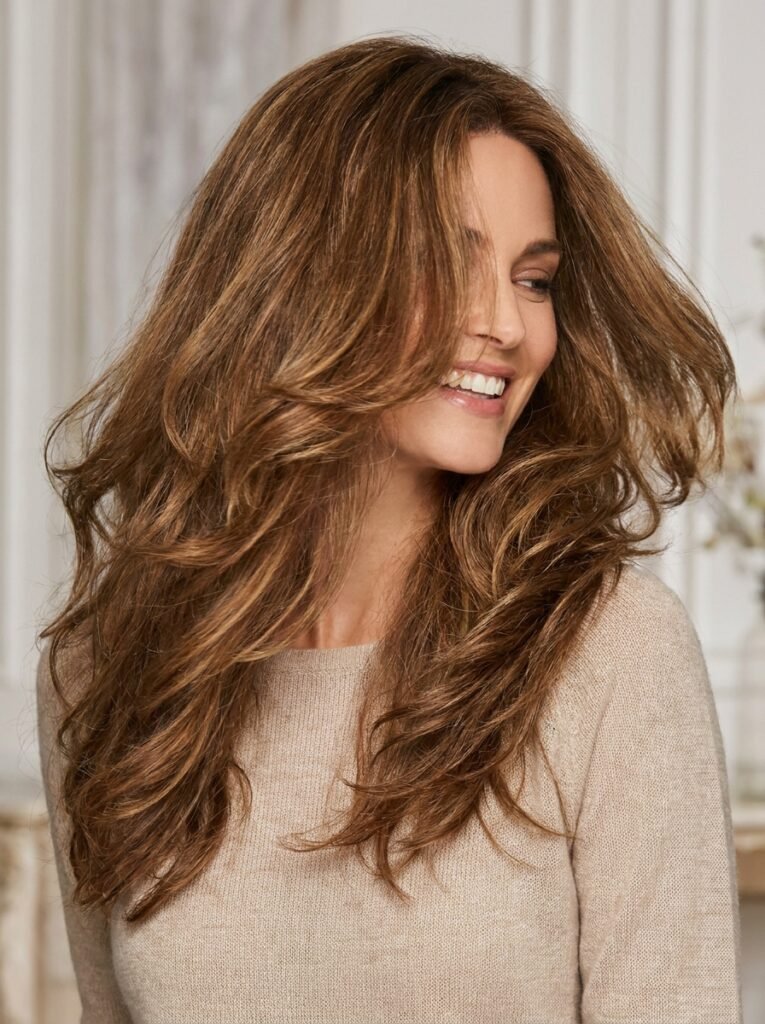
Bounce is not something a cut adds. It is what appears once the weight dragging the hair down comes out.
One length behaves like a curtain. Every strand reaches the same point, so the full mass pulls straight downward and the roots stay flat.
Shortening some strands lets the ones around them lift. That lift is the movement people describe, and it comes from subtraction rather than from any product.
Understanding the Difference Between Thick and Thin Hair

Two different measurements hide behind the word thick, and confusing them causes a great many disappointing haircuts. Density counts strands per square inch. Diameter describes the width of one strand.
The combinations matter. Fine hair growing at high density feels like a lot of hair but collapses under weight. Coarse hair at low density feels rough and bulky while showing scalp.
Both take seconds to check. A ponytail thinner than about five centimetres around suggests low density. Rolling one strand between finger and thumb tests diameter: barely detectable means fine, clearly noticeable means coarse.
How Layers Help with Thick Hair
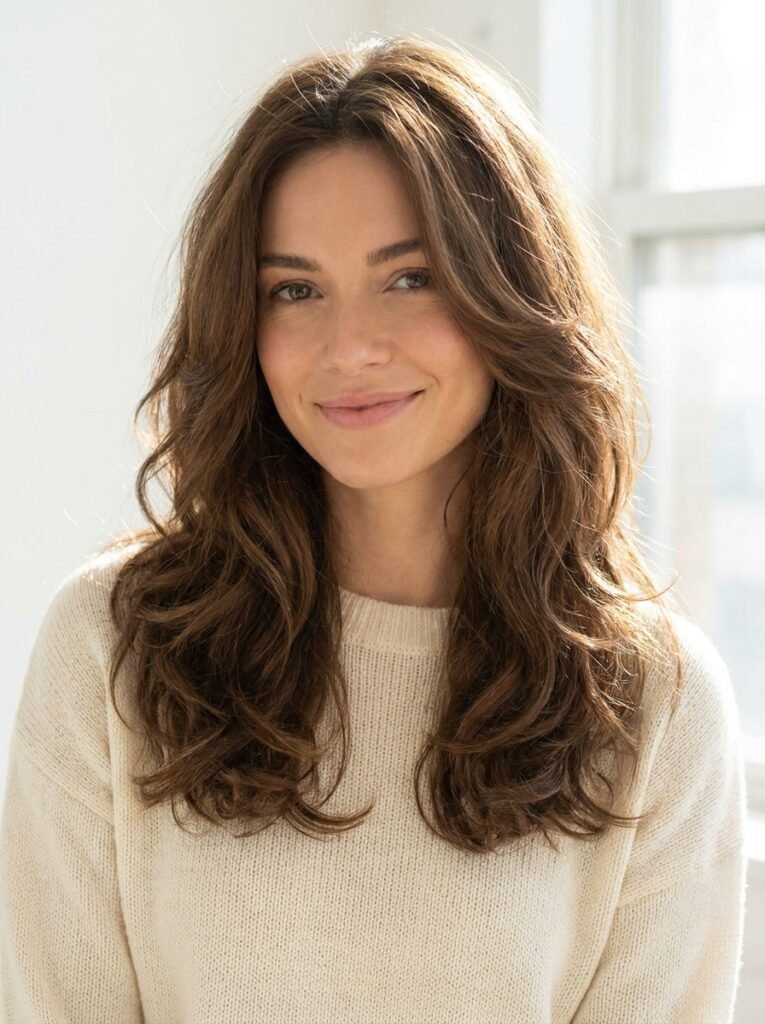
The triangle shape has a simple cause. Weight accumulates at the perimeter while the crown stays flat, so the outline widens toward the bottom.
The fix is removing weight from underneath rather than from the surface. Interior layers hollow out the mass while the outer layer stays intact. The silhouette narrows, and no short pieces appear on top.
Surface layering on thick hair produces the opposite. Short pieces sit on the outside and lift away from the mass beneath. That creates the halo of flyaways usually blamed on frizz.
How Layers Help with Thin Hair

The worry about layers thinning fine hair is well founded, and the reason is arithmetic. Limited density spread across many different lengths leaves too few strands reaching the ends.
Keeping the perimeter blunt solves it. A solid line at the bottom concentrates every remaining strand at one point. That concentration reads as thickness from a distance.
Layers then belong in the upper third only. Lift at the crown creates the volume, while the ends stay dense. That combination gives shape without the wispy tail that ruins most attempts.
The Classic Long Layer: A Style That Never Goes Out of Fashion
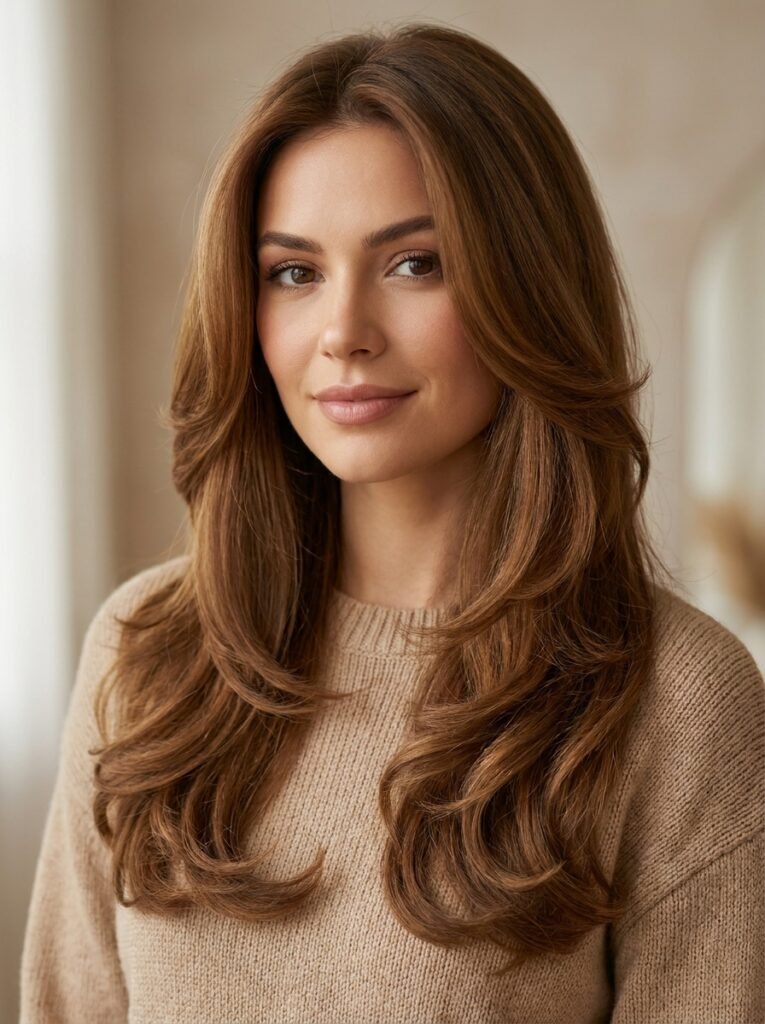
Stylists call it elevation: the angle they hold the hair at while cutting. It determines layer length entirely. Hair held flat against the head produces one length. Hair lifted higher produces progressively longer layers.
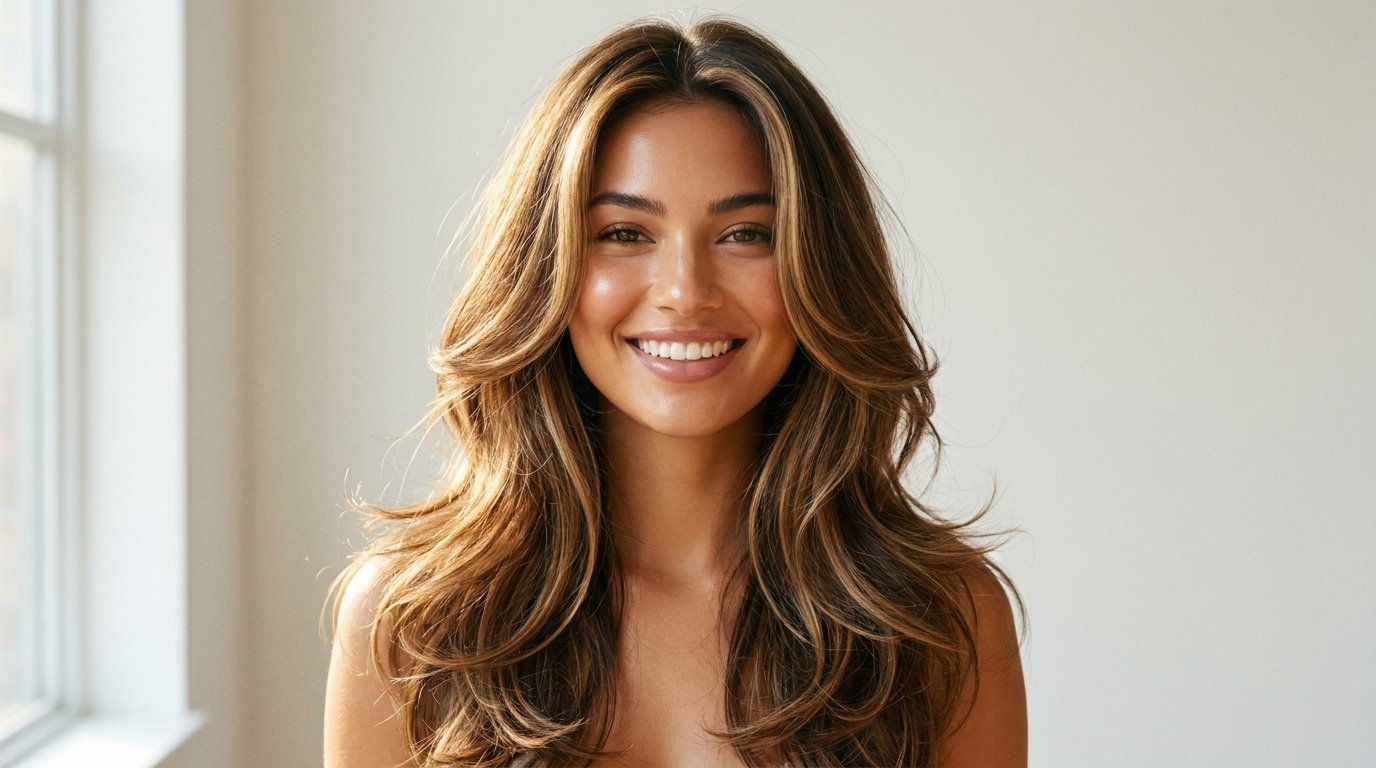
The classic long layer sits at the high end of that scale. The shortest piece still falls somewhere around the collarbone, which keeps every layer long and the transitions gentle.
Gradual transitions are why this cut forgives so much. Nothing about it depends on precise daily styling, because there is no sharp step for a bad blow-dry to expose.
Face-Framing Layers: The Instant Glow-Up

These are cut as their own section rather than as part of the interior. The stylist takes a panel from the front hairline and shapes it independently of everything behind.
The angle of that panel decides the effect. A steep angle puts the shortest piece at the cheekbone and creates a strong frame. A shallow angle starts near the jaw and reads much softer.
Being separate makes them cheap to maintain. A stylist can trim the face-framing pieces alone between appointments, leaving the length and interior untouched.
Curtain Bangs and Long Layers: The Perfect Pairing

The connection point makes or breaks this pairing. One thing decides it. Does the front read as a continuous sweep, or as two separate features meeting awkwardly?
A blended join produces the seamless version most people picture. A visible step between the two produces something closer to a fringe sitting on top of an unrelated haircut.
Asking for the fringe and the front layers to be cut as one continuous section settles it. More detail on specifying a fringe appears in this guide to chic hairstyles to refresh your look.
Butterfly Cuts: The Trendy Take on Long Layers

A butterfly cut is really two haircuts occupying one head. A short tier of layers sits on top, stopping between the chin and the collarbone. The length underneath stays almost untouched.
The gap between those tiers creates the wing effect. Without enough distance the two blend into ordinary long layers. The cut therefore needs real length below to work.
It also grows out usefully. The upper tier lengthens into the lower one over several months. A butterfly cut becomes a soft layered shape rather than an awkward stage.
The Shag Haircut: Layers With an Edgy Twist

Distribution separates a shag from long layers, not attitude. Long layers leave the crown untouched and begin lower down.
A shag carries layers right through the crown. That produces volume at the top of the head. It is the single structural difference between the two cuts.
Crown layers also carry a cost. They shorten the hair at its highest point. Anyone growing their length out should know those pieces take the longest to catch up.
Tips for Maintaining Long Layered Cuts at Home

Layers grow out evenly, and that is precisely the problem. DermNet puts scalp growth at roughly one centimetre a month during the growth phase. Every layer therefore lengthens at the same rate.
The gaps between layers therefore stay identical while every piece gets longer. The design does not collapse, it simply migrates downward until the shortest layer sits too low to lift anything.
That explains the eight to twelve week interval. It also explains why dusting, which trims only the damaged tips, maintains condition but does nothing for shape. Restoring the shape means re-cutting the layers themselves.
Styling Tools That Work Best With Layered Hair
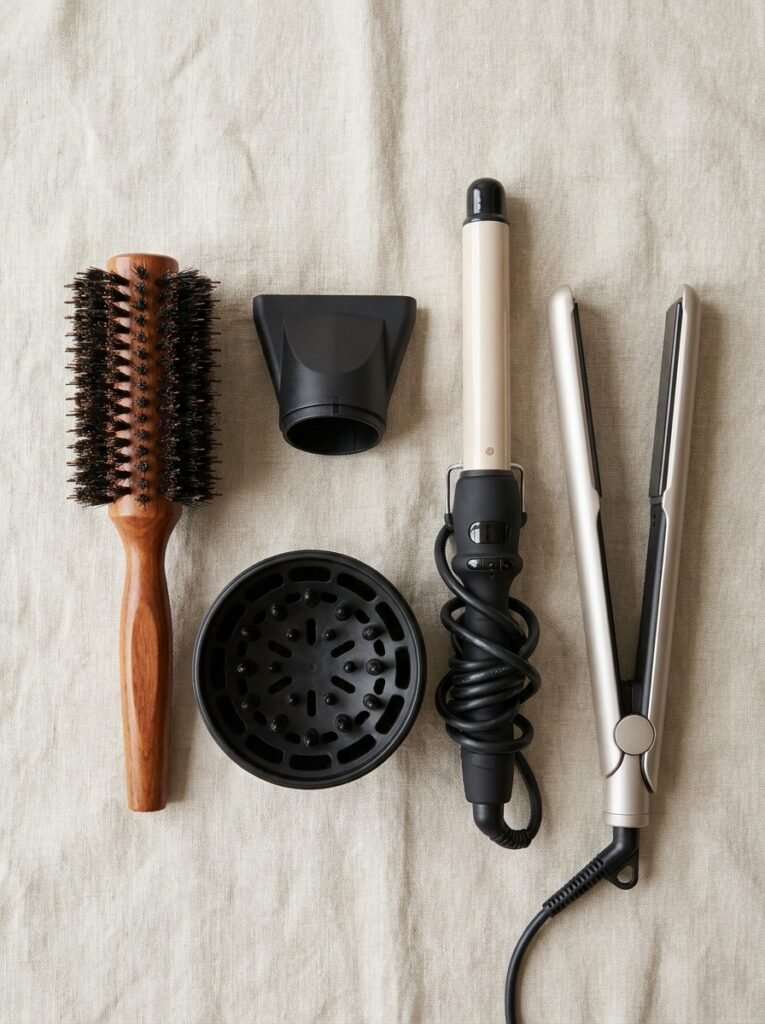
Barrel diameter sets bend diameter, which makes brush choice more consequential than brand. A wide barrel produces a soft turn at the ends. A narrow one produces a curl.
Sectioning should follow the tiers rather than random chunks. Dry the bottom layer first, then work upward. Each layer then sets against the one beneath it rather than fighting it.
The cool shot earns its button here. Heat softens the bonds holding hair in shape. Cooling while the hair is still wrapped locks the new bend in place.
Talking to Your Stylist: What to Say to Get the Perfect Cut

Three questions cover almost everything. Where will the shortest layer fall? How much comes off the perimeter? Does the weight come out of the surface or from underneath?
The third question matters most on dense hair, since surface layering is what produces the halo of short pieces. Asking it directly avoids that outcome.
One more question is worth adding. Ask what the cut looks like at month three. The answer reveals whether the stylist designed it to grow out, or only for the day.
Final Thoughts
Every section above comes back to the same question. Where does the weight come out, and how much? Beautiful long layered cuts differ mainly in that answer. So does whether a cut suits dense hair or fine hair.
Dense hair wants weight taken from underneath while the outline stays whole. Fine hair wants a solid perimeter with lift confined to the top. The butterfly, the shag, and the classic long layer are three distributions of one idea. That is why a single photograph produces three different results.
FAQ
1. Are long layered cuts suitable for all hair types?
Yes, though the technique changes completely. Dense hair needs weight removed from the interior so the outline stays clean. Fine hair needs a blunt perimeter with layers confined to the upper section. The same request produces opposite cuts on those two heads.
2. Will layers make thin hair look even thinner?
Only if they reach the ends. Spreading limited density across many lengths leaves too few strands at the bottom, which is what looks sparse. Keeping the perimeter solid concentrates the density where it shows. Layering only the top third then adds lift without that cost.
3. How often should I get my layered cut trimmed?
Every eight to twelve weeks. Hair grows around a centimetre a month. After three months every layer sits three centimetres lower, and the shortest lifts nothing above it. The shape migrates downward rather than disappearing.
4. What is the difference between face-framing layers and regular layers?
Face-framing layers are cut on a separate front panel, independently of the interior. That separation lets a stylist trim them alone between appointments. Interior layers run through the body of the hair and removing weight there changes the whole silhouette.
5. Can I style my long layered cut differently each day?
Yes, and gradual layers give the most flexibility. Sharp steps between layers show up under styling that does not suit them. Gentle transitions look intentional straight, waved, or air dried.