Beautiful Home Decor Ideas for Every Room
Decorating advice usually stops at what looks good, which is why so much of it disappoints six months later. The paint reads green in daylight. The sofa pills. The rug sheds. Beautiful home decor ideas hold up when the specification behind each one is right. Most of those specifications sit on a label or take a tape measure to find.
Start with a Color Palette You Actually Love
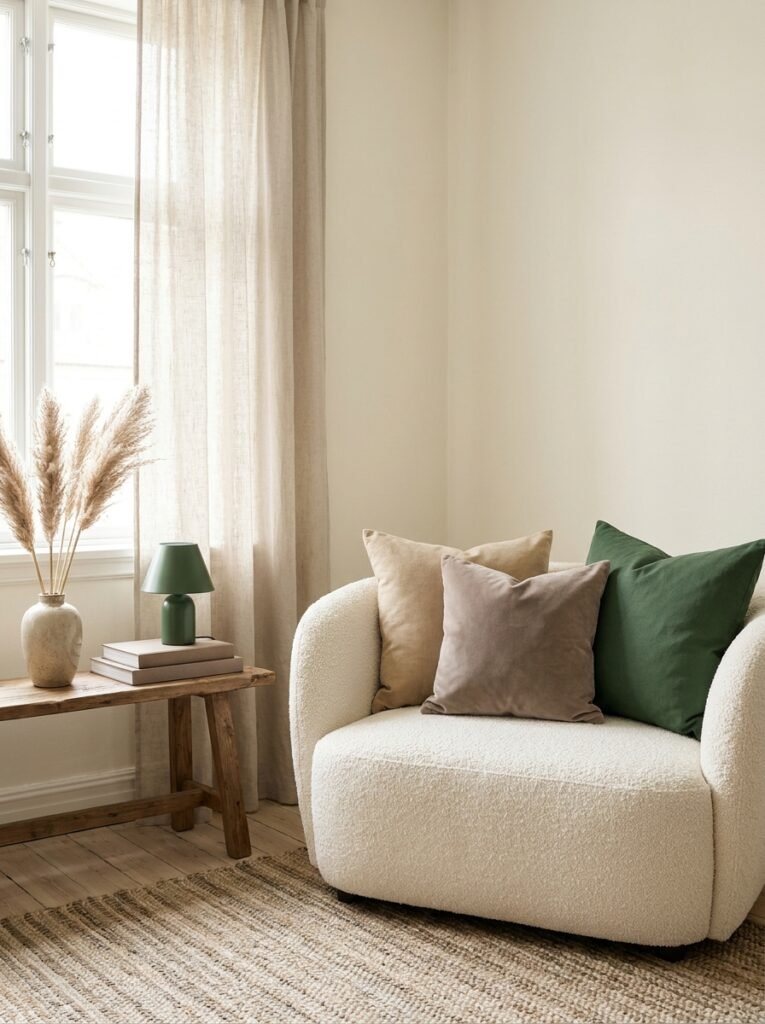
Every neutral carries an undertone. Greige leans green, pink, or yellow depending on its pigments. That bias stays invisible on a small chip. Across a whole wall it becomes the dominant impression.
Fixed elements reveal it fastest. Holding a sample against the flooring, the worktop, or the sofa exposes the clash immediately. White paper hides it completely.
Ventilation matters during the job itself. The EPA reports that indoor VOC levels typically run two to five times higher than outdoor levels. Activities such as painting push them far higher again. Opening windows and choosing a low-VOC formula both help, particularly in a bedroom or a child’s room.
Layer Your Lighting for Depth and Warmth

One number on a bulb box explains why rooms sometimes look dull under perfectly adequate light. Colour rendering index measures how accurately a light source shows colour against daylight, on a scale to 100.
Cheap LEDs often sit around 80. Fabrics look flat under them, wood loses its depth, and skin reads grey. Bulbs rated 90 or above cost slightly more and make a decorated room look like the version in the shop.
Dimming compatibility deserves a check too. Many LEDs flicker or buzz on older dimmer switches. The packaging states whether a bulb dims, and with which type of switch.
Bring the Outdoors In with Plants and Greenery

Overwatering kills more houseplants than neglect, and a weekly schedule causes most of it. Pot weight is the better signal. A dry pot feels noticeably lighter, and lifting it takes two seconds.
Drainage decides the rest. A decorative pot without a hole traps water at the root ball and rots it. Keeping the plant in its nursery pot and dropping that inside the pretty one solves the problem permanently.
New plants also sulk. Dropping leaves after a move is acclimatisation rather than failure, and it usually settles within a few weeks. Reacting by watering more is what turns a temporary sulk into a dead plant.
Invest in One Statement Piece of Furniture

Upholstery carries a durability rating, and almost nobody asks for it. Testers rub the fabric until it wears through, counting double rubs or Martindale cycles.
The bands are easy to remember. Under 15,000 double rubs suits decorative use only. Fifteen to 30,000 handles normal household wear. Above that counts as heavy duty and suits a sofa used daily by a family.
The frame matters as much and shows less. Kiln-dried hardwood with jointed corners lasts decades. Stapled particleboard loosens within a few years. A showroom sofa gives no clue which sits inside unless the specification says so.
Use Rugs to Define and Anchor a Space

Construction predicts shedding better than price does. Tufted rugs have their pile glued into a backing, so they shed for months and can eventually delaminate. Woven and hand-knotted rugs have the pile locked into the structure itself.
Density decides how a rug ages underfoot. Pressing a thumb into the pile and watching how fast it springs back gives a rough reading. A dense pile recovers quickly and resists the flattened track that forms along a walkway.
Sizing has a working figure. Leaving roughly 45 to 60 centimetres of bare floor between the rug edge and the walls reads as deliberate. Wall-to-wall coverage reads as carpet, and a small rug floating in the middle reads as an accident.
Create a Gallery Wall That Feels Personal
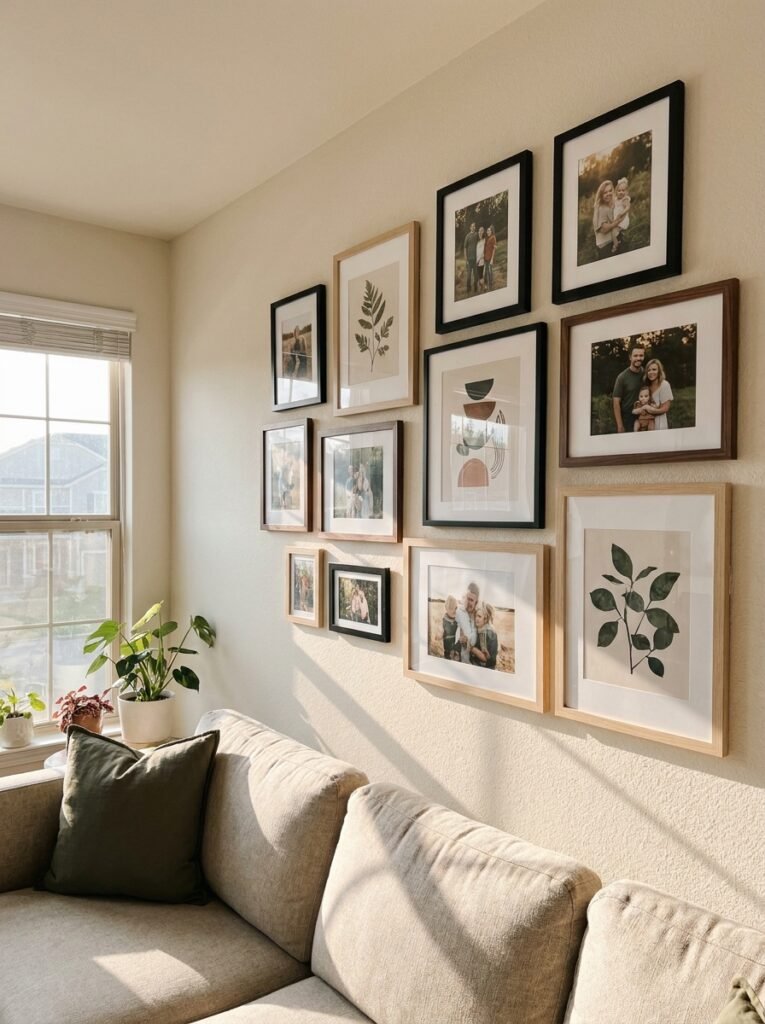
Hanging height is where most gallery walls go wrong, and galleries settled the question long ago. The centre of an artwork or arrangement belongs roughly 145 to 150 centimetres from the floor. That matches average standing eye level.
Furniture changes that rule. Art above a sofa or console belongs around 15 to 25 centimetres above it. The two then read as one grouping rather than two separate events.
Fixings depend on the wall behind. Plasterboard needs a stud or a proper cavity anchor for anything heavy, while masonry needs a hammer drill. A picture hook rated for two kilos will not hold a framed print of four.
Add Texture with Soft Furnishings

Flat, sad cushions usually come from the insert rather than the cover. An insert should measure about five centimetres larger than the cover on each side. That is what produces the plump corners in photographs.
Fill type changes the character. Feather and down collapse into a soft slump and need a shake each morning. Polyester holds a rigid shape and never quite softens. A feather core with a synthetic wrap splits the difference.
Fibre content predicts how throws age. Wool resists pilling and lasts years. Acrylic pills within a season. Cotton velvet crushes and holds the marks, while polyester velvet keeps its nap but reflects light more sharply.
Style Your Shelves Like a Pro
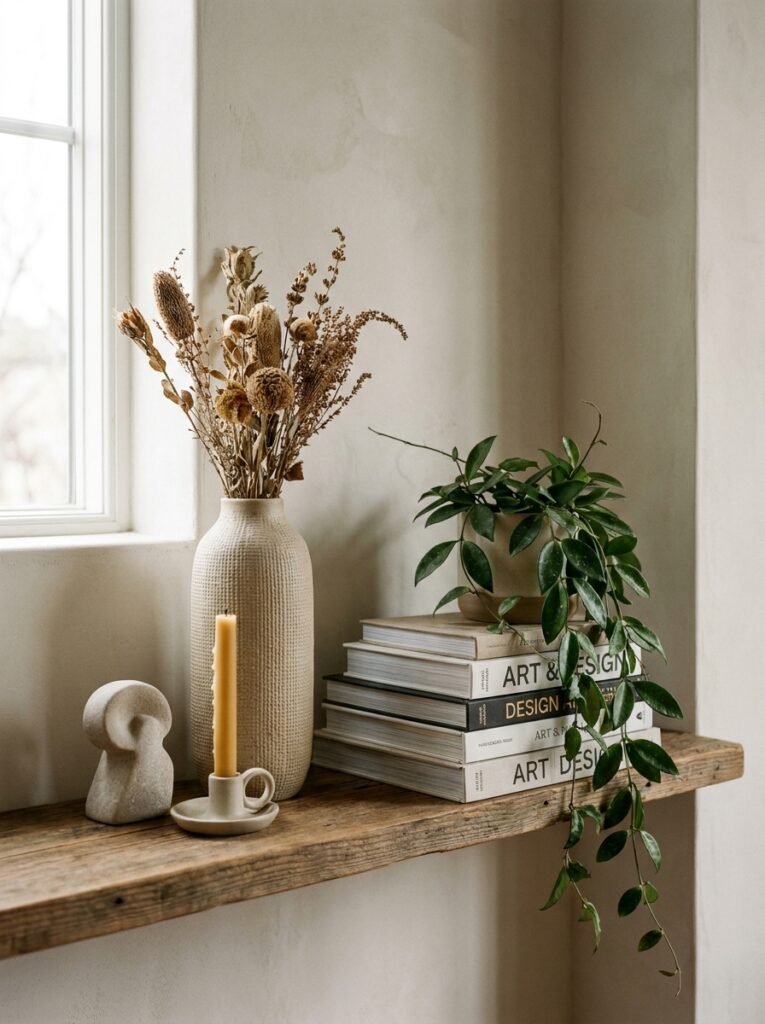
Span is the specification nobody checks. An unsupported shelf of particleboard or MDF bows under books past about 75 centimetres. That sag becomes permanent once it sets.
Solid timber and metal-reinforced shelves handle considerably more. A central bracket prevents the droop that ages a bookcase instantly. So does turning the shelf over each year, before any load settles it.
Spacing affects what a shelf can hold. Around 30 centimetres of height suits most books and leaves room to stand an object on top. This guide to styling a shelf like an interior designer covers what goes on them.
Make Your Bedroom a Sanctuary
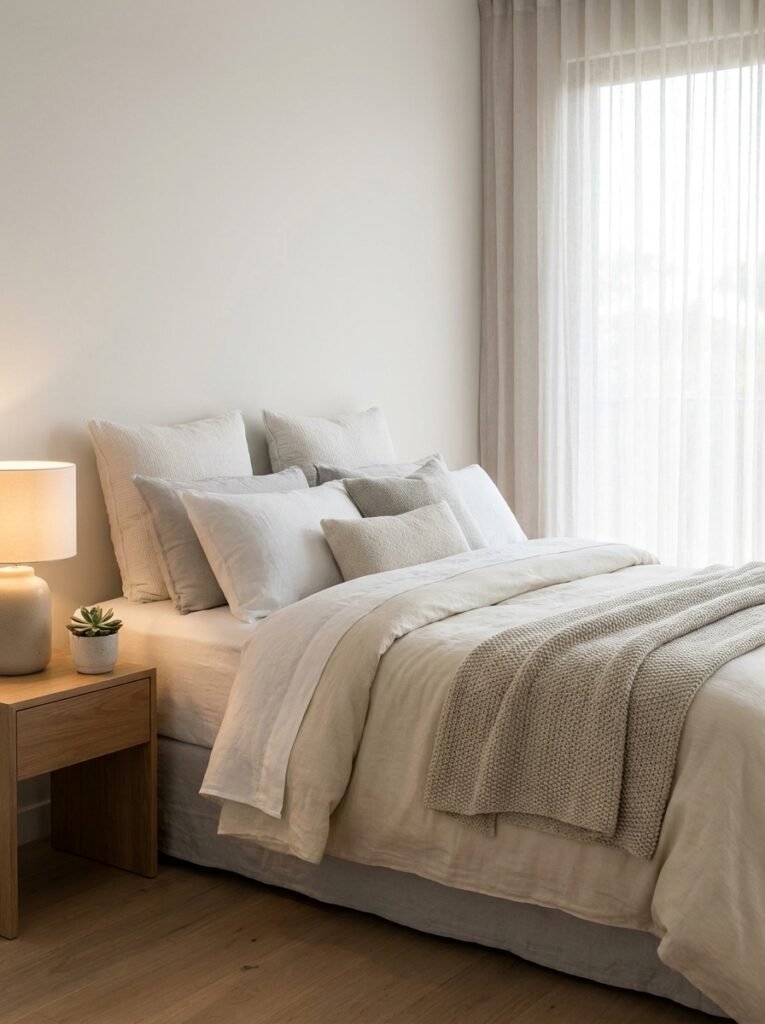
Thread count stopped being a useful measure years ago. Counts above roughly 400 add little, and very high figures often come from multi-ply yarns counted more than once.
Fibre length matters far more. Long-staple cotton produces smoother, stronger yarn that softens with washing rather than pilling. Linen uses GSM instead, where 165 to 200 suits bedding well.
Bedside height has a rule worth knowing. A table level with the top of the mattress puts a lamp and a glass within easy reach. A few centimetres either way is fine. Anything much lower means reaching down every time.
Transform Your Kitchen with Small Details
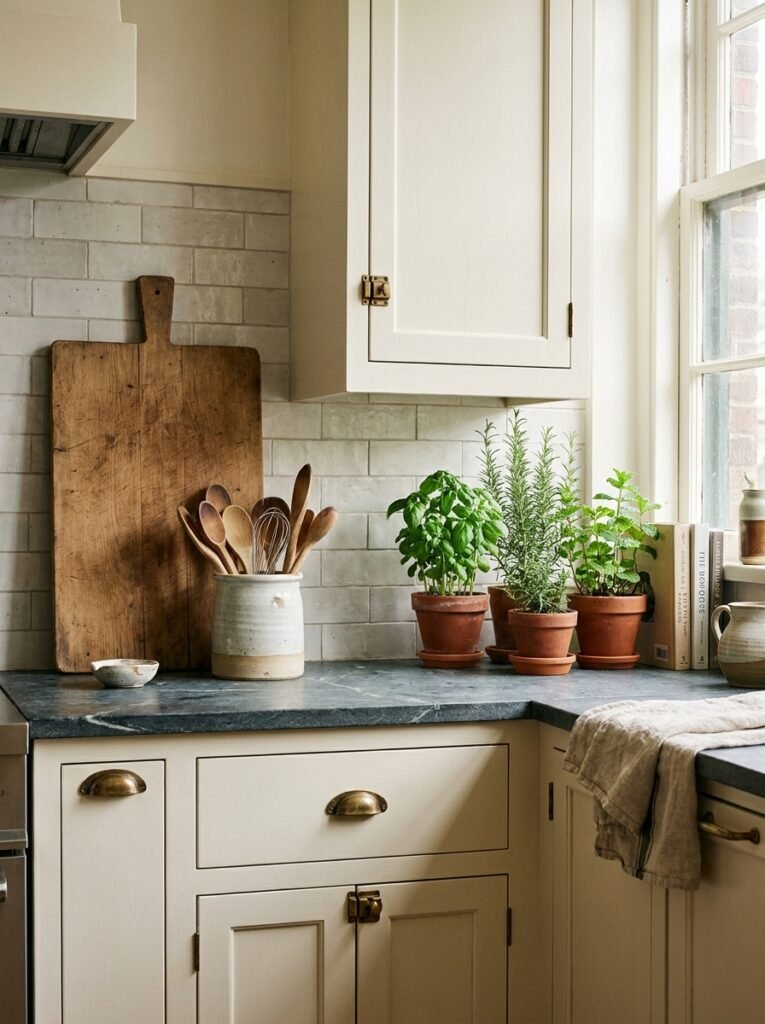
Swapping cabinet hardware is the cheapest transformation in a kitchen, and it hinges on one measurement. Centre-to-centre is the distance between the two screw holes, and new handles must match it or the doors need re-drilling.
Common sizes cluster around 96 millimetres, 128 millimetres, and 160 millimetres, though older units vary. Measuring one existing handle before ordering avoids a return. Knobs sidestep the issue entirely, since they use a single hole.
Finish affects upkeep as much as looks. Unlacquered brass develops a patina and shows fingerprints. Matte black hides marks but scuffs at the edges. Neither is wrong, but the choice determines how the kitchen looks between cleans.
Refresh Your Bathroom Without Renovating

Towels are sold on colour and judged on weight. GSM measures the density of the loops, and the difference is immediately obvious in the hand.
Around 400 to 600 GSM makes a good everyday towel that dries reasonably fast. Above 600 feels plush and hotel-like but takes considerably longer to dry, which matters in a bathroom without much ventilation.
Ventilation is the hidden variable in every bathroom refresh. Running the extractor for fifteen minutes after a shower clears the moisture. That moisture mildews fabric curtains and lifts paint at the ceiling. No amount of styling survives a damp room.
Personalize Your Entryway to Set the Tone
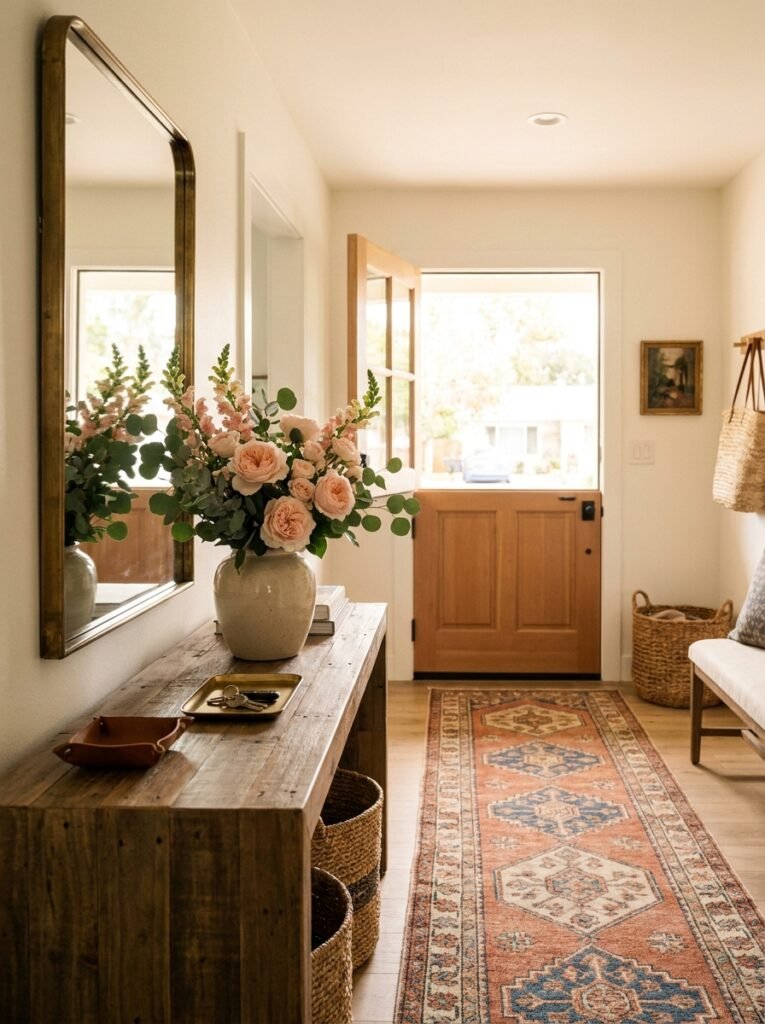
Two mats outperform one, and the reason is functional. A coarse coir mat outside scrapes grit off shoes. An absorbent mat inside takes the moisture that the first one leaves behind.
Console depth is the constraint in most hallways. Anything over about 35 centimetres deep narrows a corridor uncomfortably. Shallow consoles and wall-mounted shelves suit narrow entries far better.
A mirror does double duty here, reflecting light into a space that rarely has a window of its own. More approaches to tight spaces appear in this guide to small changes that make a room feel bigger.
Final Thoughts
A pattern connects all twelve. Behind every decorating decision sits a number or a material fact. It determines whether the result still looks good in a year. Double rubs predict how a sofa wears. GSM predicts how a towel feels. Span predicts whether a shelf sags. Centre-to-centre decides whether new handles fit at all. None of it is difficult, and none of it requires a designer. The most beautiful home decor ideas are ordinary choices made with one extra piece of information. That information nearly always sits on the label, or takes thirty seconds with a tape.
Frequently Asked Questions
How do I start decorating my home if I have a small budget?
Begin with changes that cost almost nothing. Rearranging furniture, decluttering surfaces, and swapping bulbs for a higher colour rendering index all fall into that category. Cabinet handles and cushion inserts come next, since both transform an item without replacing it.
What is the most important element in home decor?
Lighting, and specifically the quality of it rather than the quantity. A bulb rated below 80 on the colour rendering index flattens fabric and timber. Careful choosing makes no difference under it. Bulbs rated 90 or above fix that for a few pounds.
How do I make a small room look bigger?
Keep the floor plane visible with furniture on legs. Hang curtains close to the ceiling, and use one large rug rather than several small ones. A mirror positioned to reflect a doorway or an open stretch of floor adds apparent depth.
How do I choose a style for my home if I like many different aesthetics?
Look for what repeats across the images that appeal. Usually it is a material or a tone rather than a named style. A shared palette holds a mixed room together whatever labels the pieces carry.
How often should I redecorate my home?
On condition rather than on a schedule. Pilled throws, sagging shelves, flattened rug pile, and yellowed paint all signal it. Buying to the right specification the first time pushes that date out by years.