
Beauty Essentials Every Woman Should Own
Most product round-ups explain what to buy and stop there. What tends to be missing is how each thing actually works, and the one habit that quietly cancels it out. The beauty essentials every woman should own make a short list. Each one comes with a failure mode worth knowing.
1. A Good Cleanser That Suits Your Skin Type
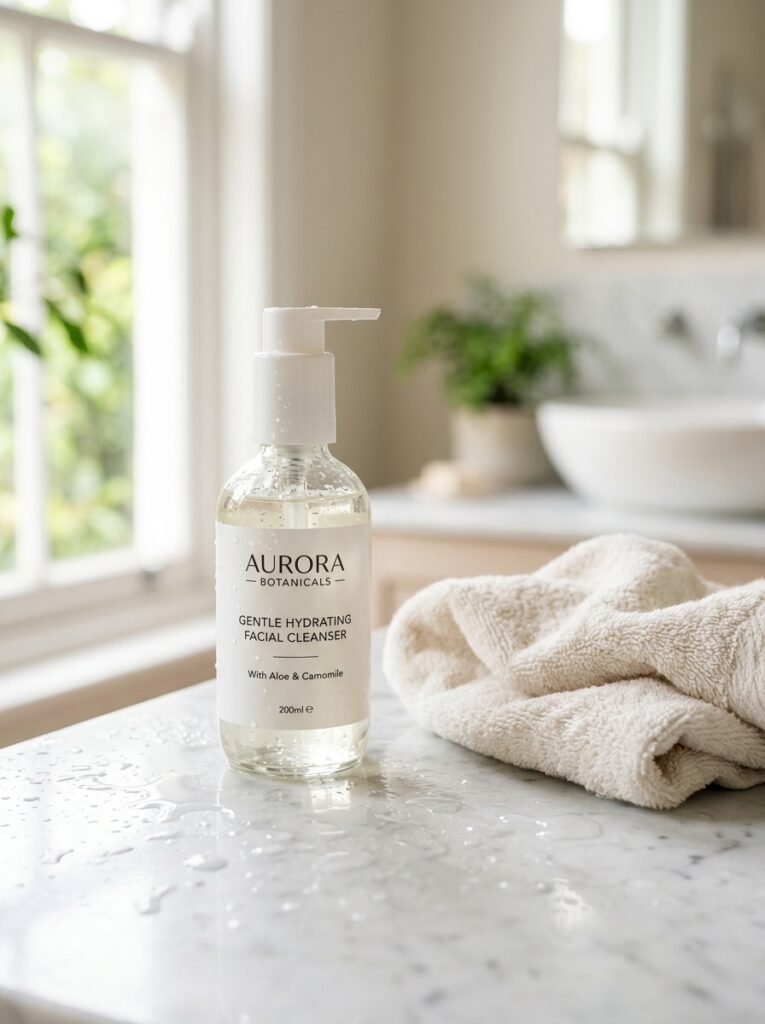
Cleansers work through surfactants. Each molecule grips oil at one end and water at the other. Grime that water alone cannot shift then rinses away.
The usual failure is pH rather than formula type. Healthy skin sits slightly acidic, around pH 5. Traditional bar soaps run alkaline and disrupt the barrier for hours afterwards. That shows up as tightness, then as flaking.
Sunscreen and long-wear makeup add a second problem, since both resist water by design. An oil or balm dissolves them because like dissolves like. A water-based cleanser afterwards clears whatever the oil left behind.
2. SPF Moisturizer for Daily Sun Protection
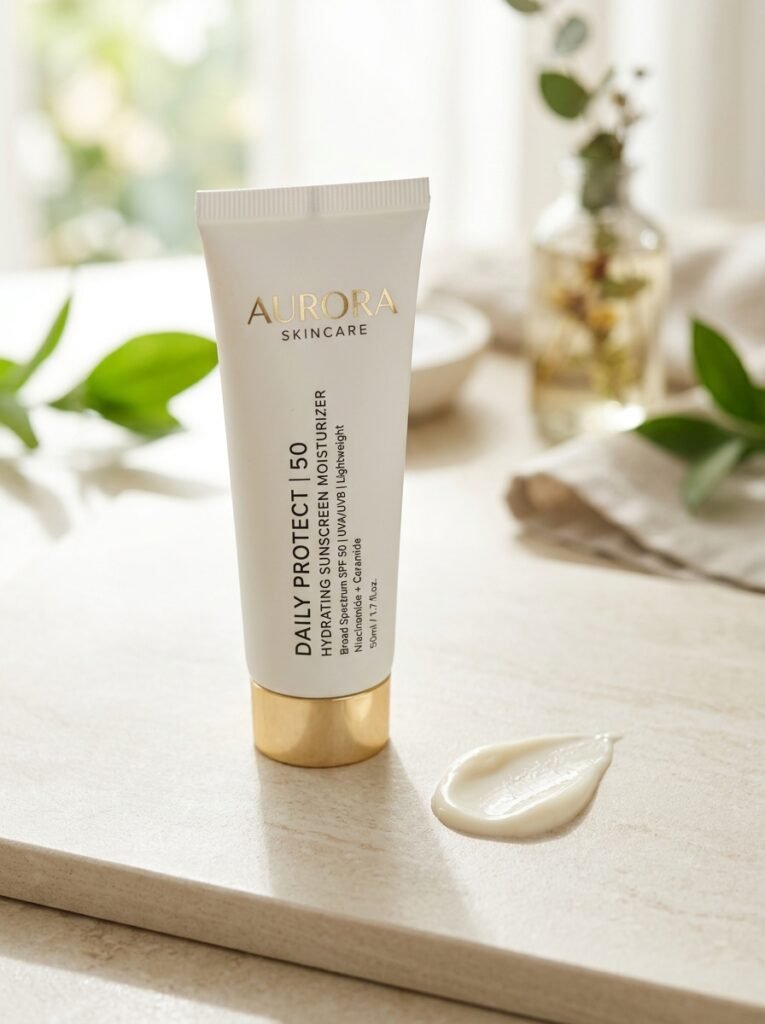
SPF describes a ratio, not a duration. An SPF 30 lets through roughly a thirtieth of the burning radiation that bare skin would receive.
That number depends entirely on quantity. Laboratory testing applies a thick, standardised layer, and most people apply a quarter to half as much. Half the quantity does not give half the protection. It gives considerably less.
SPF moisturizers suffer most from this, because people use them like moisturizer rather than like sunscreen. Roughly a quarter of a teaspoon covers a face and neck. Anything less turns a labelled SPF 30 into something much weaker.
3. A Versatile Concealer
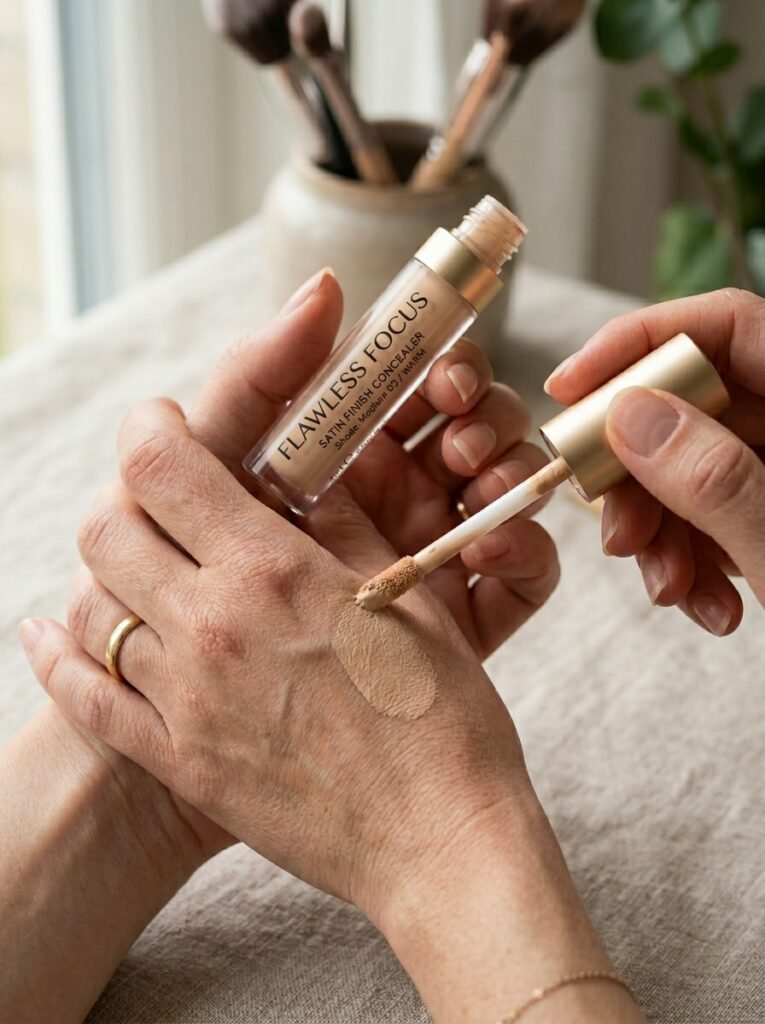
Under-eye shadows are usually blue or purple, caused by vessels showing through thin skin. Lightening does not remove a colour. It only dilutes it, which is why a paler concealer often turns grey or ashy.
Colour theory handles it properly. Peach and orange sit opposite blue and purple on the wheel. A thin layer of corrector therefore neutralises the shadow first. Concealer matched to actual skin tone then goes over the top.
Depth of skin tone decides the corrector. Fair skin needs a light peach, medium skin a true peach, and deeper skin an orange or red-based corrector. Blemishes need no correcting at all, just an exact tone match.
4. A Reliable Foundation or Tinted Moisturizer
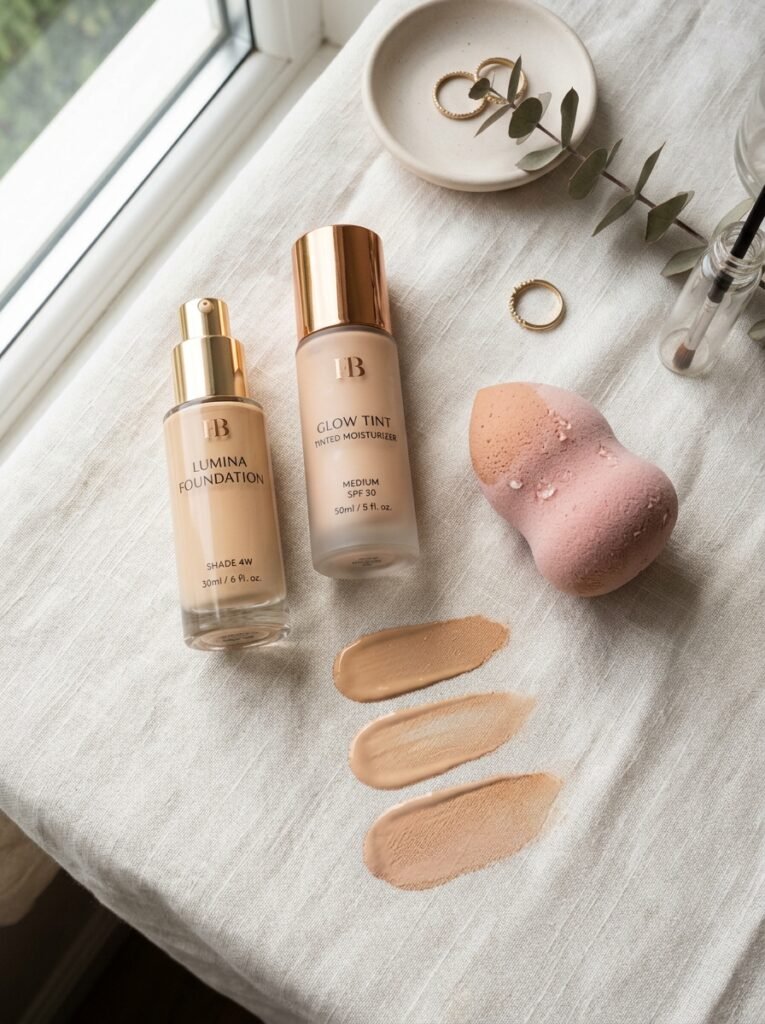
Coverage comes from pigment concentration. Tinted moisturizers carry a little, foundations carry more, and that single variable explains the whole difference between them.
Many formulas also oxidise. Contact with skin oils and air shifts the shade darker or more orange over the first hour. A perfect match in the shop can therefore look wrong by lunchtime.
Testing accordingly avoids the problem. Swatching along the jaw and waiting ten minutes settles it. That shows the shade the product becomes, not the one it starts as. Daylight beats shop lighting for the final check.
5. A Brow Product You Love
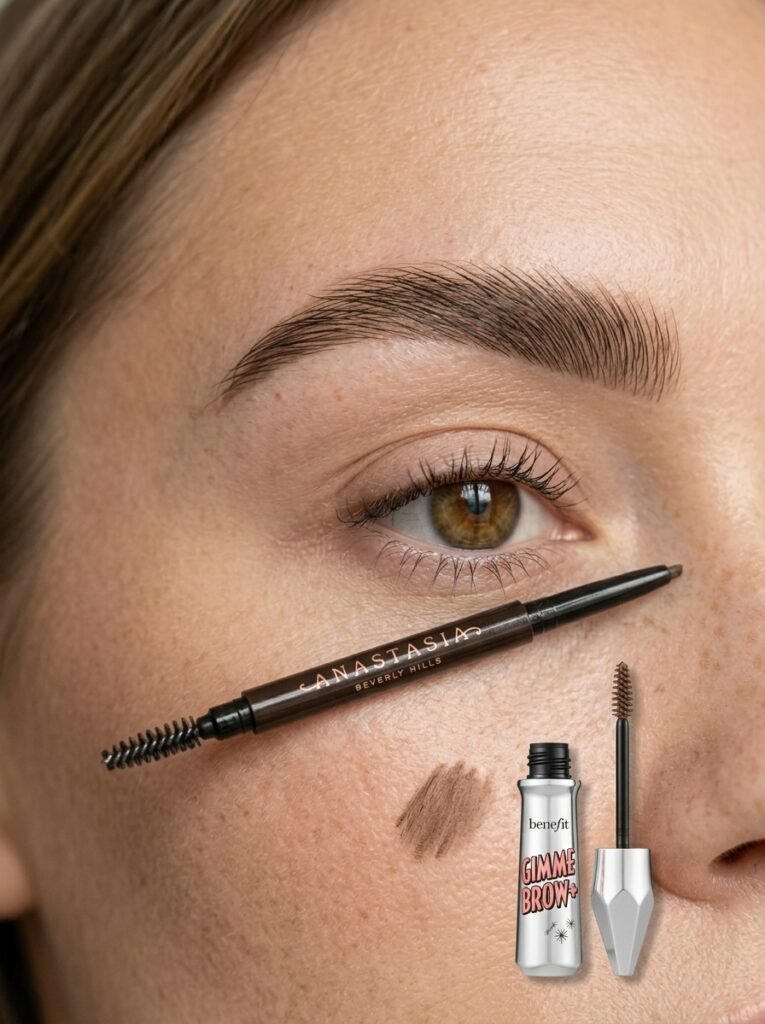
Undertone matters more than depth with brow products. Most pencils lean warm. Warm pigment against cool hair reads orange within hours, as skin oils shift it further.
A cool taupe suits a surprising number of people, including many who assume they need brown. Matching the roots rather than the lengths gives a better reference, since brow hair lightens toward the ends.
Gel does the other half of the job. Brushing the hairs upward and setting them there adds visible fullness without any colour. That flatters sparse brows more than extra pencil does.
6. A Black Mascara
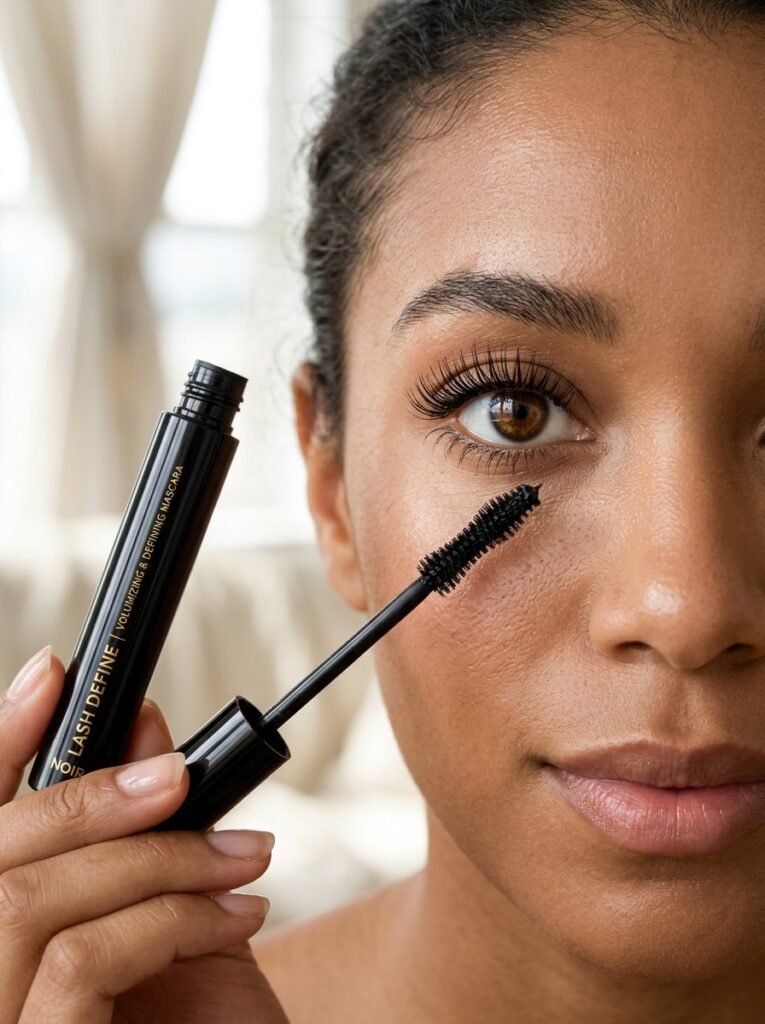
Wand shape does as much as formula. Dense bristles deposit product for volume. Widely spaced or comb-style bristles separate and stretch each lash for length.
Pumping the wand is the habit that ruins a tube. Each pump forces air into the barrel and dries the formula, which produces the clumping usually blamed on the product. Twisting the wand while pulling it out picks up plenty.
Hygiene sets a real limit here. The FDA notes that eye-area cosmetics carry the shortest shelf life of any category. It also reports that some industry experts recommend replacing mascara three months after purchase, given repeated microbial exposure and the risk of eye infection. Writing the opening date on the tube makes that easy to track.
7. A Hydrating Lip Balm
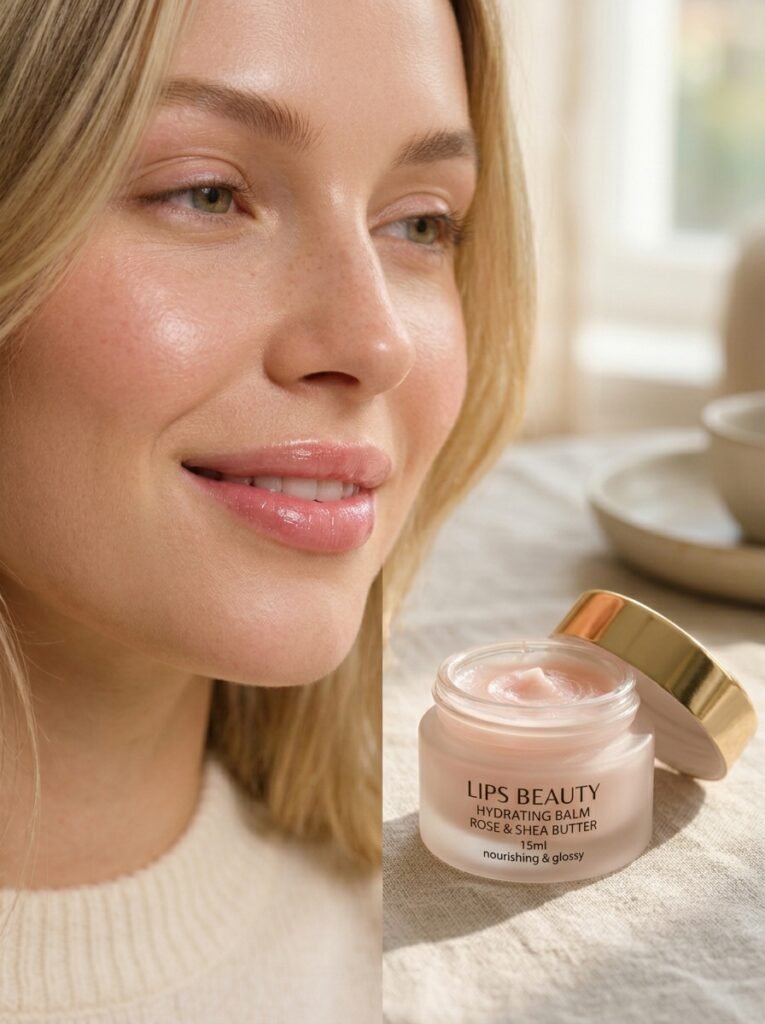
Lip products split into two mechanisms. Occlusives such as petrolatum, lanolin, and beeswax seal water in. Humectants such as glycerin and hyaluronic acid draw water toward the surface.
Humectants alone can backfire in dry air. With no seal above them, they pull moisture from deeper tissue and it evaporates, leaving lips drier than before. A balm containing both solves it.
Some ingredients create their own demand. Menthol, camphor, and phenol produce a tingle that feels active while irritating the skin, which drives reapplication every twenty minutes. A plain, boring balm usually outperforms them.
8. A Creamy Blush
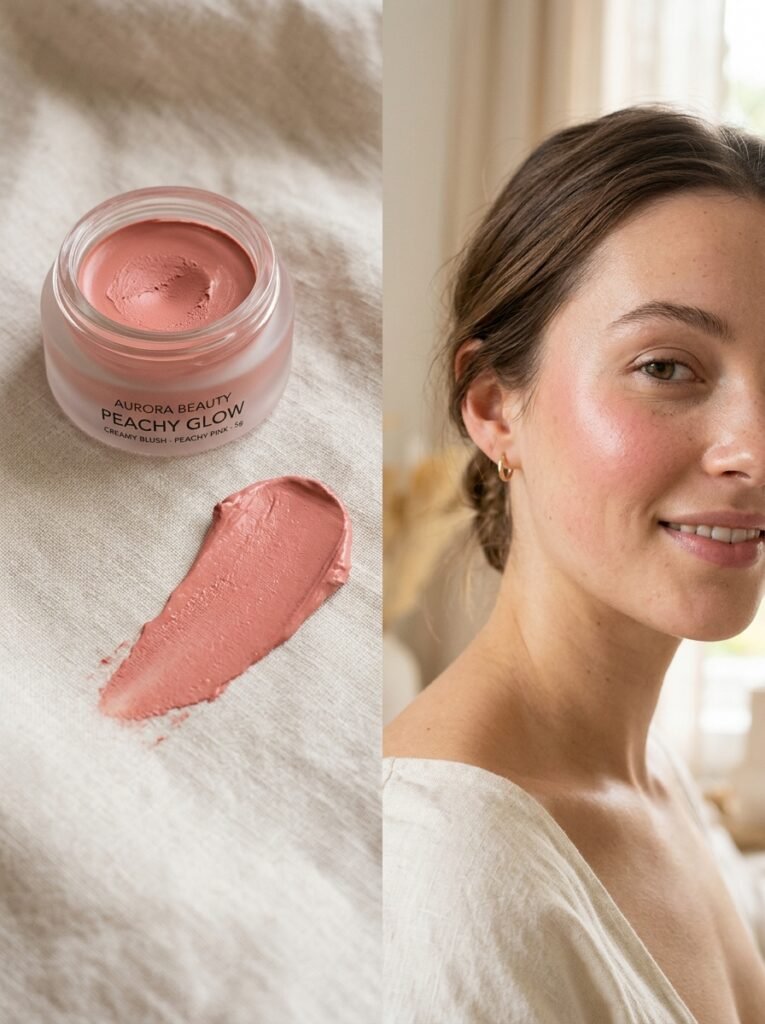
Order of application decides whether cream blush works at all. Creams need to sit on a damp or bare surface so they can blend outward.
Powder underneath breaks that. A cream laid over set powder grabs, drags the layer below, and leaves a patch that will not soften. Creams before powder, powder after creams, is the whole rule.
Warmth helps the blend. Fingertips soften the formula as they work, which is why cream blush suits beginners better than powder does. A stippling brush achieves the same with less warmth and more control.
9. A Highlighter for That Lit-From-Within Glow
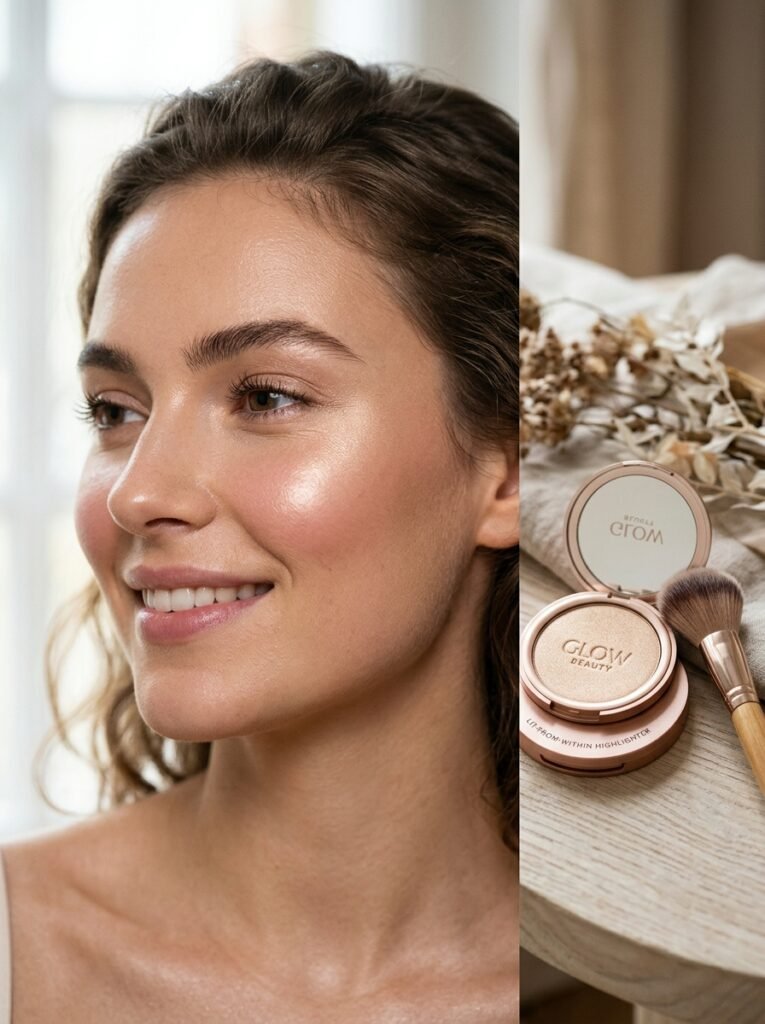
Particle size separates glow from glitter. Finely milled pigment scatters light softly. Larger particles reflect as distinct sparkles, which reads as product sitting on the face rather than as skin.
Reflection also magnifies whatever it lands on. Shimmer across visible pores or fine lines emphasises them. Every raised edge catches light and casts a small shadow.
Placement solves that. Keeping highlighter high on the cheekbone, above the pore-prone middle of the cheek, catches light where the skin is smoothest. The inner corners of the eyes and the centre of the lip do the same.
10. A Neutral Eye Shadow Palette
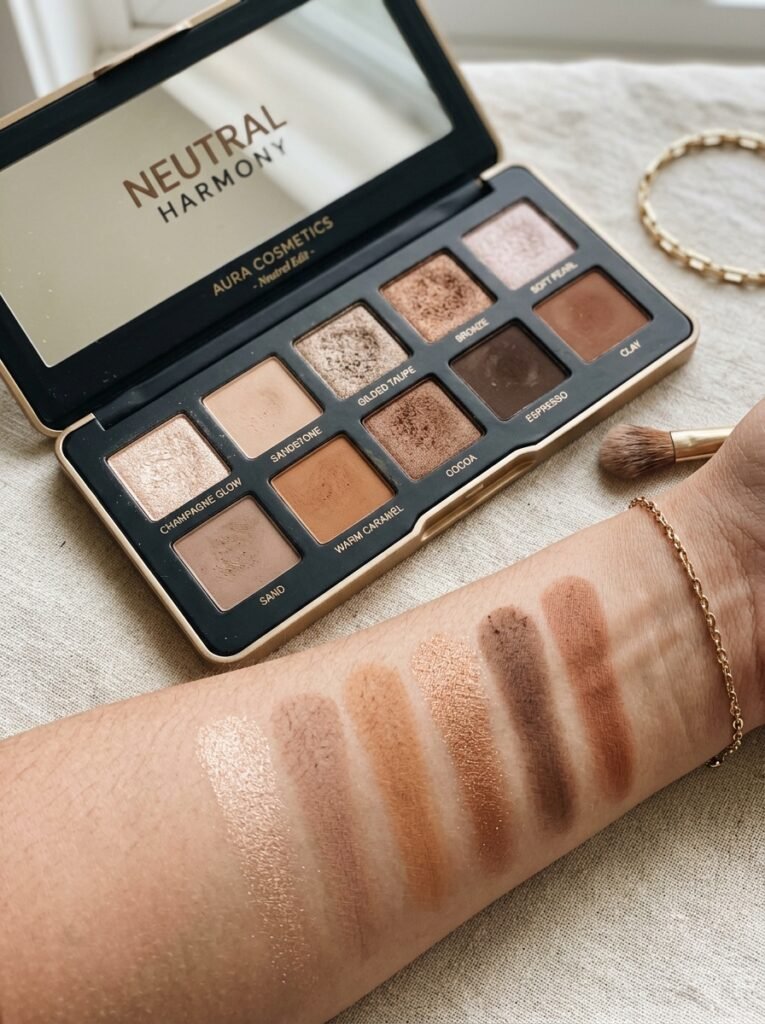
Mattes and shimmers do opposite jobs. A matte shade imitates shadow and pushes an area back. A shimmer catches light and brings an area forward. Depth on the eye comes from the first, not the second.
Most palettes are sold on their shimmers, which is why so many end up half used. A useful palette holds more mattes than shimmers, ideally in a gradient from pale to deep in one colour family.
Transition shades earn their keep quietly. A mid-tone matte a shade or two deeper than the skin blurs every edge that follows. It also runs out first in any well-used palette.
11. A Reliable Makeup Remover
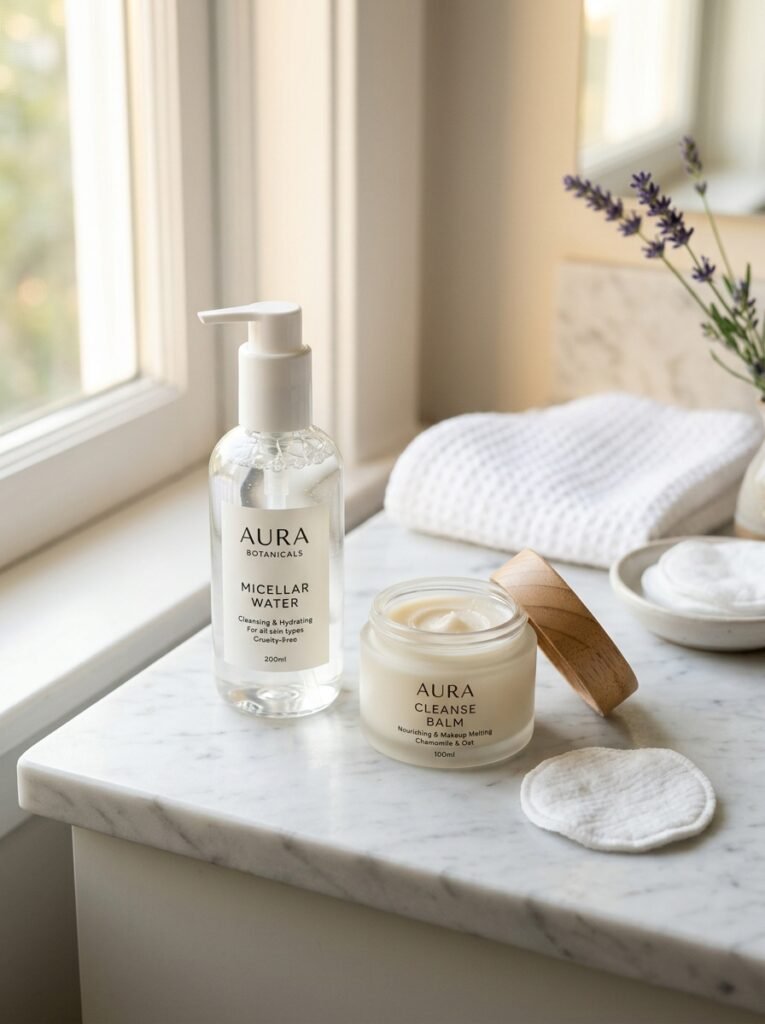
Micellar water contains surfactant molecules clustered into tiny spheres. Those spheres trap oil in their centres, which is how a watery liquid lifts makeup without foaming.
The surfactant stays behind on the skin, though. Micellar water needs rinsing off, whatever the no-rinse marketing says. Skipping that step leaves a residue that irritates over time.
Waterproof formulas need oil instead of surfactant. Holding a soaked pad against closed lashes for twenty seconds lets the oil dissolve the film. Everything then wipes away without rubbing the lash line.
12. A Facial Mist or Setting Spray
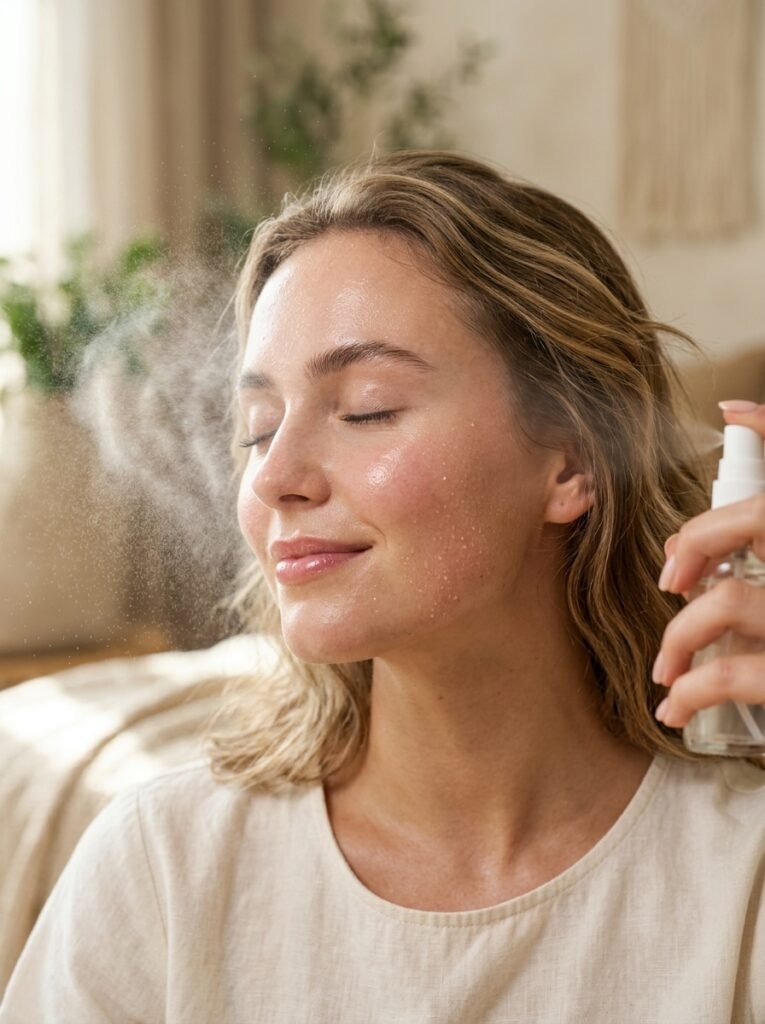
These two products get shelved together and do different things. Setting sprays contain film-forming polymers that dry into a flexible mesh over makeup. Facial mists are mostly water with humectants and no film former at all.
Only the first extends wear. A hydrating mist over finished makeup adds water that then evaporates. On a long day it can lift the base rather than lock it.
Mists still earn a place at the right moment. Used on damp skin before moisturizer, they add a layer of hydration that a cream can then seal in. Checking the ingredient list for a polymer distinguishes one from the other in seconds.
Final Thoughts
A pattern runs through all twelve. The product rarely fails, and the method usually does. Sunscreen underapplied delivers a fraction of its label. Cream blush over powder patches. Micellar water left on the skin irritates. A mascara tube pumped for air clumps. Buying something better fixes none of it. The beauty essentials every woman should own make a shorter list than most guides suggest. The gains sit in using them well, not in owning more. This guide to effortless beauty ideas for a natural finish pairs a lighter routine with the same products. This collection of affordable beauty finds that look luxe covers doing it cheaply.
Frequently Asked Questions
1. What are the most important beauty essentials every woman should own on a tight budget?
A cleanser, a sunscreen, a concealer, a mascara, and a lip balm cover skincare and a natural face. Only sunscreen really rewards spending more. Even there, texture matters more than price, because a pleasant formula gets used properly.
2. How often should I replace my beauty essentials?
Mascara is the strict one. The FDA notes eye-area cosmetics carry the shortest shelf life, with three months a commonly recommended limit. Liquid foundation lasts around a year, powders one to three years, and anything that smells changed goes regardless of date.
3. Can I skip foundation if I have good skin?
Easily. Coverage is just pigment concentration. Concealer on the few areas that need it achieves the same with less product. Skin does not breathe through foundation either way, but less product does mean less to remove at night.
4. How do I choose the right shade of concealer and foundation?
Swatch foundation along the jaw, wait ten minutes, then check in daylight, since many formulas oxidise darker. For under-eyes, a peach or orange corrector cancels the blue tone first. A concealer matched to skin then goes over it, rather than a paler shade that turns grey.
5. Are there beauty essentials that work for both skincare and makeup?
Several. A tinted sunscreen handles protection and light coverage together, provided enough goes on to reach the labelled SPF. Cream blush works on lips as well as cheeks. A balm with both an occlusive and a humectant counts as lip care and a finished look at once.





One Comment