15 Small Home Decorating Ideas That Make a Big Impact
Compact rooms punish guesswork. A sofa that would disappear into a large living room dominates a small one. A change costing nothing can also outperform one costing hundreds. The small home decorating ideas below are sorted by what each delivers. Cost and whether a tenancy allows it come into each one.
1. Use Mirrors to Create the Illusion of Space
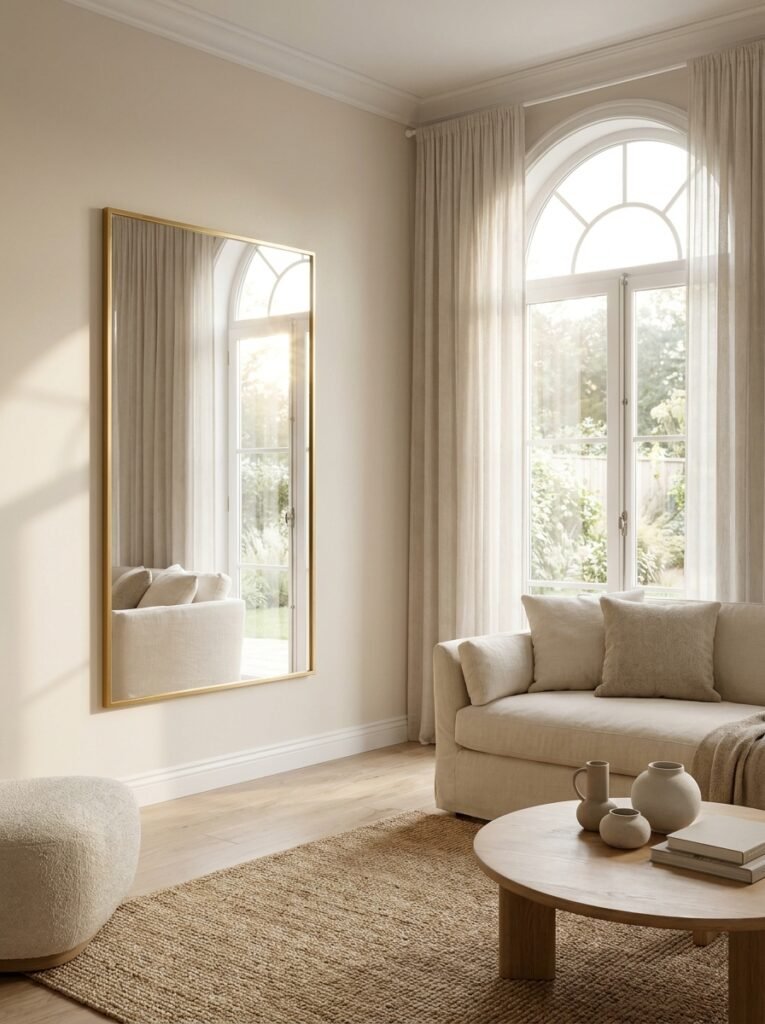
Size decides whether a mirror works. A small mirror on a large wall reads as an object hanging there. A generously sized one reads as an opening, which is the entire effect being chased.
Proportion gives a workable rule. A mirror above a console or sideboard should span roughly two thirds of that furniture’s width. Narrower than that and it looks stranded on the wall.
Leaning floor mirrors need fixing to the wall regardless of weight. A bracket or strap costs very little and removes a real tipping hazard. That matters most in the tight rooms where these mirrors get used.
2. Go Vertical With Your Shelving
Wall type sets the limit before style does. Plasterboard needs the fixings anchored into studs or supported by proper cavity anchors. Masonry takes far more weight but needs a hammer drill. Checking which one a wall is takes thirty seconds and prevents a shelf coming down loaded.
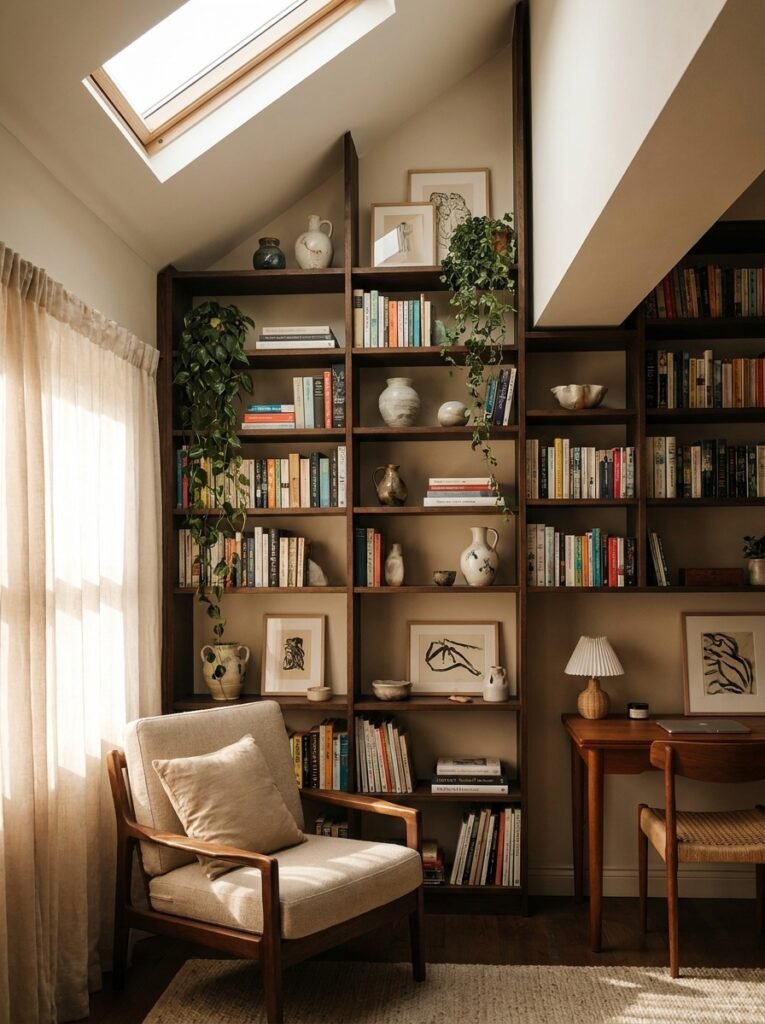
Height should run right up. A unit stopping short of the ceiling leaves a dust ledge and a horizontal break that shortens the wall. Taken to the top, the same unit reads as joinery rather than furniture.
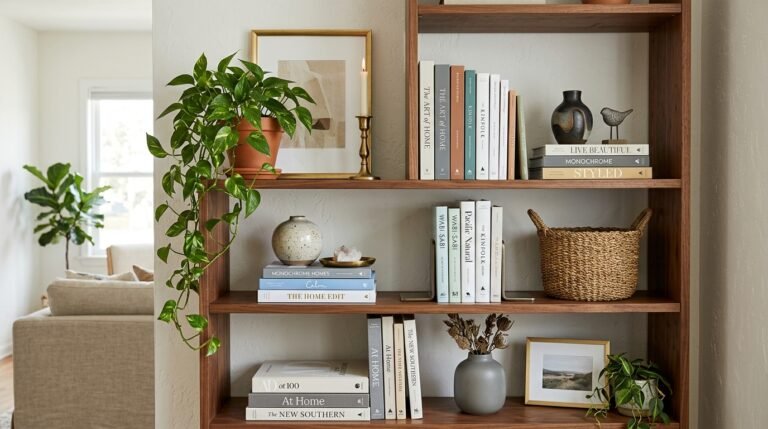
Depth matters in narrow rooms. Shelves around 20 centimetres deep hold books and objects without projecting into a walkway. Deeper units eat circulation space that a small room cannot spare. Arranging what sits on them is covered in this guide to styling a shelf like an interior designer.
3. Choose Furniture That Does Double Duty
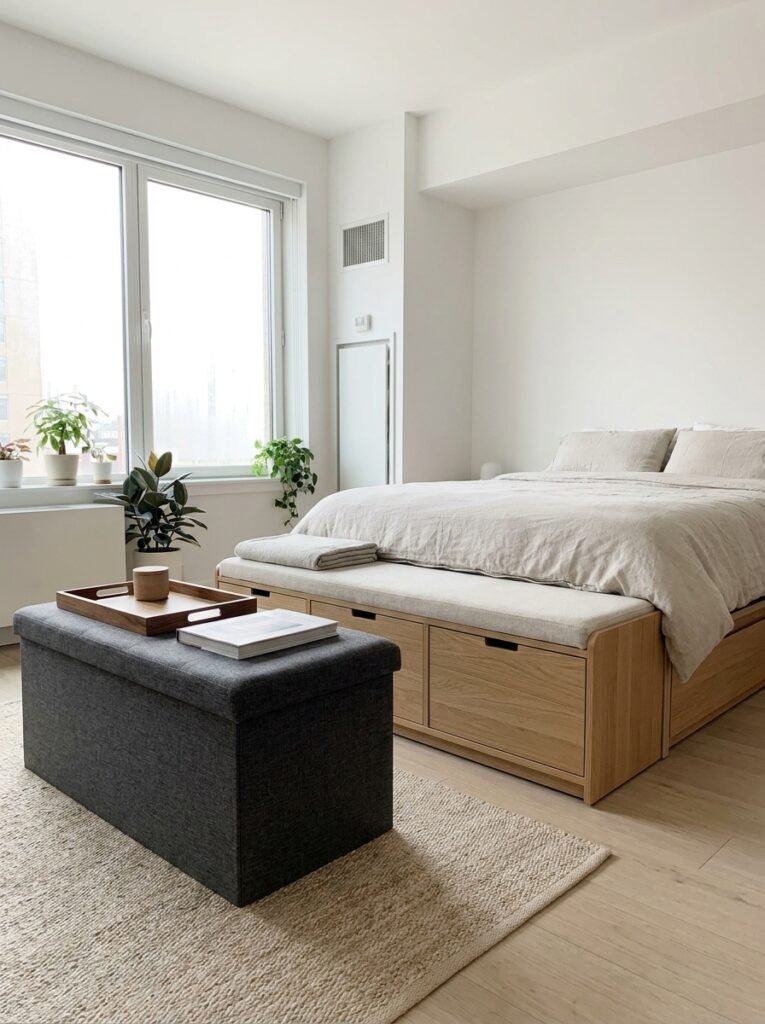
Dual-purpose furniture only pays off when the second function is convenient. Storage that requires moving the whole item first never gets used, and the piece quietly becomes single-purpose again.
Two details separate the good from the frustrating. An ottoman lid needs a hinge that stays open on its own. A lid that drops shut turns retrieving anything into a two-handed job. Under-bed drawers need clearance in front to open fully, so the walkway needs measuring before the bed arrives.
Drop-leaf and wall-mounted tables solve dining in rooms that cannot hold a permanent one. Nesting side tables work the same way, expanding for guests and collapsing back into a single footprint afterwards.
4. Stick to a Light and Cohesive Color Palette
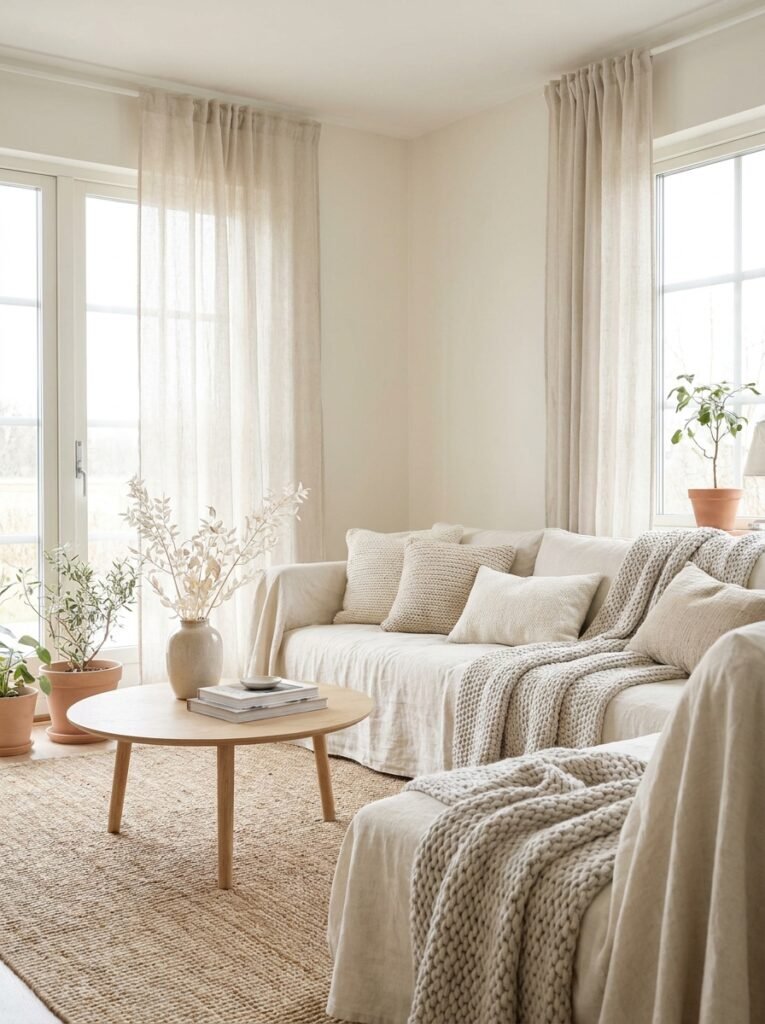
Which way a room faces changes what a colour does in it. North-facing rooms receive cool, indirect light all day. Cool greys and blue-toned whites turn dingy under it, while warm whites and creams correct the cast.
South-facing rooms get the opposite problem. Warm light through the afternoon pushes creams toward yellow, so cooler neutrals hold their intended tone better there.
Testing beats guessing. Painting a sheet of card rather than the wall lets the sample travel around the room. Morning, midday, and lamplight each show a different result. Patches painted straight onto a wall also sit against the old colour, which distorts how the new one reads.
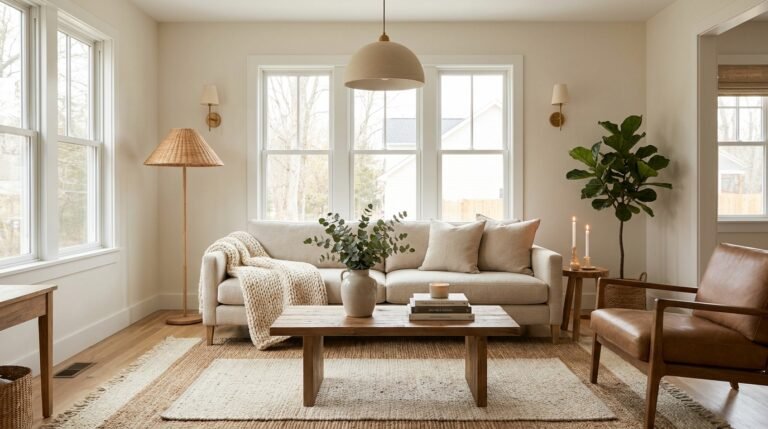
Texture keeps a restrained palette from going flat. Linen, jute, and open-weave cotton all add interest without introducing another colour.
5. Layer Your Lighting
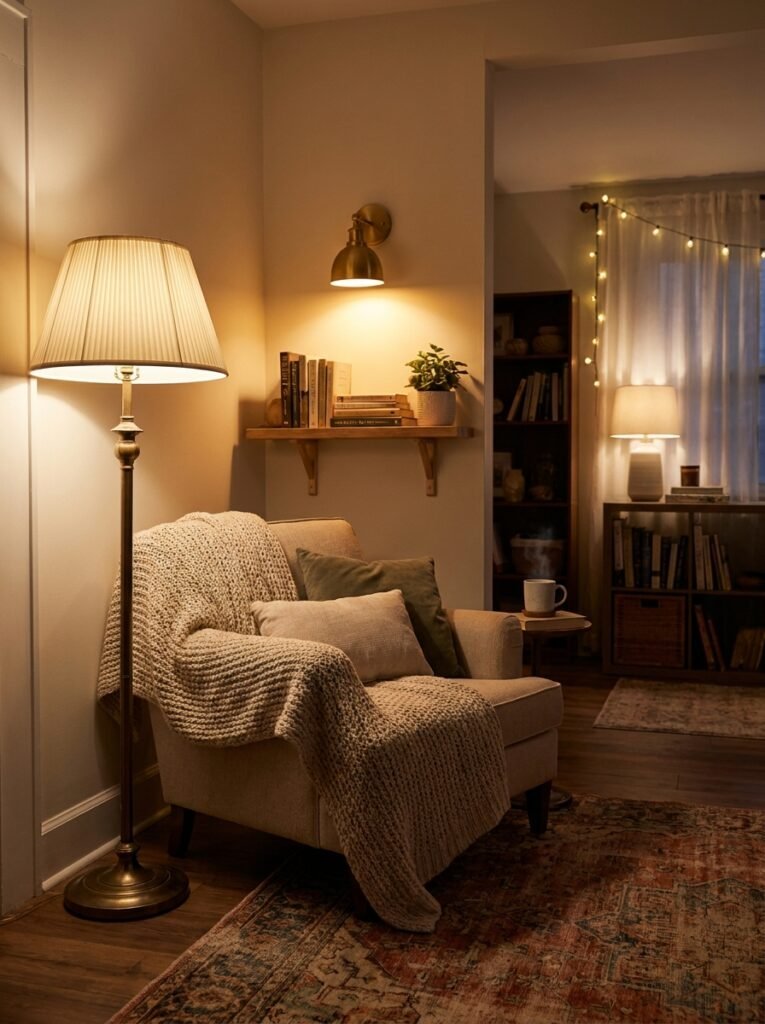
Lighting divides into three jobs. Ambient light fills the room, task light serves a specific activity, and accent light picks out a surface or object. Small rooms usually have only the first and feel flat as a result.
Colour temperature causes more trouble than fitting choice. Bulbs carry a kelvin rating. Mixing 2700K warm white with 4000K cool white in one room makes lighting feel subtly wrong. Matching every bulb costs nothing and fixes it immediately.
Brightness is measured in lumens rather than watts on modern bulbs, which trips up anyone shopping from memory. A dimmer on the main fitting then does the rest, letting one room shift between working and relaxing.
Plug-in sconces suit rented flats particularly well. They need no wiring, leave two small holes at most, and lift light off the floor where a lamp cannot reach.
6. Bring in Plants for Life and Texture
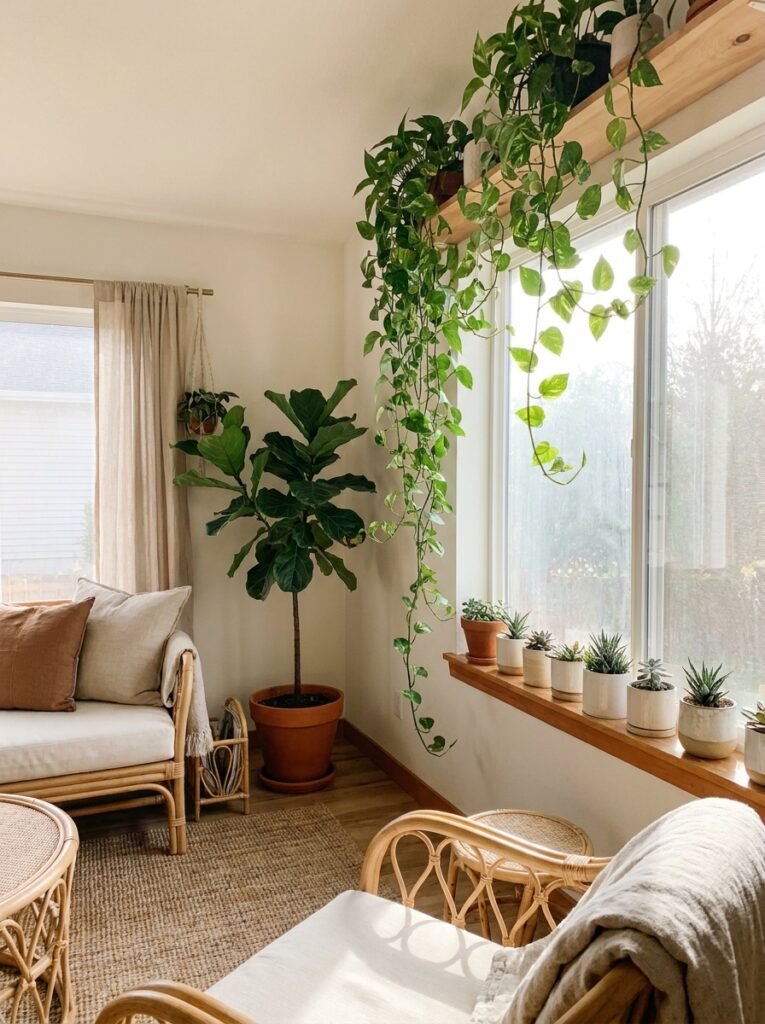
Light falls away faster than people expect. A spot two metres back from a window gets a small fraction of what the sill gets. That explains most houseplant failures blamed on watering.
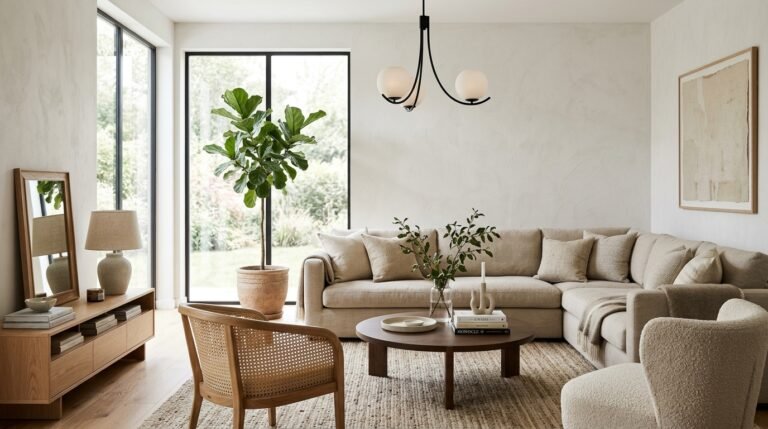
Grouping three or five plants of differing heights reads better than scattering singles around a small room. It also concentrates the watering into one task rather than five.
One popular claim deserves correcting. Houseplants are often credited with purifying indoor air, based on a 1989 NASA study conducted in sealed chambers. A 2019 review in the Journal of Exposure Science and Environmental Epidemiology reanalysed decades of that work. It found ordinary ventilation clears these compounds faster than plants absorb them. Matching a building’s air handling would take somewhere between 10 and 1,000 plants per square metre. Plants earn their place on looks and enjoyment, which is reason enough.
7. Use Rugs to Define Zones
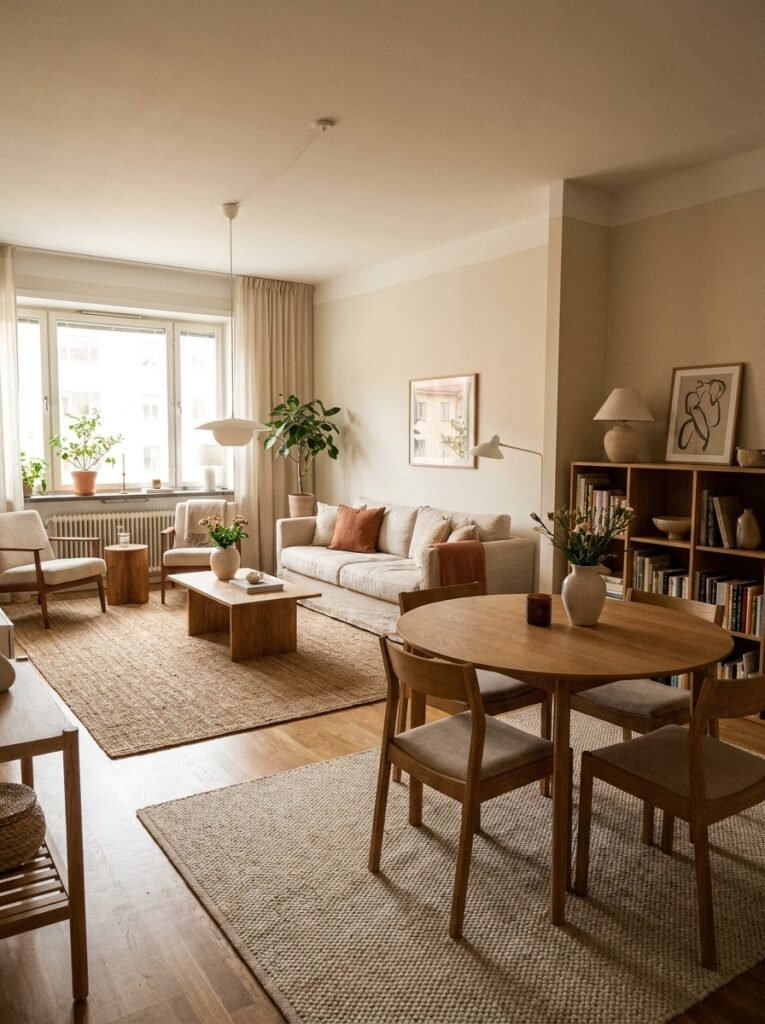
Zoning works through contrast. Two rugs that look similar read as one interrupted floor covering rather than two areas. Differing the pattern while keeping a shared tone marks the boundary without fragmenting the room.
Pile height decides whether a dining zone functions. Chairs need to slide back and in, and a thick pile catches the legs every time. Flatweave, sisal, and low-pile wool all handle that job. Deep pile belongs in the seating zone instead.
Rug pads earn their cost twice over. They stop movement underfoot, which matters in a tight layout. They also slow the wear that shows fast on a rug crossed daily.
8. Declutter Ruthlessly and Regularly
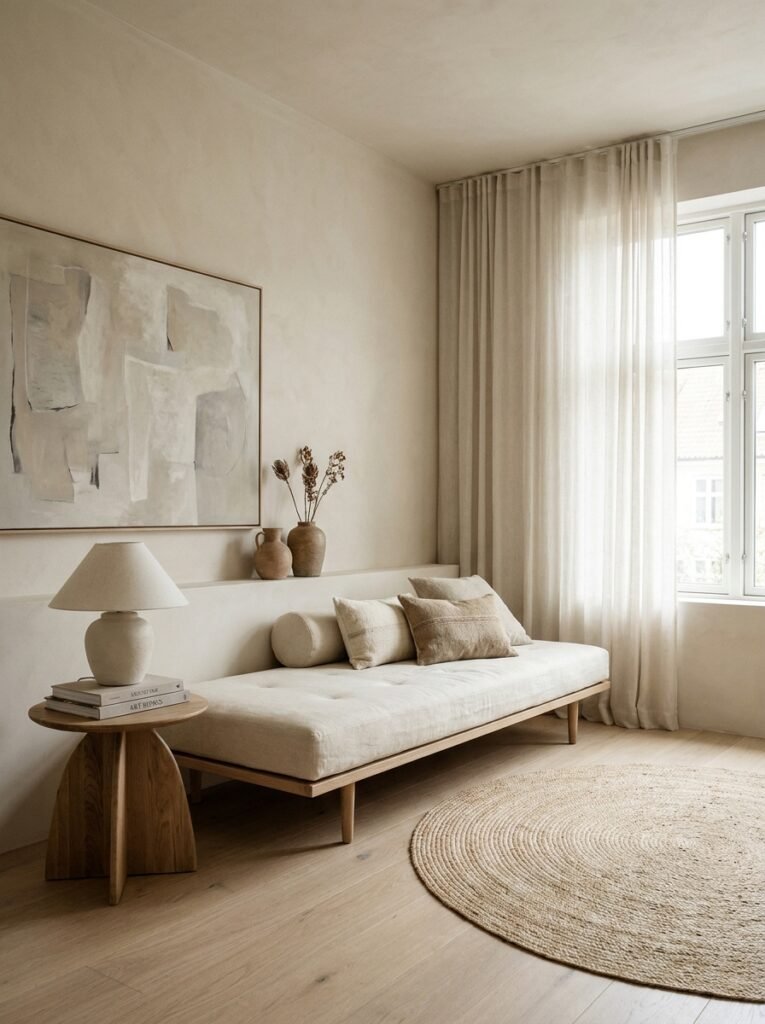
Clutter enters at a single point in most homes. Keys, post, bags, and shoes accumulate within a metre or two of the front door, then migrate outward from there.
Solving that entry point handles a surprising share of the problem. A hook rail, a shallow tray, and a basket give each arriving item a destination. The spread stops there rather than reaching the living room.
A holding box handles the undecided items. Anything uncertain goes in and the box gets a date. Whatever remains untouched after six months leaves the house. That removes the decision paralysis that stalls most attempts.
One-in-one-out keeps the gains. Every new arrival displaces something, which holds the total steady rather than letting it climb again.
9. Hang Curtains High and Wide
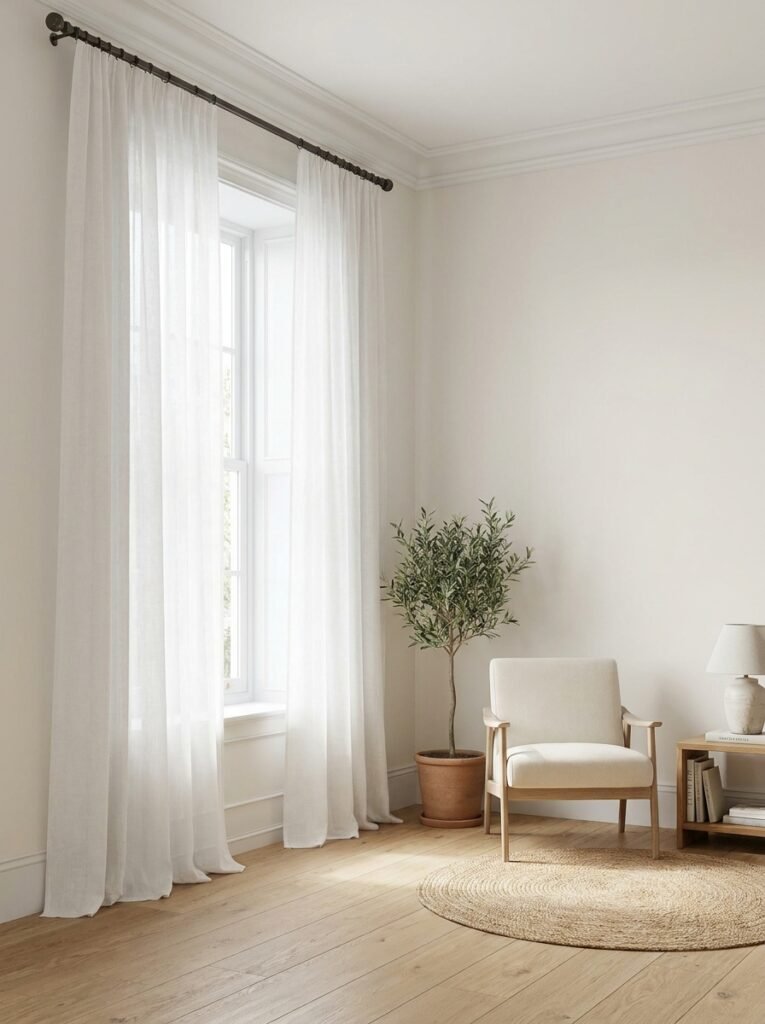
Hardware limits this more than most guides admit. Tension rods cannot span beyond the window recess, so extending a rod past the frame requires wall-mounted brackets. Ceiling-fixed track is the alternative where a landlord permits it.
Hem length behaves differently in a small room. Curtains that just touch the floor keep the line clean. Pooled fabric spreading across the boards looks luxurious in a large room and simply consumes floor in a compact one.
Fabric weight trades privacy against light. Sheers keep a room bright but reveal shapes after dark. A sheer layer paired with a heavier one on a double track solves both. The second layer stacks off the glass during the day.
10. Add a Statement Wall
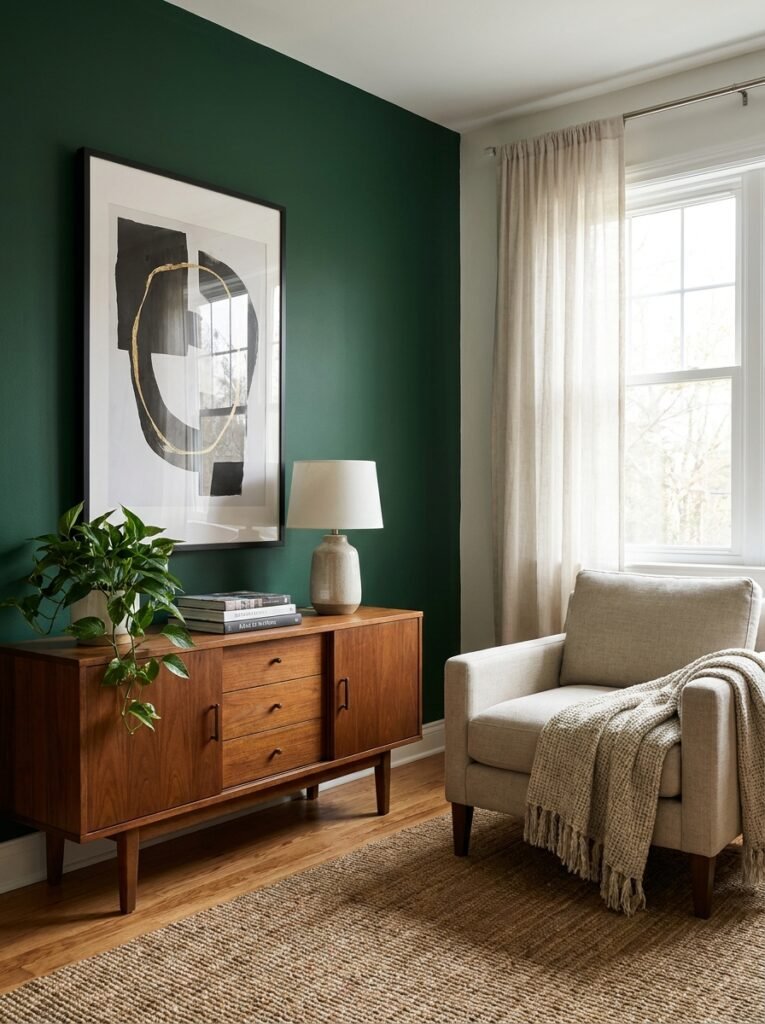
Wall choice makes or breaks this. The strongest candidate is an unbroken wall. Usually that means the one facing the door, or the one behind the largest furniture. Walls interrupted by doors, windows, and radiators fragment any treatment applied to them.
Dark colours behave counterintuitively in small rooms. A deep shade absorbs light and blurs the corner where wall meets wall. That pushes the boundary away rather than pulling it closer. The room can end up feeling deeper, not smaller.
Peel-and-stick wallpaper has real conditions attached. It grips smooth, matte-painted, fully cured surfaces. Textured plaster, gloss paint, and freshly painted walls all cause it to lift at the edges within weeks.
11. Edit Your Accessories Thoughtfully
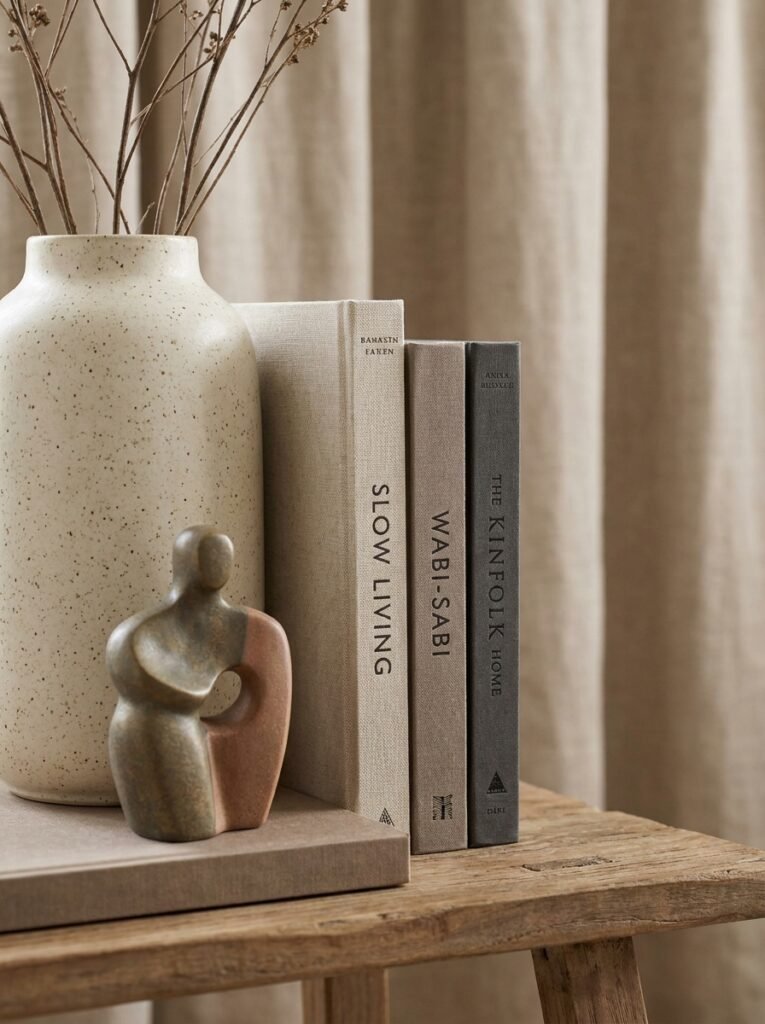
Small homes have few surfaces, and that changes the maths. One grouping per surface is usually the ceiling. Three separate arrangements on one console read as clutter however carefully each was assembled.
The doorway is the honest vantage point. Standing at the entrance shows what a visitor sees on arrival. Few people check that view while arranging things up close.
Function counts as decoration in a compact space. A handsome bowl that holds keys, or a basket that swallows blankets, earns its surface twice. Purely ornamental objects have to compete for room that is genuinely scarce.
12. Invest in One Great Piece
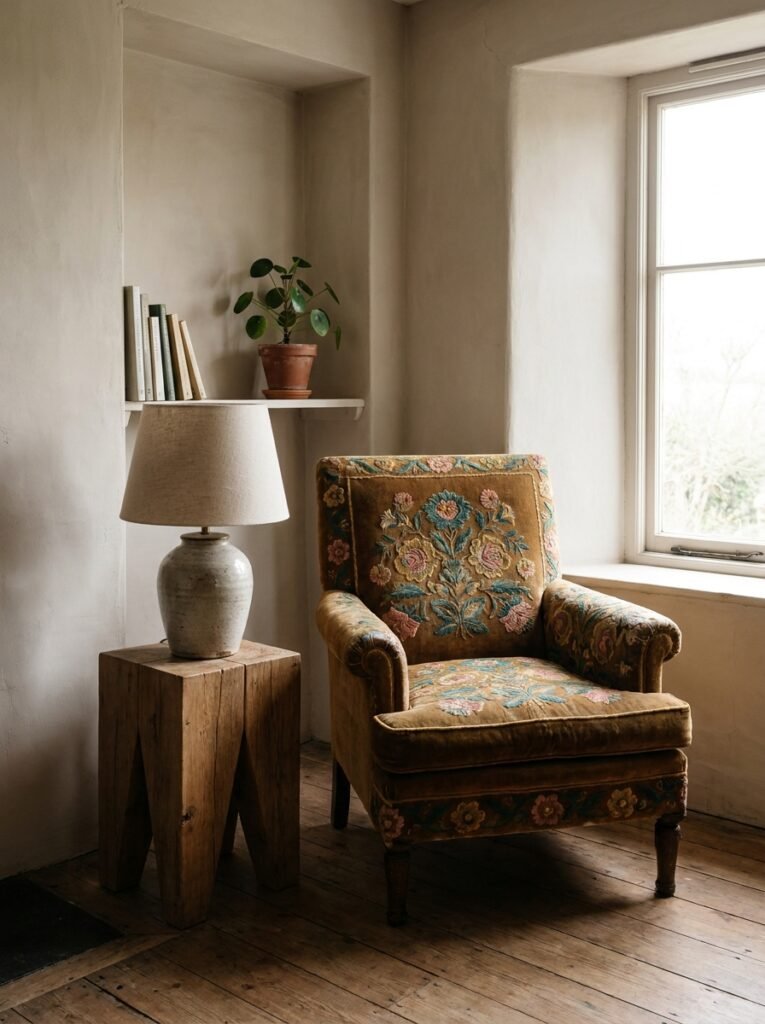
Where to spend follows from use rather than visibility. The items used daily and hardest to replace later deserve the budget: seating, a mattress, and lighting. Decorative objects can wait.
Cost per use makes the comparison concrete. A chair sat in every evening for a decade justifies a price a decorative object never will. The sticker price matters far less.
Scale still governs the choice. A hero piece too large for the room defeats its own purpose. The better investment is usually a well-made version of something modest, rather than a grand one squeezed in.
Final Thoughts
Among these small home decorating ideas, cost and impact rarely track each other. Rehanging curtains, matching bulb temperatures, and clearing the entry point cost almost nothing and change a room noticeably. New furniture costs a great deal and often changes less.
Reversibility is the other axis worth weighing, particularly under a tenancy. Mirrors, lamps, rugs, and plants all move to the next address. Paint and wallpaper stay behind.
Starting with the free changes also reveals what the room actually needs. Several small home decorating ideas here overlap with this guide to small changes that make a room feel bigger. That one goes further into proportion and sightlines.
FAQ
Which changes cost nothing at all?
Rearranging furniture for better circulation. Clearing the entry point where clutter collects. Matching every bulb in a room to one colour temperature. Moving a mirror so it reflects depth rather than a wall also costs nothing.
What colours suit a small room?
That depends on which way the room faces. North-facing rooms take warm whites and creams, since cool greys go dingy under indirect light. South-facing rooms handle cooler neutrals, because afternoon light already supplies warmth.
Do houseplants improve indoor air quality?
Not meaningfully. A 2019 review in the Journal of Exposure Science and Environmental Epidemiology settled this. Normal ventilation removes airborne compounds faster than plants absorb them. Plants are worth having for how they look, not for air purification.
Which of these work in a rented flat?
Nearly all of them. Plug-in sconces need no wiring and curtain brackets leave small holes. Mirrors, rugs, and storage furniture all travel to the next address. Only paint and wallpaper require a landlord conversation.
Where should a limited budget go first?
Into whatever gets used daily and resists upgrading later, which usually means seating, a mattress, and lighting. Decorative objects can be added slowly, and cost per use tends to justify the split.